New Study Reveals Theia and Earth May Have Shared Origins Before Collision
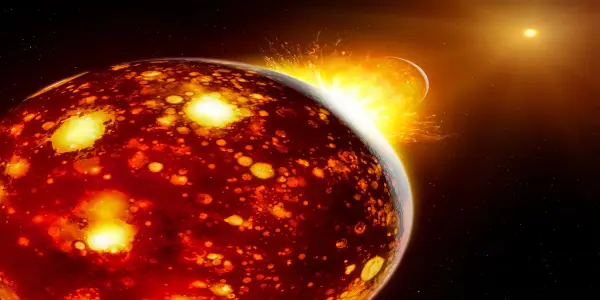
A recent investigation suggests that Theia, the celestial body responsible for the Moon's formation, likely originated from the inner Solar System, indicating a closer relationship with early Earth than previously thought.
In-depth analysis
New discoveries
Recent research from the Max Planck Institute reveals that Theia, the body believed to have collided with Earth to form the Moon, likely originated in the inner Solar System. This study utilized iron isotope analysis to demonstrate a close elemental relationship between Earth and Theia, suggesting they were neighbors in the early Solar System.
Mission updates
The research team, led by Timo Hopp, has published significant findings that enhance our understanding of the origins of Theia and its connection to Earth, utilizing advanced isotopic analysis techniques.
Who is affected
This study impacts the scientific community, particularly geoscientists and astronomers, by refining theories about planetary formation. It also influences our understanding of Earth's history and the processes that led to the development of the Moon, which is crucial for studies in planetary science.
Next steps
Future research will focus on further analyzing isotopic compositions and exploring the dynamics of the collision event. This will help clarify the contributions of both Theia and proto-Earth in the Moon's formation.
Did you know?
Why we should care
Understanding the origins of the Moon shapes our knowledge of Earth’s history and its place in the Solar System. This research not only illuminates the chaotic events that gave rise to our planet's companion but also reveals insights into planetary formation processes that can affect potential future explorations. As we look to the stars for resources and new worlds, knowing our cosmic origins becomes crucial.
The universe's unsolved mystery
Despite advances in isotopic analysis, questions surrounding the specifics of Theia's collision with Earth remain. How did such a massive impact lead to the Moon's creation, and what materials were truly involved? These unanswered questions about the dynamics of planetary formation continue to challenge scientists, highlighting the intricate and often violent history of our Solar System.
The person who looks at the stars
Meet Clara Zhang, an aspiring astronomer from a small town in Ohio. Every night, she sets up her telescope in her backyard, gazing at the Moon that was formed from a collision billions of years ago. Clara dreams of unraveling the mysteries of the cosmos, inspired by stories of celestial events that shaped Earth. For her, understanding Theia's origins is more than academic; it’s a connection to the universe that fuels her passion. Each new discovery, like the recent findings from the Max Planck Institute, deepens her resolve to explore further, knowing that every star she observes is tied to a chaotic history that birthed her home planet. Clara believes that with each revelation, humanity can better grasp its place in the universe and the cosmic forces that surround us.

Top Black Friday Smartwatch Deals Worth...
James Webb Telescope Identifies Rapidly Growing...
Astronomers Converge in Phoenix for AAS 247: A...
Exploring the Composition of Cosmic Voids

FULU Foundation Introduces Repair Bounty System...

Satellite Imagery Highlights Hurricane Damage...
NASA's X-59 Achieves Historic Supersonic Flight
Andromeda Galaxy's Impact on Its Satellite...
Exploring Oregon's Premier Public Telescope...
SpaceX Achieves 150th Falcon 9 Launch with...
Astronomers Uncover a Rapid Star-Forming Galaxy...
Deep Fission Proposes Underground Nuclear...
Astronomers Identify Three Earth-Sized Exoplanets...
Artemis 2 Astronauts Safely Return After Historic...
James Webb Space Telescope Captures Stunning...
Breakthrough in Milky Way Simulation Using AI...
NASA's Ambitious Timeline for Human Exploration...

Exploring Alternatives to the Meta Quest 3 Elite...
China's Mars Orbiter Captures Image of...
SabreSat: An Innovative Air-Breathing Satellite...
Enhance Your Weather Preparedness with Weather...
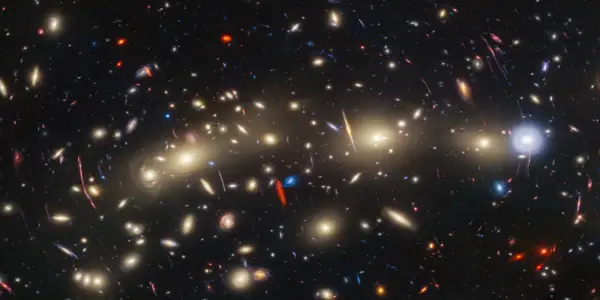
James Webb Space Telescope May Have Detected the...
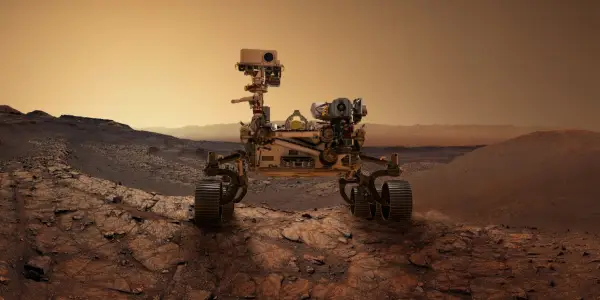
Unraveling the Mysteries of Mars: Recent...
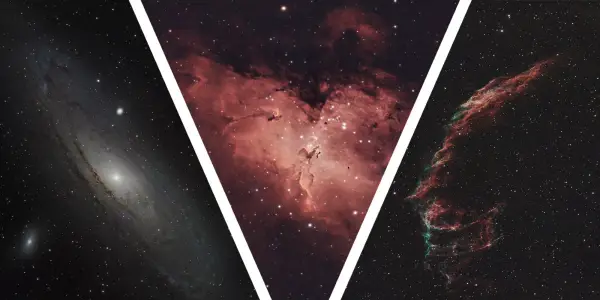
The Dwarf III Smart Telescope: A Compact Marvel...

Samsung Unveils Unprecedented Black Friday Deal...
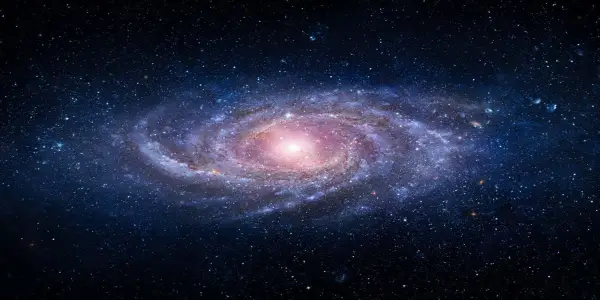
Potential Evidence of Dark Matter Emerges from...
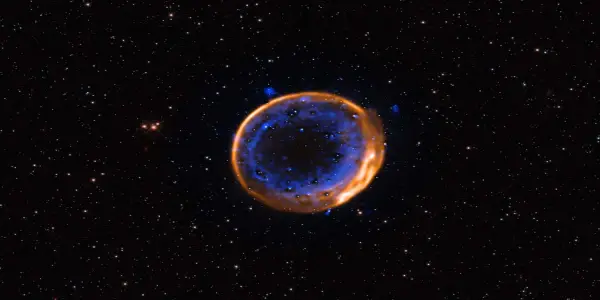
Highlights of 2025 in Space Exploration: From...
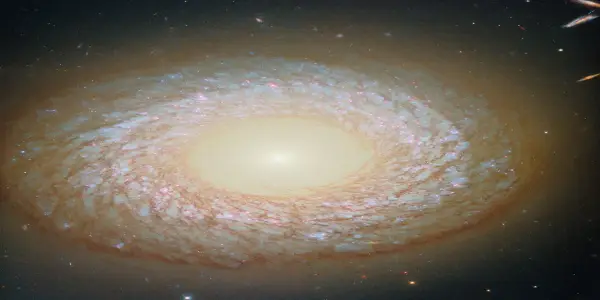
Hubble Telescope Unveils Enigmatic Galaxy NGC 2775
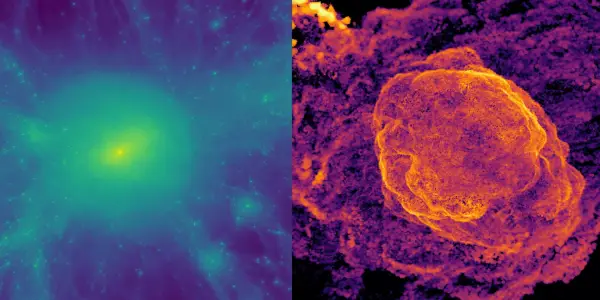
New Simulations Shed Light on the Enigmatic...
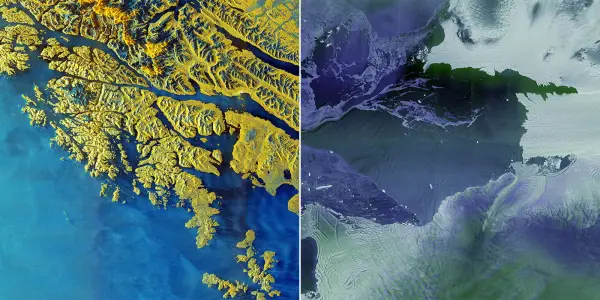
European Space Agency Unveils Stunning Radar...
Discovery of a Planet Formation Zone Beyond...

Astronomers Identify Potential Earth-Like...
NASA and European Partners Prepare for...
New Research Suggests Dark Matter Influences...
Hawaiian Students Honor Gemini North Telescope's...
Boeing's Upcoming Starliner Mission Set for April...