Nearby Super-Earth Identified as Key Target in Search for Extraterrestrial Life
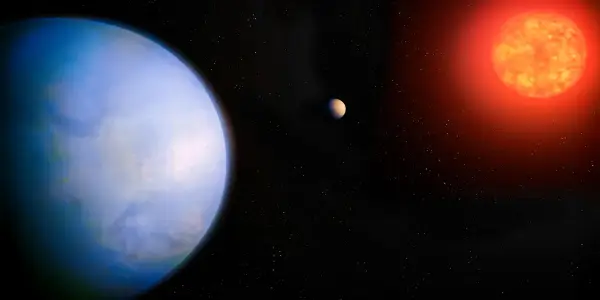
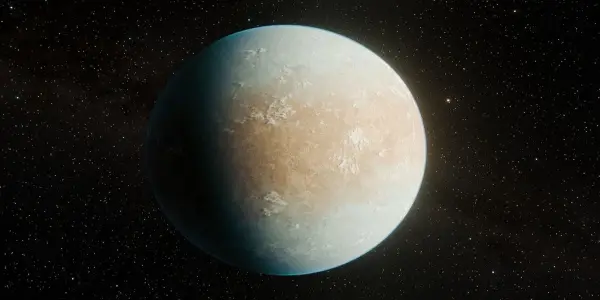
Astronomers have discovered a super-Earth located within the habitable zone of an M-dwarf star, merely 18 light-years from Earth. Advanced instruments have revealed gravitational evidence of a rocky planet that may possess conditions suitable for liquid water.
In-depth analysis
New discoveries
Astronomers from the University of California, Irvine, have uncovered a super-Earth named GJ located in the habitable zone of a nearby M-dwarf star. This area is characterized by temperatures conducive to liquid water, suggesting that GJ may possess Earth-like qualities. The findings, published in The Astronomical Journal, underscore significant progress in exoplanet research.
Mission updates
The research team plans to utilize the Thirty Meter Telescope (TMT) for future observations of GJ. This advanced telescope is expected to enhance the capabilities for studying distant exoplanets, making GJ a focal point for upcoming missions.
Who is affected
The discovery of GJ impacts the scientific community, particularly astronomers and researchers focused on exoplanet studies. It also has implications for institutions involved in astronomical research, including UCLA and Penn State University, highlighting the collaborative efforts in this field.
Next steps
Researchers aim to confirm GJ's characteristics and its potential for hosting life through direct imaging. Continued investment in advanced telescopes and collaborative efforts will be essential for unlocking further insights into this exoplanet.
Did you know?
Why we should care
The discovery of GJ in the habitable zone of an M-dwarf star could reshape our understanding of life beyond Earth. With the planet located a mere 18 light-years away, it brings the dream of finding habitable conditions within reach. This breakthrough might inspire public interest in science and technology, influencing education and funding in space exploration, which are crucial for tackling pressing issues on our home planet.
The universe's unsolved mystery
The identification of GJ opens a broader dialogue about the nature of habitable environments. While Earth-like conditions are sought, the diversity of life on Earth reminds us that alien ecosystems may differ vastly from our expectations. This invites us to ponder: what forms of life might thrive under different celestial conditions, and how do we adapt our search strategies accordingly?
The person who looks at the stars
Meet 28-year-old Elena Martinez, a budding astronomer who spent countless nights stargazing from her rooftop in Los Angeles. The discovery of GJ resonates deeply with her, fueling her passion for the cosmos. Inspired by her childhood dreams of finding extraterrestrial life, she often imagines the landscapes of distant worlds. For Elena, GJ symbolizes hope and curiosity, reminding her that the universe still holds secrets waiting to be unveiled. As she prepares to join a research team at UC Irvine, the potential for GJ to harbor life ignites her ambition to contribute to humanity's quest for answers beyond our solar system.
Unusual Wind from Neutron Star Challenges Space...
Andromeda Galaxy's Impact on Its Satellite...
Collaboration Between Exoplanet Researchers and...
Astronomers Identify Potential Earth-Like...
Charlotte: The Lunar 3D Printer Poised to...
Assessing the Financial Impact of NASA's Apollo...
Breakthrough in Milky Way Simulation Using AI...
NASA's ESCAPADE Probes Set for Unique Journey to...

Astronomers Identify Three Earth-Sized Exoplanets...

Blue Origin Faces Major Setback as New Glenn...
Astronomers Uncover Evidence of Aging Stars...

Exploring Alternatives to the Meta Quest 3 Elite...

Apple Introduces Emergency SOS via Satellite in...
Discovery of a Planet Formation Zone Beyond...

NASA's Artemis 3 Moon Mission Delayed to 2028 Due...

NASA Unveils New Images of Interstellar Comet...

Samsung Galaxy S26 Expected to Feature Enhanced...
Young Canadian Astronomer Identifies Two...
Astronomers Discover Ancient White Dwarf Actively...
Astronauts aboard the ISS Capture Stunning Images...

Samsung Unveils Unprecedented Black Friday Deal...

SpaceX Achieves 150th Falcon 9 Launch with...
China's Mars Orbiter Captures Image of...
James Webb Space Telescope Discovers Ancient...

Lenovo's Legion Tab Gen 3 Sees Significant Black...
Astronomers Converge in Phoenix for AAS 247: A...
NASA's Ambitious Timeline for Human Exploration...

Jeff Bezos's AI Hardware Venture Takes Aim at...
NASA and European Partners Prepare for...
Unraveling the Mysteries of Mars: Recent...

Foundation Season 3 Hints at Deeper Asimov Themes...
Astrophysicists Unveil Dark Universe Through...

This Week In Space Podcast: Episode 187 Explores...
Recent Studies Explore Potential Exoplanet in...

Innovative Portable Reflecting Telescope...
New Simulations Shed Light on the Enigmatic...

NASA's X-59 Achieves Historic Supersonic Flight