NASA's Roman Space Telescope Set to Illuminate Cosmic Expansion
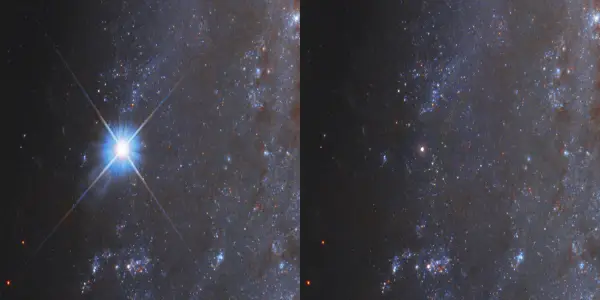
The Nancy Grace Roman Space Telescope, scheduled for launch by May 2027, aims to revolutionize our understanding of cosmic expansion through its extensive observational capabilities.
In-depth analysis
New discoveries
The Nancy Grace Roman Space Telescope is set to uncover new insights into the universe's expansion by focusing on transient phenomena like Type Ia supernovae. Its advanced capabilities will allow for the detection of these cosmic events from unprecedented distances, enhancing our understanding of dark matter and dark energy's influence on cosmic growth.
Mission updates
Scheduled for launch no later than May 2027, the Roman Space Telescope is currently in preparation, with a potential launch as early as fall 2026. Its mission will span five years, focusing on critical community-defined surveys.
Who is affected
The scientific community, particularly cosmologists and astrophysicists, will benefit significantly from the Roman Space Telescope's findings. Its data on supernovae and cosmic events will enhance research capabilities and inform theories regarding the universe's expansion and the role of dark energy.
Next steps
Following its launch, the telescope will begin its two-year High-Latitude Time-Domain Survey, dedicating 200 nights to observing and analyzing transient astronomical phenomena. This systematic approach aims to capture dynamic events and deepen our understanding of the cosmos.
Did you know?
Why we should care
Understanding the expansion of the universe is not just an academic pursuit; it influences technologies in our daily lives, from GPS systems to telecommunications. The insights gained from the Roman Space Telescope can lead to breakthroughs in energy, materials science, and even climate modeling. By unraveling cosmic mysteries, we enhance our grasp of the world around us and our place within it.
The universe's unsolved mystery
Despite centuries of astronomical advancements, the nature of dark energy remains elusive. This mysterious force is believed to drive the universe's accelerated expansion, yet its fundamental properties are still unknown. The Roman Space Telescope aims to shed light on this enigma, potentially revolutionizing our understanding of physics and reshaping the theories that govern the cosmos.
The person who looks at the stars
Meet Elena Torres, a high school science teacher in Tucson, Arizona, who inspires her students to ponder the cosmos. Every clear night, Elena sets up her telescope in her backyard, sharing the wonders of the universe with her students and their families. For Elena, the upcoming launch of the Roman Space Telescope represents hope—the hope that we will uncover answers to questions that have fascinated humanity for millennia. As she explains the significance of supernovae in her classroom, she lights a spark of curiosity in her students. She dreams that one day, one of them will be among the scientists analyzing data from Roman, contributing to our understanding of dark energy. For Elena, each gaze into the night sky is a reminder of the endless possibilities that await, both in knowledge and inspiration.
Expert Commentary
Assessing the Financial Impact of NASA's Apollo...
Euclid Space Telescope Discovers Hidden Stars in...
Mapping the Invisible: Astronomers Uncover Dark...
Deep Fission Proposes Underground Nuclear...
James Webb Telescope Identifies Rapidly Growing...
Hawaiian Students Honor Gemini North Telescope's...

Childcare Crisis: Families Struggle as...
Astronomers Capture Unprecedented Black Hole...

X-Men Return to Education in Upcoming Comic...

Lenovo's Legion Tab Gen 3 Sees Significant Black...
Astrophotographer Captures Stunning Image of...
Jupiter's Moons Io and Europa to Cast Shadows...
Rogue Moons: A New Frontier for Life Beyond Stars

Daily Roundup: November 10, 2025 – Advancements...
India Successfully Launches CMS-03 Military...
Unraveling the Mysteries of Mars: Recent...
NASA's Campaign to Monitor Interstellar Comet...
Charlotte: The Lunar 3D Printer Poised to...
The Impact of Space Technology on Everyday Life
Astronomers Uncover Evidence of Aging Stars...
NASA's Artemis 3 Moon Mission Delayed to 2028 Due...
New Simulations Shed Light on the Enigmatic...
Recent Studies Explore Potential Exoplanet in...
Study Suggests the Universe's Expansion May Be...
This Week In Space Podcast: Episode 187 Explores...
Astrophysicists Unveil Dark Universe Through...
Congress Questions NASA's Facility Closures Amid...
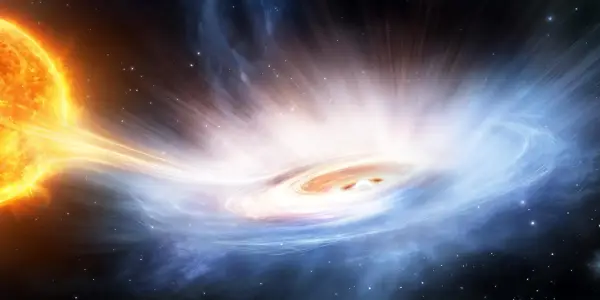
Unusual Wind from Neutron Star Challenges Space...

European Space Agency Unveils Stunning Radar...

Samsung's Galaxy S26 Ultra Set for Significant...
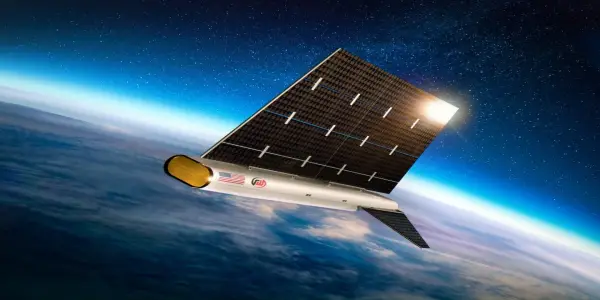
SabreSat: An Innovative Air-Breathing Satellite...
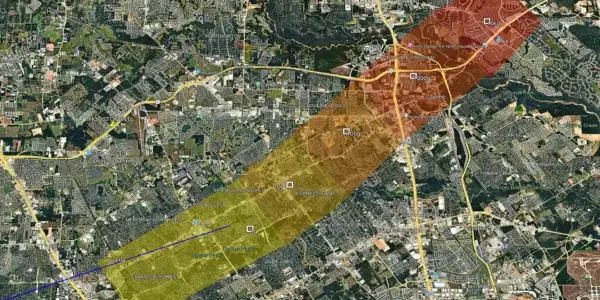
Meteorite Fragment May Have Impacted Houston Home
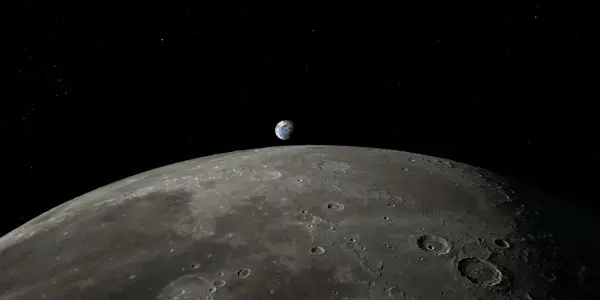
Young Canadian Astronomer Identifies Two...
X5.1 Solar Flare Triggers G4 Geomagnetic Storm...

Exploring Alternatives to the Meta Quest 3 Elite...

Jeff Bezos's AI Hardware Venture Takes Aim at...
China's Mars Orbiter Captures Image of...
Interstellar Comet 3I/ATLAS Approaches...
Russian Cosmonauts Conduct Extended Spacewalk to...