The Legacy of NASA's Apollo Missions: The Last Living Moonwalkers
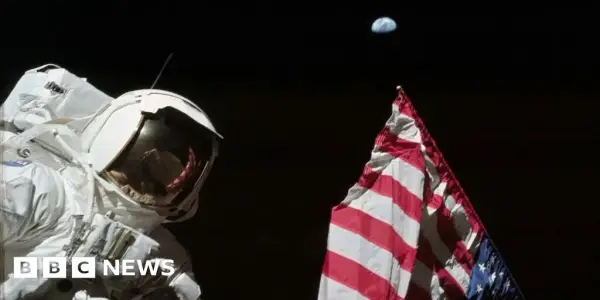
Among the 24 astronauts who journeyed to the Moon during NASA's Apollo program, only five are still alive, representing a pivotal era in space exploration.
In-depth analysis
New discoveries
The Artemis program aims to build upon the legacy of the Apollo missions by not only returning humans to the Moon but also establishing a sustainable presence. This endeavor will facilitate advanced scientific research, particularly in lunar geology, and prepare for future Mars exploration, potentially unlocking new knowledge about our solar system.
Mission updates
NASA's Artemis 2 mission timeline has been adjusted as the agency reassesses its readiness for a crewed lunar flight initially scheduled for 2022, reflecting ongoing challenges in its preparations.
Who is affected
The dwindling number of Apollo astronauts, now just five, highlights the urgency of NASA's lunar ambitions. Their experiences and insights not only inspire current and future generations but also emphasize the importance of continued investment in space exploration.
Next steps
As NASA moves forward with Artemis, collaboration with private companies like SpaceX and Boeing will be crucial. Addressing technological challenges will be essential to meet the ambitious timeline for returning humans to the Moon.
Did you know?
Why we should care
The Apollo program laid the groundwork for modern space exploration, shaping technology and innovation that permeate daily life, from satellite communication to GPS. As NASA's Artemis program seeks to establish a sustainable lunar presence, this mission promises to inspire future generations and could lead to breakthroughs in science, energy, and even climate solutions—affecting everything from our understanding of Earth to how we traverse it.
The universe's unsolved mystery
Despite monumental achievements like landing on the Moon, humanity still grapples with fundamental questions about life beyond Earth. The Artemis program's potential to pave the way for Mars exploration raises new mysteries about our place in the cosmos. What if discoveries on the Moon lead to the realization that we aren't alone? The excitement of exploring these unknowns fuels both scientific inquiry and human imagination.
The person who looks at the stars
Evelyn Harper, a 12-year-old aspiring astronaut, spends her nights gazing at the stars from her backyard in Tucson, Arizona. Inspired by the Apollo missions and captivated by Buzz Aldrin's stories, she dreams of venturing beyond Earth. For Evelyn, the Artemis program symbolizes hope and possibility, representing a future where she could contribute to humanity's journey to the Moon and Mars. The stories of astronauts like Jim Lovell and Charlie Duke ignite her passion, reinforcing the idea that exploration is not just for the elite but for anyone willing to reach for the stars. Evelyn's emotional connection to space exploration reminds us that the legacy of Apollo lives on in the dreams of the young and curious.
Expert Commentary

Highlights of 2025 in Space Exploration: From...
Euclid Space Telescope Discovers Hidden Stars in...
The Impact of Space Technology on Everyday Life
Astronomers Converge in Phoenix for AAS 247: A...
Collaboration Between Exoplanet Researchers and...
Italian Producer Plans Historic Film to Shoot in...

Astronomers Identify Three Earth-Sized Exoplanets...

NASA's Artemis 3 Moon Mission Delayed to 2028 Due...

Childcare Crisis: Families Struggle as...

Innovative Portable Reflecting Telescope...
Breakthrough in Milky Way Simulation Using AI...

Young Canadian Astronomer Identifies Two...

Astronomers Uncover Evidence of Aging Stars...

Webb Telescope Reveals Unprecedented Cosmic...

Meteorite Fragment May Have Impacted Houston Home

James Webb Space Telescope Discovers Ancient...

Discovery of a Planet Formation Zone Beyond...

Study Suggests the Universe's Expansion May Be...

Recent Studies Explore Potential Exoplanet in...

James Webb Telescope Identifies Rapidly Growing...
NASA and European Partners Prepare for...
Andromeda Galaxy's Impact on Its Satellite...
NASA and Blue Origin Successfully Launch Dual...

Samsung Unveils Unprecedented Black Friday Deal...

European Space Agency Unveils Stunning Radar...

Urwerk Unveils Limited-Edition 100V 'LightSpeed'...

Lenovo's Legion Tab Gen 3 Sees Significant Black...

This Week In Space Podcast: Episode 187 Explores...
New Mexico Startup Unveils Ambitious Plan to...

Deep Fission Proposes Underground Nuclear...

Samsung Galaxy S26 Expected to Feature Enhanced...
Interstellar Comet 3I/ATLAS Approaches...

New Simulations Shed Light on the Enigmatic...

NASA's Ambitious Timeline for Human Exploration...
Assessing the Financial Impact of NASA's Apollo...

Daily Roundup: November 10, 2025 – Advancements...

Astronomers Discover Ancient White Dwarf Actively...