China's Tianwen-3 Mission: A Potential Rival in Mars Sample Return Efforts
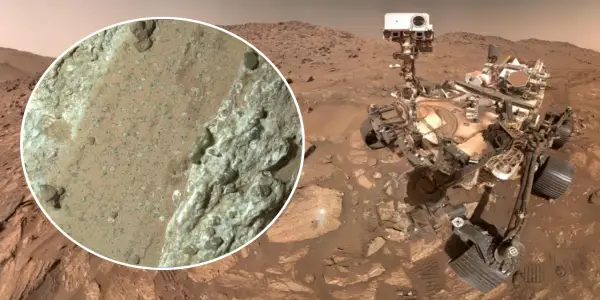
As NASA grapples with delays in its Mars Sample Return mission, China's Tianwen-3 may emerge as a key player in returning Martian samples to Earth, including possible biosignatures.
In-depth analysis
New discoveries
Recent findings from NASA's Perseverance rover suggest the presence of potential biosignatures in Martian rock samples, particularly intriguing minerals that hint at past microbial life. These discoveries could reshape the understanding of Mars' geological history and its capacity to support life, necessitating further investigation through sample return missions.
Mission updates
The Perseverance rover has successfully collected a core sample named 'Sapphire Canyon,' which is now securely sealed for future transport to Earth, pending the resolution of budgetary challenges affecting the Mars Sample Return program.
Who is affected
The ongoing developments impact multiple stakeholders, including NASA, which faces budget cuts that jeopardize its Mars Sample Return mission, and China's space program, which aims to launch its Tianwen-3 mission to collect Martian samples potentially ahead of NASA.
Next steps
Future actions involve closely monitoring the budget discussions surrounding NASA's Mars Sample Return program while assessing the implications of China's Tianwen-3 mission, particularly its landing site selection and sample retrieval capabilities.
Did you know?
Why we should care
The discovery of potential biosignatures on Mars could transform our understanding of life beyond Earth. If confirmed, these findings might reshape our quest for extraterrestrial life, impacting everything from scientific research funding to educational initiatives. For everyday people, such breakthroughs could ignite curiosity in the sciences and foster a new generation of explorers inspired by the mysteries of the universe.
The universe's unsolved mystery
The possibility of microbial life on Mars raises profound questions about our place in the cosmos. What if life arose independently on another planet? This not only challenges our understanding of biology but also invites a reevaluation of philosophical and ethical considerations regarding our responsibilities in exploring and potentially colonizing other worlds.
The person who looks at the stars
Meet Clara Chen, a high school science teacher in San Francisco, who spends her evenings stargazing with her students. Her passion for astronomy was ignited when she learned about Mars during a college course. Clara uses the Perseverance rover’s discoveries to inspire her students, encouraging them to dream big. She often reminds them that the search for life on Mars might reveal answers to questions they've never thought to ask. For her, every new development in space exploration is a chance to spark curiosity and wonder, making the cosmos feel a little closer and more attainable.
Expert Commentary

Unusual Wind from Neutron Star Challenges Space...
Andromeda Galaxy's Impact on Its Satellite...
Collaboration Between Exoplanet Researchers and...
Astronomers Identify Potential Earth-Like...
Charlotte: The Lunar 3D Printer Poised to...
Assessing the Financial Impact of NASA's Apollo...

Childcare Crisis: Families Struggle as...
Breakthrough in Milky Way Simulation Using AI...
NASA's ESCAPADE Probes Set for Unique Journey to...
Astronomers Identify Three Earth-Sized Exoplanets...
Blue Origin Faces Major Setback as New Glenn...

Astronomers Uncover Evidence of Aging Stars...

Exploring Alternatives to the Meta Quest 3 Elite...
Apple Introduces Emergency SOS via Satellite in...
Discovery of a Planet Formation Zone Beyond...
NASA's Artemis 3 Moon Mission Delayed to 2028 Due...

NASA Unveils New Images of Interstellar Comet...

Samsung Galaxy S26 Expected to Feature Enhanced...
Young Canadian Astronomer Identifies Two...
Astronomers Discover Ancient White Dwarf Actively...
Astronauts aboard the ISS Capture Stunning Images...

Samsung Unveils Unprecedented Black Friday Deal...
SpaceX Achieves 150th Falcon 9 Launch with...

China's Mars Orbiter Captures Image of...

James Webb Space Telescope Discovers Ancient...

Lenovo's Legion Tab Gen 3 Sees Significant Black...
Astronomers Converge in Phoenix for AAS 247: A...
NASA's Ambitious Timeline for Human Exploration...

Jeff Bezos's AI Hardware Venture Takes Aim at...
NASA and European Partners Prepare for...
Unraveling the Mysteries of Mars: Recent...

Foundation Season 3 Hints at Deeper Asimov Themes...

Astrophysicists Unveil Dark Universe Through...

This Week In Space Podcast: Episode 187 Explores...
Recent Studies Explore Potential Exoplanet in...
Innovative Portable Reflecting Telescope...
SpaceX Faces Challenges in Meeting NASA's 2027...

NASA's X-59 Achieves Historic Supersonic Flight