Sanae Takaichi: Japan's First Female Prime Minister and Her Conservative Agenda
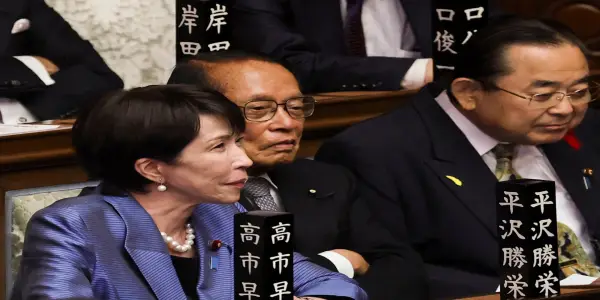
As the first woman to lead Japan, Takaichi faces significant challenges while promoting a conservative political agenda reminiscent of her mentor, Shinzo Abe.
In-depth analysis
Background context
Sanae Takaichi's election as Japan's first female prime minister marks a historic moment in the nation's political landscape, where women have long been underrepresented in leadership roles. Her journey began in the 2000s with the Liberal Democratic Party, and she has held various cabinet positions, influenced notably by former Prime Minister Shinzo Abe.
Key political implications
Takaichi's leadership signals a consolidation of conservative policies in Japan, emphasizing national security and traditional values. Her administration will likely continue the LDP's longstanding dominance in Japanese politics.
Who gains / who loses
Takaichi's rise may benefit conservative factions within the LDP and those advocating for a stronger military stance. However, progressive groups and advocates for social reform, including LGBTQ rights, could find themselves marginalized under her leadership.
Possible future scenarios
Takaichi's administration could face pressures to adapt her policies in response to economic challenges and public opinion. Alternatively, her firm stance on security may strengthen Japan's alliances but also provoke tensions with neighboring countries.
Did you know?
Why you should know this
Sanae Takaichi's election as Japan's first female prime minister is more than a historical milestone; it represents a shift in societal expectations and the potential for increased female representation in leadership roles. This change could influence policies that impact everyday life, from workplace equality to social welfare programs, sparking conversations about gender norms in a traditionally male-dominated political landscape.
Behind the political curtain
Despite being a prominent figure in Japan's political landscape, Takaichi's rise is noteworthy given that only 10% of Japan's lawmakers are women, one of the lowest rates among developed nations. Her election could serve as a catalyst for change, encouraging more women to pursue political careers.
Ordinary person in an extraordinary situation
Meet Yuki Sato, a 35-year-old teacher in Kyoto, who has long felt disheartened by Japan's gender politics. Growing up in a family that discouraged women from aiming high, Yuki often questioned her own aspirations. With Takaichi’s election, she feels a renewed sense of possibility. 'If she can do it, maybe I can too,' Yuki says, contemplating a future where women can lead, not just follow. This sentiment reflects a broader hope among many Japanese women for a society that values their contributions and perspectives, potentially reshaping the cultural landscape for generations to come.
Expert Commentary

Spain's Attorney General Convicted in...

Political Reactions to BBC Leadership Changes...

Examining Trump's Claims of Resolving Conflicts:...

Russian and Indian Foreign Ministers Convene...

The Legacy of French Colonialism: Language and...

Hungarian Prime Minister Viktor Orban Engages...

The Fate of the Maquis in Star Trek: A Missed...

Bangladesh Seeks India's Assistance in...

Exiled Russian Orthodox Leader Responds to Spying...
Six Finalists Announced for the 2026...

Saudi Crown Prince's Invitation to the White...

The 1969 Sino-Soviet Border Conflict: A Near Miss...

Inquiry Critiques Scottish Government's Covid-19...

Saudi Crown Prince Mohammed bin Salman Set for...

Algeria Grants Pardon to Jailed Novelist Boualem...

Isaac Asimov's Perspective on Star Trek: A Sci-Fi...
South Korea Initiates First Military Talks with...
Sias University Adapts to Modern Educational...

Japan and Finland in Diplomatic Tension Following...

Nevada's Governor's Office Allegedly Intervened...

Tarique Rahman's Homecoming: A Potential Turning...

China's Shift to a Cautious Research Strategy...

German Chancellor Merz to Visit Israel for Key...

NASA Unveils Stunning Images of Interstellar...

Texas Governor Abbott Designates CAIR as a...

Syria's Foreign Minister Visits China to...

The Evolving Landscape of Copyright Enforcement...

EA Raises Concerns Over Sale to Saudi Arabia's...

Democrats Celebrate Recent Wins Amidst Internal...

U.S. Embassies Redefine Human Rights:...

Geopolitical Tensions Surround Palau Amid...

Japan Protests China's Travel Advisory Amid...

Germany Resumes Arms Exports to Israel Amid...

Bhutan's Complex Relationship with India: A...

Challenges Faced by Costumes in 'Mighty Morphin...

Key Insights from Trump's National Security...

Egypt Affirms Commercial Nature of Gas Agreement...

Canada's Carney to Meet Xi in China, Signaling a...

Misjudgments in Military Strategy: The Lessons...

Zohran Mamdani's Vision for Global Municipal...