Japanese Physicists Revive Historical 'Knot' Theory to Address Matter-Antimatter Enigma
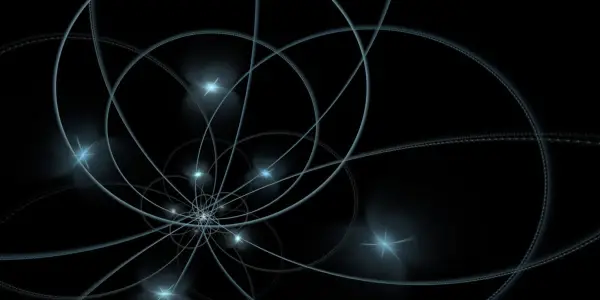
Japanese physicists revive a 150-year-old knot theory, suggesting it may explain the matter-antimatter imbalance in the universe. Discover this groundbreakin...
In-depth analysis
New discoveries
Japanese researchers have revitalized the 150-year-old knot theory, suggesting it may explain the matter-antimatter asymmetry in the universe. By interpreting atomic structures as 'knots' in higher-dimensional space, they propose that cosmic phase transitions created defects that could favor matter over antimatter, offering new insights into this fundamental mystery.
Mission updates
The research team, led by Yu Hamada, has published their findings in Physical Review Letters, marking a significant step in understanding the matter-antimatter imbalance through the lens of knot theory.
Who is affected
This groundbreaking research impacts theoretical physicists and cosmologists working to unravel the mysteries of the universe's composition. It also has implications for the broader scientific community, as it challenges existing theories and encourages new explorations into fundamental physics.
Next steps
Further validation of the knot theory is essential, with researchers aiming to conduct experiments that could detect the predicted strings from collapsing cosmic knots, potentially utilizing gravitational wave observatories like LIGO or LISA.
Did you know?
Why we should care
Understanding matter-antimatter asymmetry is crucial for grasping the universe's origins and structure. This theory could illuminate why our world is predominantly made of matter, impacting everything from particle physics to cosmology. The implications might even trickle down to technology, influencing advancements in quantum computing and energy solutions, which rely on our grasp of fundamental particles.
The universe's unsolved mystery
The matter-antimatter imbalance challenges our fundamental understanding of the universe. As researchers explore concepts like knot theory, they might uncover hidden layers of reality that reshape our view of physics. Each discovery promises to peel back another layer of cosmic mystery, pushing the boundaries of human knowledge and sparking curiosity about our place in the universe.
The person who looks at the stars
Meet Sarah, a high school physics teacher in Tokyo who stargazes with her students every Friday night. The recent revival of knot theory has sparked her passion anew, as she helps her students grapple with the mysteries of the cosmos. For Sarah, these theories aren't just abstract concepts; they represent the possibility of uncovering truths that connect us to the universe. Each explanation she shares inspires her students to dream bigger and question the fabric of reality. As she looks at the stars, she sees not just distant suns, but the potential for her students to become the next generation of physicists, unraveling the universe's secrets.
SpaceX Faces Challenges in Meeting NASA's 2027...
Intense Solar Storms Could Ignite Life on...
Ancient Galaxies: A Chaotic Early Universe...
James Webb Telescope Identifies Rapidly Growing...

Astronomers Identify Three Earth-Sized Exoplanets...

European Space Agency Unveils Stunning Radar...

ISS Crew Takes Precautions Against Radiation...

NASA's Artemis 3 Moon Mission Delayed to 2028 Due...

Daily Roundup: November 10, 2025 – Advancements...
China's Mars Orbiter Captures Image of...

Satellite Imagery Reveals Extensive Damage Across...
Astrophotographer Captures Stunning Image of...
Highlights of 2025 in Space Exploration: From...
SpaceX Set to Launch NASA's Pandora Exoplanet...
NASA's Ambitious Timeline for Human Exploration...
Potential Alien Disclosure May Trigger Bitcoin...
Astronomers Discover Ancient White Dwarf Actively...
Webb Telescope Reveals Unprecedented Cosmic...

Enhance Your Weather Preparedness with Weather...
Euclid Space Telescope Discovers Hidden Stars in...
Italian Producer Plans Historic Film to Shoot in...
X5.1 Solar Flare Triggers G4 Geomagnetic Storm...
Astronomers Identify Potential Earth-Like...
NASA's ESCAPADE Probes Set for Unique Journey to...
Astronomers Converge in Phoenix for AAS 247: A...
Mapping the Invisible: Astronomers Uncover Dark...
Unraveling the Mysteries of Mars: Recent...
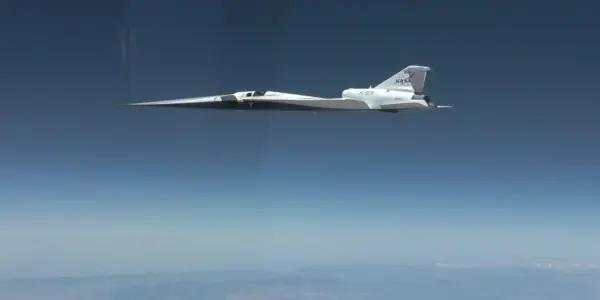
NASA's X-59 Achieves Historic Supersonic Flight

Foundation Season 3 Hints at Deeper Asimov Themes...
New Research Suggests Dark Matter Influences...
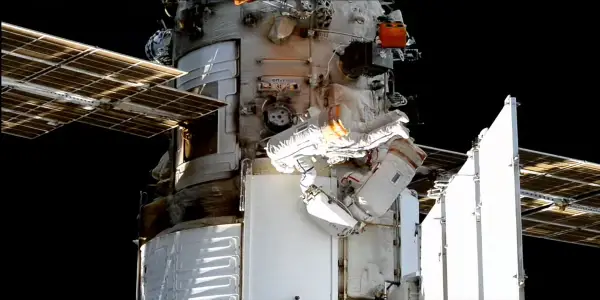
Russian Cosmonauts Conduct Extended Spacewalk to...

Childcare Crisis: Families Struggle as...
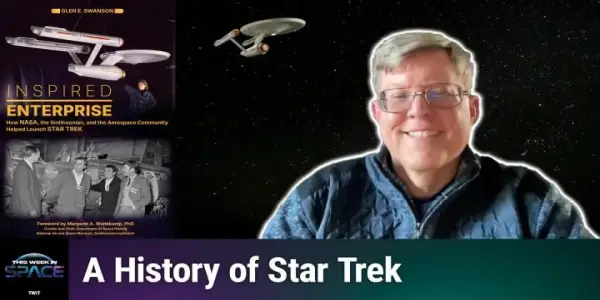
This Week In Space Podcast: Episode 187 Explores...

Samsung Unveils Unprecedented Black Friday Deal...
Andromeda Galaxy's Impact on Its Satellite...
Young Canadian Astronomer Identifies Two...
NASA and European Partners Prepare for...