Moss Survives 9 Months in Space and Thrives After Return to Earth
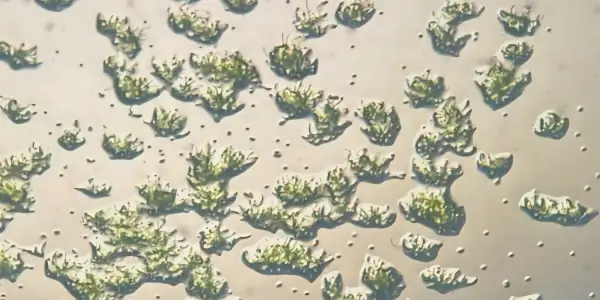
A study shows that moss species Physcomitrium patens survived nine months in space, thriving upon return to Earth. Discover its implications for astrobiology...
In-depth analysis
Natural phenomena
The recent study highlights the remarkable resilience of the moss species Physcomitrium patens, which demonstrated the ability to endure extreme conditions in outer space for nine months. Surviving vacuum, cosmic radiation, and significant temperature changes, this moss showcases the potential for life to thrive in environments previously thought to be inhospitable.
Impact on communities
The findings may inspire communities engaged in space exploration and astrobiology, fostering interest in research that examines the limits of life and its adaptability in extreme environments, such as those found on other celestial bodies.
Scientific updates
This research underscores the potential for moss spores to remain viable after exposure to the harsh conditions of space. Notably, many spores not only survived but also resumed normal growth and photosynthesis upon returning to Earth, offering valuable insights into the resilience of life.
Future outlook
The implications of this study extend to future space missions, particularly those targeting the Moon and Mars. Understanding how organisms like Physcomitrium patens adapt to extreme environments may inform strategies for sustaining life during long-duration space travel.
Did you know?
Why this matters for our planet
The resilience of Physcomitrium patens highlights nature's extraordinary adaptability, offering hope for future space missions. Its ability to survive extreme conditions not only pushes the boundaries of astrobiology but also prompts us to rethink our understanding of life. As humans seek to explore other planets, this moss could play a crucial role in developing sustainable ecosystems for future colonies, directly impacting our quest for survival beyond Earth.
Earth's undiscovered wonder
Mosses, often overlooked, can survive in extreme conditions due to their unique cellular structure. Physcomitrium patens, the focus of the recent study, can endure cosmic radiation and vacuum, showcasing nature’s incredible resilience. This adaptability makes it a prime candidate for research into life-support systems in space.
The voice of Earth
Marcus, 34, from Chicago, has always been fascinated by plants. When he learned about Physcomitrium patens surviving in space, he was captivated. Growing up, he spent weekends exploring local forests, finding solace in the simplicity of moss-covered stones. The idea that a moss could withstand the vacuum of space ignited a spark in him. He now volunteers in urban greening initiatives, hoping to inspire others about the resilience of nature. For Marcus, the moss’s journey symbolizes not just survival but the endless possibilities of life, both on Earth and beyond.
New Research Suggests Water Could Form During...

Google Launches WeatherNext 2: Enhanced AI...
Ancient Crocodile Fossils Unearthed in Australia...
Reassessing Economic Growth: Valuing Natural...
New Glenn Rocket Completes Successful Test...

November's Full Supermoon: A Celestial Event to...
Exploring Sustainable Methods for Rare Earth...
James Webb Space Telescope Reveals First 3D...
First Mosquito Sightings in Iceland Linked to...

Post-Artemis 2: What Insights Will Scientists...
Young Star V1298 Tau Sheds Light on Planet...
Supercomputers Analyze Enceladus's Plume Dynamics
Damage Assessment Underway in Northern Australia...
Exploring the Nature of Intelligence: Insights...

Catherine O’Hara, Iconic Actress from...
Geomagnetic Storm Forces Delay of Blue Origin's...
US Government to Halt SNAP Benefits Amid Ongoing...
Embracing the Light: A Reflection on Our...
Ancient Air Trapped in 6-Million-Year-Old...

Exploring the Depths of Nature: Boyd Varty's...
Understanding Artificial Reefs: A Solution for...

Putin Initiates Strategic Plan for Russia's Rare...

The Earth’s Value: An Exploration of Its...
Ancient Australian Rocks Provide Insights into...
Exocomets Detected Around Distant Stars
Sun Emits Second-Strongest Flare of 2025, Causing...
Interstellar Comet 3I/ATLAS Reaches Perihelion,...
VTN Architects Completes Nuoc Ui School in...
Exploring Sustainable Approaches to Deep-Sea...

The Intersection of AI Development and Natural...
Intense Solar Activity: Sunspot Region Produces...
Understanding the Formation of Tectonic Plates
Time on Mars Outpaces Earth, Unveiling Challenges...
Rammed Earth Homes of 2026 Showcase Sustainable...

Indigenous Activists Challenge COP30's Rainforest...
New Insights from the Butterfly Nebula May...
Perseverance Rover Discovers Unusual Rock Near...

Top Organic Mattresses of 2025: Birch, Avocado,...
Study Reveals Fast Healing of Deep Earthquake...

Exploring Key Questions Raised by ‘Avatar: Fire...