New Map Reveals the Sun's Boundary of Escape
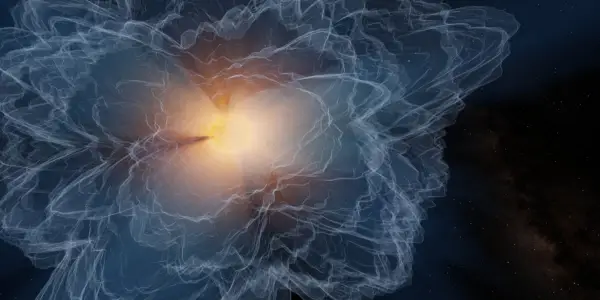
A groundbreaking 2D map of the Sun's outer surface reveals its dynamic boundaries, shedding light on solar winds and magnetic waves, enhancing our understand...
In-depth analysis
Natural phenomena
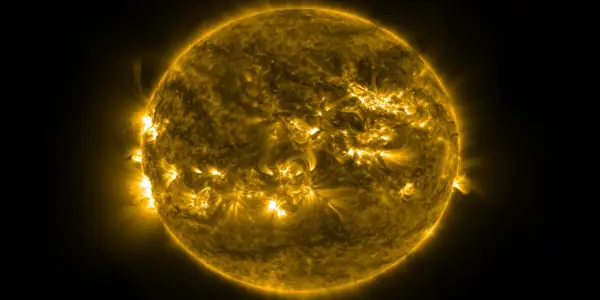
The Sun's outer surface is characterized by complex interactions of solar winds, plasma, and magnetic waves. Researchers have created a groundbreaking continuous 2D map that reveals the turbulent nature of this environment, including the significant Alfvén surface, where solar wind accelerates beyond the speed of magnetic waves, marking a critical boundary for solar material.
Impact on communities
Understanding the dynamics of the Sun's outer surface holds implications for Earth, particularly regarding solar emissions that can affect satellite operations and communication networks, thereby influencing daily life and technology.
Scientific updates
The new map of the Sun's boundary, developed by researchers at the Center for Astrophysics, utilizes data from the Parker Solar Probe and other spacecraft. This advancement allows for more precise studies of solar activity and its effects, including insights into the high temperatures of the solar corona.
Future outlook
The innovative mapping technique is expected to enhance our understanding of not only the Sun but also other stars, potentially revealing how their atmospheric dynamics can impact orbiting planets in various solar systems.
Did you know?
Why this matters for our planet
Understanding the Sun's dynamics is crucial for protecting our technology and environment. Solar storms can disrupt satellite communications, power grids, and even GPS systems we rely on daily. By mapping the solar boundary, scientists can better predict these events, ultimately safeguarding everything from our smartphones to climate monitoring systems, making our lives more resilient to cosmic influences.
Earth's undiscovered wonder
Did you know that the Sun's outer atmosphere, or corona, is millions of degrees hotter than its surface? This paradox has puzzled scientists for decades, as one would expect the surface to be the hottest part of a star. Understanding this phenomenon is key to unlocking the mysteries of solar activity and its effects on Earth.
The voice of Earth
Marcus, 34, from Chicago, has always been fascinated by the night sky. As a child, he spent hours stargazing with his grandfather, who would share stories about the Sun and its mysteries. Recently, Marcus learned about the new solar boundary map and felt a deep connection to the research. He realized that the very stars he admired could influence weather patterns and technology he uses every day. This knowledge reignited his passion for astronomy and inspired him to volunteer at a local planetarium, eager to share the wonders of our universe with others.

Google Launches WeatherNext 2: Enhanced AI...
Young Star V1298 Tau Sheds Light on Planet...

Exploring the Nature of Intelligence: Insights...
Understanding the Formation of Tectonic Plates

Tennessee's Nature-Based Solutions for Health and...
New Research Sheds Light on Jet Streams of Gas...

Google Enhances Weather Forecasting with...
New Research Suggests Water Could Form During...
Blue Origin's New Glenn Rocket Set to Launch...
Moss Survives 9 Months in Space and Thrives After...
Insights into Lithospheric Dynamics from Turkana...

US Greenhouse Gas Emissions Increase Amid Cold...

UK Churches Embrace Heat Pumps for Sustainable...
HEO Robotics Expands Satellite Imaging...

Understanding Artificial Reefs: A Solution for...
Jupiter's Rapid Spin Influences Water...

Rising Frustration in Aceh as Flood Relief...

Indigenous Activists Challenge COP30's Rainforest...

Johnny Keefer's Ascent Raises Questions About...
Embracing the Light: A Reflection on Our...

Reassessing the Impact of Farmed Seafood on Ocean...

Innovative Gel Shows Promise in Regenerating...

Innovative Use of Underwater Speakers Aims to...
Perseverance Rover Discovers Unusual Rock Near...
Damage Assessment Underway in Northern Australia...
Exploring Sustainable Methods for Rare Earth...
Study Reveals Fast Healing of Deep Earthquake...
Exploring Sustainable Approaches to Deep-Sea...
The Late Ordovician Mass Extinction: A Pivotal...
SpaceX to Launch Over 100 Satellites Today on...

Protests Erupt at COP30 Climate Summit in Belém
Intense Solar Activity: Sunspot Region Produces...
Significant Solar Activity Forecasted to Cause...

Post-Artemis 2: What Insights Will Scientists...
China's Astronauts Return Safely, but Another...
Upcoming Venus Missions Set to Explore Earth's...

New Technique Unveils Natural Clock in Dinosaur...
Significant Geomagnetic Storm Unleashes Auroras...

Rammed Earth Homes of 2026 Showcase Sustainable...

Innovative Technique Utilizes Dragonberry Weed to...