Understanding Artificial Reefs: A Solution for Coral Conservation
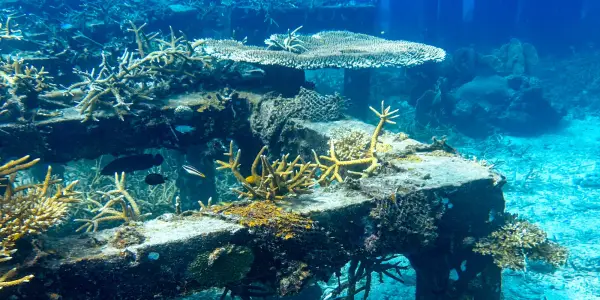
Explore how artificial reefs can aid coral conservation as climate change and pollution threaten these vital ecosystems, affecting marine life and economies ...
In-depth analysis
Natural phenomena
Coral reefs, essential to marine biodiversity, are facing unprecedented threats due to pollution and climate change. Recent data reveals that nearly 90% of reefs worldwide are experiencing bleaching, marking the most extensive event ever recorded. This alarming trend indicates that these vital ecosystems are at a critical environmental tipping point, necessitating immediate action for their survival.
Impact on communities
The degradation of coral reefs poses significant risks to local communities that depend on them for their livelihoods. With an estimated economic contribution of $375 billion annually, the loss of these ecosystems could lead to dire consequences for fisheries and coastal protection.
Scientific updates
Innovative strategies like artificial reefs are being explored to combat coral loss. These structures, which include sunken ships and specially designed concrete blocks, aim to provide stable environments for coral larvae, thereby enhancing natural populations. The Environmental Protection Agency endorses this approach as a viable solution for reef restoration.
Future outlook
As scientists develop new methods for coral conservation, the integration of artificial reefs into restoration efforts shows promise. This proactive approach not only addresses the current crisis but also aims to bolster the resilience of marine ecosystems for generations to come.
Did you know?
Why this matters for our planet
Coral reefs are not just picturesque underwater landscapes; they are crucial for maintaining marine biodiversity and supporting the livelihoods of millions. With 25% of marine species relying on these ecosystems, their decline threatens food security for coastal communities globally. Beyond ecological impacts, the economic ramifications could reach $375 billion annually, affecting fisheries and tourism, underscoring the urgency for immediate action to safeguard these irreplaceable resources.
Earth's undiscovered wonder
Interestingly, coral reefs produce compounds that are being studied for potential medical applications, including cancer treatments. Scientists have identified that some coral species contain unique chemical compounds that could lead to breakthroughs in pharmaceuticals, highlighting the untapped potential of these vibrant ecosystems beyond their ecological roles.
The voice of Earth
Marcus, 34, from Chicago, recalls his childhood summers spent snorkeling in the Florida Keys, where he marveled at the vibrant coral reefs. After learning about the severe bleaching affecting these ecosystems, he felt a profound sense of loss. Marcus now volunteers with local conservation groups, advocating for coral preservation. He reflects, 'Each reef I visited as a child feels like a piece of my childhood is disappearing. I want future generations to experience that same wonder and connection to nature.'
Young Star V1298 Tau Sheds Light on Planet...
New Research Suggests Water Could Form During...

WhatsApp Security Vulnerability Exposes 3.5...
Ancient Air Trapped in 6-Million-Year-Old...

Exploring the Depths of Nature: Boyd Varty's...
Asteroid Impact in Finland Reveals Ancient...
Intaaya Retreat in Indonesia Features Innovative...

Newly Discovered Snake Species Named After Steve...
Blue Origin's New Glenn Rocket Successfully Lands...
First Mosquito Sightings in Iceland Linked to...
The Late Ordovician Mass Extinction: A Pivotal...
Ancient Crocodile Fossils Unearthed in Australia...

Tennessee's Nature-Based Solutions for Health and...
Aging Stars Pose Threat to Nearby Planets, New...
The Challenges of Sending a Supervillain into the...
Ancient Australian Rocks Provide Insights into...

Exploring Iterative Creativity: Pelicans on...
New Technique Unveils Natural Clock in Dinosaur...

Apple Offers Support Following Fire in Hong Kong

The Impact of the Three Gorges Dam on Earth's...
Ancient Lakes on Mars: New Research Unveils Ice...
Moss Survives 9 Months in Space and Thrives After...
Jupiter's Rapid Spin Influences Water...
Innovative Architectural Designs Inspired by...
Perseverance Rover Discovers Unusual Rock Near...

FX Confirms Season 2 Renewal for 'Alien: Earth'

Catherine O’Hara, Iconic Actress from...

Post-Artemis 2: What Insights Will Scientists...

Rammed Earth Homes of 2026 Showcase Sustainable...

UK Churches Embrace Heat Pumps for Sustainable...
Significant Geomagnetic Storm Unleashes Auroras...

Interstellar Comet 3I/ATLAS Reaches Perihelion,...

Artemis II Sparks Renewed Interest in Lunar...
Pacific Northwest's Subduction Zone Revealed to...
Notable Aquatic Highlights from the 2025 Nature's...
New Insights from the Butterfly Nebula May...
Upcoming Venus Missions Set to Explore Earth's...

Google Launches WeatherNext 2: Enhanced AI...
Study Reveals Fast Healing of Deep Earthquake...

Putin Initiates Strategic Plan for Russia's Rare...