New Discoveries of Dark Comets Could Illuminate Interstellar Mysteries
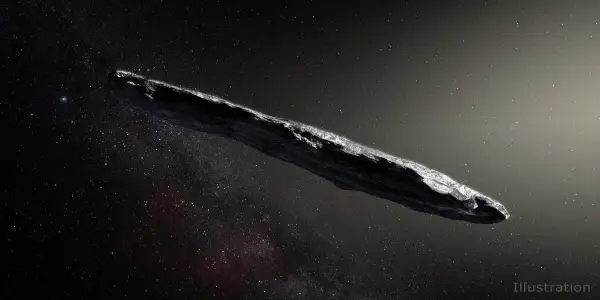
Recent findings on dark comets may clarify the behavior of 'Oumuamua and enhance our understanding of Earth's habitability.
In-depth analysis
Natural phenomena
Recent observations have identified a new class of celestial objects known as dark comets, which exhibit behaviors reminiscent of 'Oumuamua, the first interstellar object recorded in our solar system. These comets do not display the typical jets of gas and dust associated with standard comets, leading to intriguing questions about their composition and the processes governing their movement.
Impact on communities
The research surrounding dark comets holds potential implications for communities engaged in scientific research and education. By enhancing our understanding of these celestial bodies, local institutions may foster greater public interest in astronomy and space exploration.
Scientific updates
A recent study published in Nature Astronomy has provided the first confirmed telescopic observation of a dark comet exhibiting a tail, a significant milestone in cometary research. This finding reinforces the natural origins of 'Oumuamua and expands the classification of cometary bodies within our solar system, offering new insights into their characteristics.
Future outlook
The upcoming Near-Earth Object Surveyor mission and the capabilities of the James Webb Space Telescope promise to enhance our exploration of dark comets and interstellar objects. These advancements are expected to deepen our understanding of the cosmos and the origins of life on Earth.
Did you know?
Why this matters for our planet
Understanding dark comets is crucial for grasping Earth's history and its habitability. These celestial bodies may have delivered vital water and organic materials to our planet, shaping the conditions necessary for life. This research not only informs us about our cosmic origins but also enhances our ability to detect and respond to future interstellar objects that could impact Earth's environment.
Earth's undiscovered wonder
Did you know that dark comets can be nearly invisible to traditional telescopes? Their low reflectivity, caused by their dark, carbon-rich surfaces, makes them challenging to detect. This unique characteristic allows them to evade our observation, hiding in the vastness of space despite potentially carrying important clues about the formation of our solar system.
The voice of Earth
Marcus, 34, from Chicago, always looked up at the night sky with wonder. As a child, his grandmother would tell him stories of stars and comets, igniting his passion for astronomy. When he learned about 'Oumuamua and the recent discoveries of dark comets, he felt a deep connection to the universe. It reminded him of his grandmother's tales, bridging the gap between childhood dreams and scientific reality. Marcus often reflects on how these celestial bodies might have contributed to the water in Lake Michigan, where he spent countless summer days. The thought that these ancient travelers could hold secrets to Earth's origins fills him with awe and gratitude, rekindling his commitment to protect our planet.
Expert Commentary
New Technique Unveils Natural Clock in Dinosaur...

Innovative Architectural Designs Inspired by...
Artemis II Sparks Renewed Interest in Lunar...

Exploring Sustainable Approaches to Deep-Sea...

New Study Reveals Microbes Colonizing Freshly...
New Insights from the Butterfly Nebula May...
Time on Mars Outpaces Earth, Unveiling Challenges...

Catherine O’Hara, Iconic Actress from...

Blue Origin's New Glenn Rocket Set to Launch...
Interstellar Comet 3I/ATLAS Reaches Perihelion,...


Putin Initiates Strategic Plan for Russia's Rare...
Sun Emits Second-Strongest Flare of 2025, Causing...
Breakthrough in Microscopy Sheds Light on Ocean's...

Ancient Crocodile Fossils Unearthed in Australia...
Abrams Studios Announces New Sci-Fi Exploration...
Embracing the Light: A Reflection on Our...

Notable Aquatic Highlights from the 2025 Nature's...

SpaceX to Launch Over 100 Satellites Today on...
Perseverance Rover Discovers Unusual Rock Near...

Top Organic Mattresses of 2025: Birch, Avocado,...
Upcoming Venus Missions Set to Explore Earth's...
NASA's Mars Sample Return Mission Faces...
Supercomputers Analyze Enceladus's Plume Dynamics

FX Confirms Season 2 Renewal for 'Alien: Earth'
Young Star V1298 Tau Sheds Light on Planet...

Exploring Iterative Creativity: Pelicans on...

The Earth’s Value: An Exploration of Its...

Tennessee's Nature-Based Solutions for Health and...

Reassessing the Impact of Farmed Seafood on Ocean...

US Greenhouse Gas Emissions Increase Amid Cold...

Exploring Sustainable Methods for Rare Earth...
Ancient Lakes on Mars: New Research Unveils Ice...

Johnny Keefer's Ascent Raises Questions About...

New Glenn Rocket Completes Successful Test...

Natural History Museums: Essential Partners in...

First Mosquito Sightings in Iceland Linked to...

Newly Discovered Snake Species Named After Steve...

UK Churches Embrace Heat Pumps for Sustainable...

VTN Architects Completes Nuoc Ui School in...