Time on Mars Outpaces Earth, Unveiling Challenges for Future Space Navigation
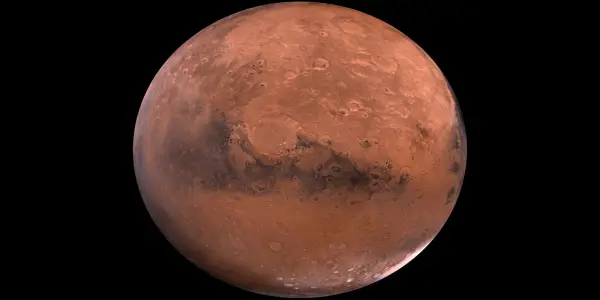
Recent findings reveal that time on Mars passes slightly faster than on Earth, raising important considerations for future interplanetary navigation and communication systems.
In-depth analysis
Natural phenomena
Recent findings reveal that time on Mars runs approximately a millionth of a second faster each day compared to Earth. This discrepancy arises from the principles of general relativity, where gravitational forces and velocity influence the passage of time. The unique orbital characteristics of Mars, including its distance from the Sun, contribute to these variations.
Impact on communities
The implications of these time differences extend to future Martian colonies and communication networks, as precise timing is crucial for navigation and data transmission. Communities planning interplanetary missions must consider these factors to ensure operational efficiency.
Scientific updates
Researchers from the National Institute of Standards and Technology have quantified the time variance between Mars and Earth by examining the Red Planet's orbit and the gravitational influences of both Earth and the Moon. Their study emphasizes the complexities involved in celestial navigation and timekeeping.
Future outlook
As exploration of Mars intensifies, understanding these time discrepancies will be vital for developing advanced navigation systems. This knowledge will not only aid in mission planning but also pave the way for potential human settlement on Mars.
Did you know?
Why this matters for our planet
Understanding time differences between Mars and Earth isn't just a scientific curiosity; it has real-world implications for future space exploration and communication. As we contemplate sending humans to Mars, accurate navigation will be vital. This knowledge could affect everything from the timing of communications to the synchronization of data systems, impacting how we manage interplanetary missions and possibly shape our experience of life beyond Earth.
Earth's undiscovered wonder
Mars' unique orbital dynamics result in a time difference that varies subtly based on its position relative to Earth and the Sun. This means that, during certain periods, a day on Mars is approximately 1.000001 seconds longer than a day on Earth, showcasing the intricate dance of celestial bodies and the complex nature of our universe.
The voice of Earth
Marcus, 34, from Chicago, has always been fascinated by space. As a child, he gazed at the stars, dreaming of exploring distant planets. Now, as a researcher in astrobiology, he feels a personal connection to the implications of time on Mars. Every time he discusses navigation strategies for potential Mars missions, he recalls the nights spent with his telescope. Marcus envisions a future where humanity thrives on another planet, and he realizes that the precision of timekeeping might be the key to making his childhood dreams a reality.

Innovative Use of Underwater Speakers Aims to...
Interstellar Comet 3I/ATLAS Reaches Perihelion,...
Jupiter's Rapid Spin Influences Water...

FX Confirms Season 2 Renewal for 'Alien: Earth'

The Allure of Venezuela's Oil Reserves: Analyzing...

Brazil's Lula Urges Global Action Against Climate...

Newly Discovered Snake Species Named After Steve...

Reassessing Economic Growth: Valuing Natural...
American Museum of Natural History Launches...

Rammed Earth Homes of 2026 Showcase Sustainable...
Blue Origin's New Glenn Rocket Successfully Lands...

Natural History Museums: Essential Partners in...
Blue Origin's New Glenn Rocket Set to Launch...

New Technique Unveils Natural Clock in Dinosaur...

Intaaya Retreat in Indonesia Features Innovative...

Exploring Sustainable Approaches to Deep-Sea...
Apple Offers Support Following Fire in Hong Kong
New Research Sheds Light on Jet Streams of Gas...

Exploring Sustainable Methods for Rare Earth...

Indigenous Activists Challenge COP30's Rainforest...

Ancient Crocodile Fossils Unearthed in Australia...
Supercomputers Analyze Enceladus's Plume Dynamics

November's Full Supermoon: A Celestial Event to...
Time on Mars Outpaces Earth, Unveiling Challenges...
Sun Emits Second-Strongest Flare of 2025, Causing...
Significant Solar Activity Forecasted to Cause...

Exploring the Depths of Nature: Boyd Varty's...

The Intersection of AI Development and Natural...
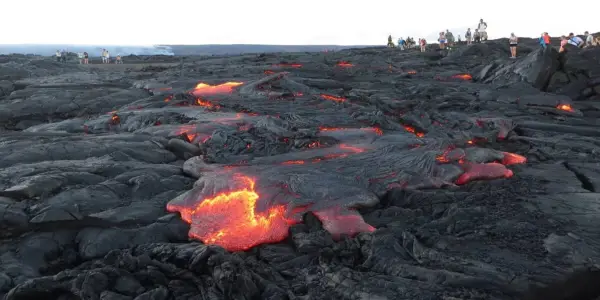
New Study Reveals Microbes Colonizing Freshly...

The Impact of the Three Gorges Dam on Earth's...
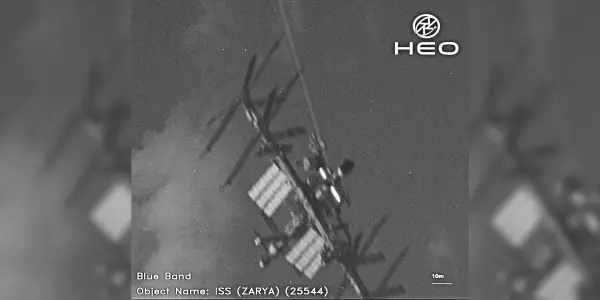
HEO Robotics Expands Satellite Imaging...

Rising Frustration in Aceh as Flood Relief...
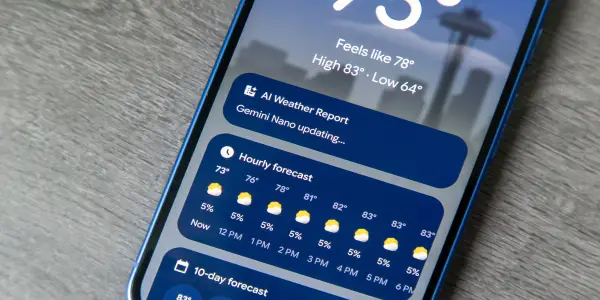
Google Launches WeatherNext 2: Enhanced AI...
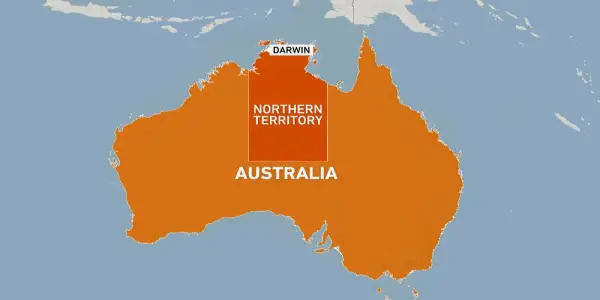
Damage Assessment Underway in Northern Australia...

Steven Spielberg Steps Back from Sci-Fi Series...

Johnny Keefer's Ascent Raises Questions About...


UK Churches Embrace Heat Pumps for Sustainable...

Google Enhances Weather Forecasting with...