New Report Advocates for Life Search in First Human Mars Missions
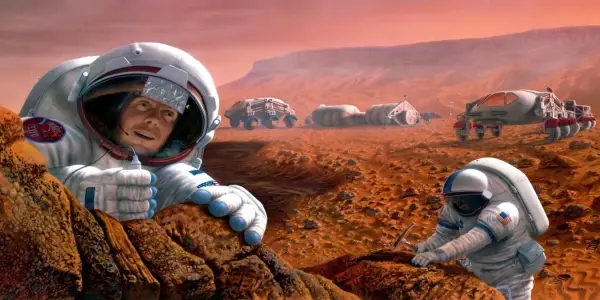
A report from the U.S. National Academies emphasizes that future human missions to Mars should prioritize the search for signs of life, both past and present.
In-depth analysis
Natural phenomena
The recent report emphasizes the importance of exploring Martian environments to search for signs of life. It outlines various mission campaigns targeting specific areas, such as transiently habitable zones and subsurface layers, where evidence of prebiotic chemistry may be discovered. These strategies aim to enhance our understanding of Mars' geological and environmental history.
Impact on communities
The report highlights the potential for increased public engagement in space exploration through the narrative of searching for life on Mars. This endeavor could inspire educational initiatives and foster a greater interest in science and technology among communities worldwide.
Scientific updates
NASA's strategic framework suggests prioritizing the detection of biological evidence during crewed missions to Mars. The report outlines a variety of methodologies, including drilling operations to explore subsurface Martian layers, which could yield significant insights into the planet's capacity to support life.
Future outlook
As NASA prepares for its crewed missions, the report sets a clear direction for future exploration efforts. The emphasis on life detection not only shapes mission objectives but also positions Mars as a focal point in humanity's broader quest to understand life beyond Earth.
Did you know?
Why this matters for our planet
The quest for life on Mars could redefine our understanding of biology and the evolution of life itself. Discovering microbial life on another planet might not only validate the potential for life beyond Earth but also influence how we approach environmental challenges here. Insights gained from Mars could lead to innovative solutions for sustainability and climate resilience back home.
Earth's undiscovered wonder
Mars has seasons just like Earth, but they last about twice as long. One Martian year equals 687 Earth days, allowing for unique weather patterns and geological changes that could offer new insights into planetary evolution and climate dynamics.
The voice of Earth
Marcus, 34, from Chicago, has always been fascinated by the stars. As a child, he would spend nights peering through his father's old telescope, dreaming of exploring other worlds. Now, as an adult, he volunteers at a local science center, where he shares his passion with children. The thought of finding life on Mars ignites a spark in him; it represents hope and possibility. For Marcus, every discovery is a reminder that we are not alone in the universe and that our actions here on Earth might echo throughout the cosmos.
Mars Express Reveals Evidence of Ancient Ice Age...
Perseverance Rover Discovers Unusual Rock Near...
Microsoft Integrates NASA's Satellite Data into...


Reassessing Economic Growth: Valuing Natural...
Ancient Air Trapped in 6-Million-Year-Old...
Embracing the Light: A Reflection on Our...
Blue Origin's New Glenn Rocket Set to Launch...
Supercomputers Analyze Enceladus's Plume Dynamics

Rising Frustration in Aceh as Flood Relief...
Abrams Studios Announces New Sci-Fi Exploration...

Comet Lemmon Illuminates the Skies Over England
Ancient Australian Rocks Provide Insights into...
Explosive Discoveries: CO₂ Ice Blocks May Be the...

UK Churches Embrace Heat Pumps for Sustainable...
Exocomets Detected Around Distant Stars

Exploring the Conclusion of 'Predator: Badlands'
Sun Emits Second-Strongest Flare of 2025, Causing...

New Insights from the Butterfly Nebula May...
Study Reveals Fast Healing of Deep Earthquake...
October 2025 New Moon Offers Rare Antares...

Tennessee's Nature-Based Solutions for Health and...
Interstellar Comet 3I/ATLAS Reaches Perihelion,...
Blue Origin's New Glenn Rocket Successfully Lands...
Ancient Crocodile Fossils Unearthed in Australia...

Portable Libraries: A Lifeline When Internet...

Indigenous Activists Challenge COP30's Rainforest...

Exploring Sustainable Methods for Rare Earth...

Reassessing the Impact of Farmed Seafood on Ocean...

WhatsApp Security Vulnerability Exposes 3.5...
The Late Ordovician Mass Extinction: A Pivotal...
Upcoming Venus Missions Set to Explore Earth's...
Sun Unleashes Spectacular Solar Flare Amid...

November's Full Supermoon: A Celestial Event to...
Aging Stars Pose Threat to Nearby Planets, New...

Innovative Use of Underwater Speakers Aims to...

VTN Architects Completes Nuoc Ui School in...
China's Astronauts Return Safely, but Another...
Exploring Sustainable Approaches to Deep-Sea...

Newly Discovered Snake Species Named After Steve...