Tennessee's Nature-Based Solutions for Health and Economic Resilience
Tennessee's innovative nature-based solutions are enhancing public health and economic resilience through no-till farming, forest restoration, and grassland ...
In-depth analysis
Natural phenomena
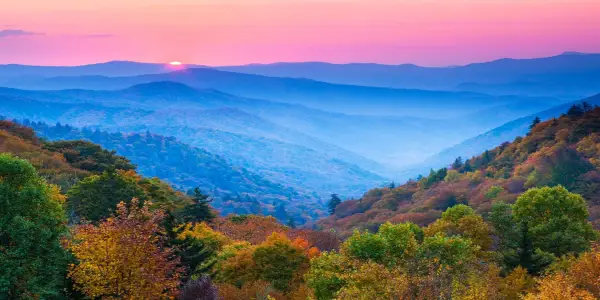
Tennessee's diverse ecosystems, including forests and grasslands, are central to its environmental strategy. Efforts like no-till farming and forest restoration not only mitigate soil erosion but also enhance carbon sequestration, contributing to climate resilience. The state's commitment to managing over 100,000 acres of forest underscores the importance of preserving these natural resources for ecological balance.
Impact on communities
Local communities are experiencing tangible benefits from Tennessee's investment in nature-based solutions. Enhanced public health outcomes and economic resilience are evident as sustainable practices gain traction among landowners and farmers, fostering a healthier environment for all.
Scientific updates
Recent studies emphasize the critical role of grasslands in carbon storage and biodiversity support. Research conducted by institutions like the University of Tennessee highlights innovative practices such as cover cropping, which improves soil health and contributes to broader conservation efforts across the state.
Future outlook
Tennessee's ongoing commitment to nature-based solutions suggests a promising future for both environmental health and economic stability. Continued collaboration among farmers, businesses, and researchers will be vital in sustaining these initiatives and addressing challenges related to climate change.
Did you know?
Why this matters for our planet
Investing in nature in Tennessee goes beyond environmental benefits; it directly impacts public health and economic stability. Initiatives like no-till farming reduce soil erosion, enhancing food security while ensuring cleaner air and water. These practices improve local economies by fostering sustainable agriculture, which can lead to healthier communities and resilience against climate change, affecting daily lives across the state.
Earth's undiscovered wonder
Tennessee's grasslands, often overlooked, are critical carbon sinks. They can store up to 1.5 billion tons of carbon dioxide, playing a pivotal role in combating climate change. This lesser-known fact highlights the importance of preserving these ecosystems, which not only support diverse wildlife but also contribute significantly to our planet's overall health.
The voice of Earth
Marcus, 34, from Chicago, recalls childhood summers spent in Tennessee with his grandparents. Those visits ignited his passion for nature. Now, as an environmental advocate, he works tirelessly to promote sustainable farming practices. Recently, he returned to Tennessee to witness the no-till farming initiatives in action. Watching farmers care for the land he once roamed filled him with hope. He believes that these practices not only heal the earth but also honor the legacy of his family’s connection to the land.

Rammed Earth Homes of 2026 Showcase Sustainable...
Exploring Sustainable Approaches to Deep-Sea...

Blue Origin's New Glenn Rocket Successfully Lands...
Insights into Lithospheric Dynamics from Turkana...

Exploring the Depths of Nature: Boyd Varty's...

Upcoming Venus Missions Set to Explore Earth's...

Johnny Keefer's Ascent Raises Questions About...

Rising Frustration in Aceh as Flood Relief...

Top Organic Mattresses of 2025: Birch, Avocado,...

Supercomputers Analyze Enceladus's Plume Dynamics

Steven Spielberg Steps Back from Sci-Fi Series...

Google Enhances Weather Forecasting with...
Mars Express Reveals Evidence of Ancient Ice Age...

Innovative Architectural Designs Inspired by...

Geomagnetic Storm Forces Delay of Blue Origin's...
The Allure of Venezuela's Oil Reserves: Analyzing...
Jupiter's Rapid Spin Influences Water...

Blue Origin's New Glenn Rocket Set to Launch...

James Webb Space Telescope Reveals First 3D...

Coyote vs. Acme Blends Looney Tunes with...
New Ice Age Episodes of Prehistoric Planet Now...
Understanding Artificial Reefs: A Solution for...

US Government to Halt SNAP Benefits Amid Ongoing...

Interstellar Comet 3I/ATLAS Reaches Perihelion,...
Reassessing Economic Growth: Valuing Natural...

Young Star V1298 Tau Sheds Light on Planet...

Embracing the Light: A Reflection on Our...

Exploring Key Questions Raised by ‘Avatar: Fire...

Aging Stars Pose Threat to Nearby Planets, New...
The Late Ordovician Mass Extinction: A Pivotal...

Apple Offers Support Following Fire in Hong Kong

Natural History Museums: Essential Partners in...
Intaaya Retreat in Indonesia Features Innovative...
Tennessee's Nature-Based Solutions for Health and...
Breakthrough in Microscopy Sheds Light on Ocean's...

Catherine O’Hara, Iconic Actress from...

SpaceX to Launch Over 100 Satellites Today on...

Exocomets Detected Around Distant Stars

Exploring the Conclusion of 'Predator: Badlands'
Innovative Use of Underwater Speakers Aims to...