Aging Stars Pose Threat to Nearby Planets, New Study Reveals
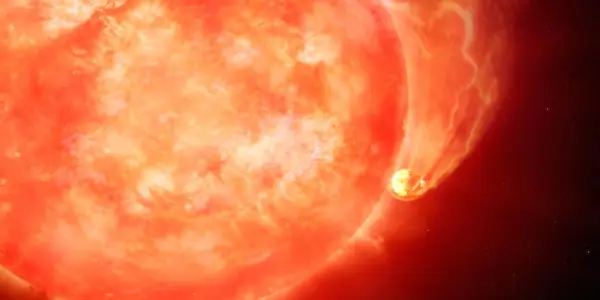
Recent research indicates that as stars evolve, their expansion can jeopardize the planets in close proximity, particularly those with short orbital periods.
In-depth analysis
Natural phenomena
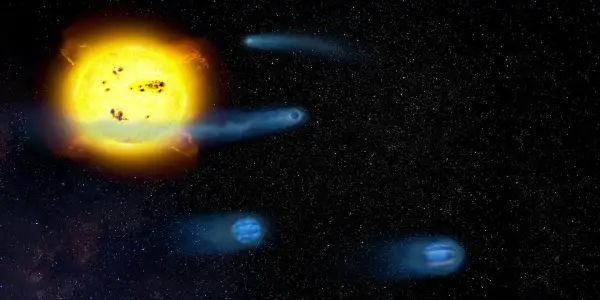
A new study reveals the complex relationship between aging stars and their nearby planets. As stars transition through their life cycles, they cool and expand, leading to potentially catastrophic outcomes for closely orbiting planets. This research emphasizes the vulnerability of planets with short orbital periods, particularly as their host stars evolve into red giants.
Impact on communities
The findings of this study raise significant concerns for future planetary systems, including our own. The potential destruction of planets as their stars age could have profound implications for the habitability of worlds in close proximity to evolving stars.
Scientific updates
The research, based on data from over 300 post-main sequence stars, identifies a notable decline in the prevalence of planets around older stars. With a detection rate of about 30% for younger stars, this figure drops to approximately 5% for those in the red giant phase, underscoring the destructive effects of stellar evolution.
Future outlook
Looking ahead, upcoming missions like PLATO, scheduled for launch in late 2026, are expected to provide deeper insights into the dynamics of planetary systems around aging stars. This will enhance understanding of the long-term viability of planets as their host stars continue to evolve.
Did you know?
Why this matters for our planet
Understanding the fate of planets around aging stars is crucial for grasping our own solar system's future. As the Sun evolves, Earth's long-term habitability could be jeopardized. If gas giants nearby face destruction, it raises questions about the stability of our planetary neighborhood. This research provides insight into cosmic cycles that could ultimately reshape life on Earth, emphasizing the interconnectedness of our existence with the universe.
Earth's undiscovered wonder
Did you know that the closest known star system to Earth, Alpha Centauri, hosts a planet that orbits its star every 3.24 days? This exoplanet, Proxima Centauri b, exists in a unique position that could potentially support life, but as its star ages, the conditions could change drastically, highlighting the delicate balance of cosmic environments.
The voice of Earth
Marcus, 34, from Chicago, has always been captivated by the night sky. As a child, he spent countless evenings stargazing with his grandmother, who instilled in him a sense of wonder about the universe. Recently, he learned about the dynamics of aging stars and their potential to consume planets. This news struck a chord, reminding him of his childhood dreams of exploration. Now, he worries not just about distant worlds, but about the future of Earth. Marcus often reflects on how transient life can be, both on our planet and beyond, urging him to advocate for environmental protection. He believes that understanding our cosmic fate can inspire action to preserve the beauty of Earth before it’s too late.

HEO Robotics Expands Satellite Imaging...
Perseverance Rover Discovers Unusual Rock Near...

Reassessing Economic Growth: Valuing Natural...
New Research Sheds Light on Jet Streams of Gas...
Mars Express Reveals Evidence of Ancient Ice Age...

Embracing the Light: A Reflection on Our...

WhatsApp Security Vulnerability Exposes 3.5...

Exploring the Depths of Nature: Boyd Varty's...

Reassessing the Impact of Farmed Seafood on Ocean...

Johnny Keefer's Ascent Raises Questions About...
Insights into Lithospheric Dynamics from Turkana...
Damage Assessment Underway in Northern Australia...

Innovative Architectural Designs Inspired by...

Tennessee's Nature-Based Solutions for Health and...

Exploring Sustainable Methods for Rare Earth...

UK Churches Embrace Heat Pumps for Sustainable...

Exploring the Conclusion of 'Predator: Badlands'
Sun Emits Second-Strongest Flare of 2025, Causing...
Sun Unleashes Spectacular Solar Flare Amid...
Study Reveals Fast Healing of Deep Earthquake...

Indigenous Activists Challenge COP30's Rainforest...

Protests Erupt at COP30 Climate Summit in Belém
Ancient Australian Rocks Provide Insights into...
Young Star V1298 Tau Sheds Light on Planet...

The Intersection of AI Development and Natural...

American Museum of Natural History Launches...
Breakthrough in Microscopy Sheds Light on Ocean's...
Upcoming Venus Missions Set to Explore Earth's...
James Webb Space Telescope Reveals First 3D...

Geomagnetic Storm Forces Delay of Blue Origin's...

The Impact of the Three Gorges Dam on Earth's...

November's Full Supermoon: A Celestial Event to...

Innovative Precast Rammed Earth Tennis Court...

US Government to Halt SNAP Benefits Amid Ongoing...

Innovative Use of Underwater Speakers Aims to...

Post-Artemis 2: What Insights Will Scientists...
Ancient Lakes on Mars: New Research Unveils Ice...

US Greenhouse Gas Emissions Increase Amid Cold...