Innovative DNA Techniques Aid Conservation of Gilbert's Potoroo, Australia's Rarest Marsupial
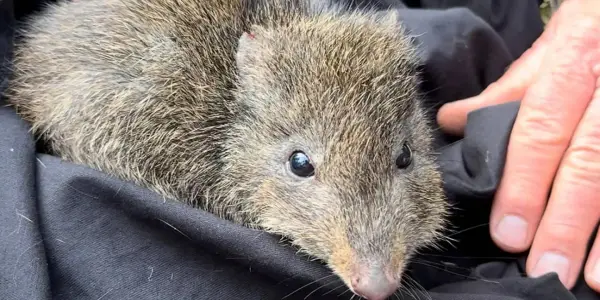
Researchers are employing advanced DNA analysis from feces to protect the critically endangered Gilbert's potoroo, with fewer than 150 remaining in the wild.
In-depth analysis
Natural phenomena
The Gilbert's potoroo, a marsupial endemic to Western Australia, exemplifies the delicate balance of its ecosystem. With a population dwindling to under 150 individuals, this species highlights the fragility of biodiversity. Recent advancements in environmental DNA (eDNA) techniques have revealed critical insights into the potoroo's dietary habits, essential for its conservation amid challenges like habitat loss and predation.
Impact on communities
The plight of the Gilbert's potoroo resonates with local communities, emphasizing the importance of conservation efforts. As residents witness the decline of this unique species, there is a growing collective responsibility to support initiatives that promote ecological balance and biodiversity preservation.
Scientific updates
Researchers at Edith Cowan University are utilizing eDNA metabarcoding to analyze the dietary habits of the Gilbert's potoroo, offering a non-invasive alternative to traditional methods. This innovative approach not only enhances the accuracy of dietary assessments but also aids in identifying suitable translocation sites by examining dietary overlaps with other species.
Future outlook
The future of the Gilbert's potoroo hinges on successful translocation efforts and habitat restoration. With ongoing research into its dietary needs, conservationists are optimistic that informed strategies will bolster the species' numbers and secure its survival against environmental threats.
Did you know?
Why this matters for our planet
The survival of the Gilbert's potoroo is a vital indicator of ecosystem health in Western Australia. As this critically endangered species depends on specific fungi for food, its decline reveals the fragility of biodiversity and habitat integrity. Protecting such species ensures that the intricate web of life remains intact, directly affecting agriculture, water systems, and overall environmental stability that communities rely on.
Earth's undiscovered wonder
The Gilbert's potoroo, once presumed extinct, has a unique relationship with certain fungi that grow in its habitat. These fungi, part of a complex underground network, are essential not just for the potoroo's diet but also for maintaining soil health and promoting plant growth, highlighting the interconnectedness of species within ecosystems.
The voice of Earth
Marcus, 34, from Chicago, never expected his love for wildlife to lead him to a small marsupial halfway around the world. After volunteering with conservation groups, he learned about the Gilbert's potoroo and its plight. Moved by its story, he organized local fundraisers, educating his community about the species. At a recent event, he held a photo of the potoroo, sharing how its survival reflects our responsibilities to protect endangered species. 'Every little effort counts,' he said, his voice filled with passion. For Marcus, the potoroo is not just an animal; it symbolizes hope and the collective action needed to safeguard our planet's future.
Expert Commentary
Time on Mars Outpaces Earth, Unveiling Challenges...

Breakthrough Discovery Offers Insights into the...
New Technique Unveils Natural Clock in Dinosaur...

Indigenous Activists Challenge COP30's Rainforest...

The Intersection of AI Development and Natural...

The Impact of the Three Gorges Dam on Earth's...
Understanding the Formation of Tectonic Plates

Blue Origin's New Glenn Rocket Set to Launch...
Breakthrough in Microscopy Sheds Light on Ocean's...

Jupiter's Rapid Spin Influences Water...
Abrams Studios Announces New Sci-Fi Exploration...
Study Reveals Fast Healing of Deep Earthquake...

Exocomets Detected Around Distant Stars

Top Organic Mattresses of 2025: Birch, Avocado,...

The Challenges of Sending a Supervillain into the...

Google Launches WeatherNext 2: Enhanced AI...

Significant Geomagnetic Storm Unleashes Auroras...

Innovative Precast Rammed Earth Tennis Court...

Innovative Architectural Designs Inspired by...

Catherine O’Hara, Iconic Actress from...

Putin Initiates Strategic Plan for Russia's Rare...
New Fossil Discovery Alters Understanding of...

Google Enhances Weather Forecasting with...
Natural History Museums: Essential Partners in...

Post-Artemis 2: What Insights Will Scientists...

Sun Emits Second-Strongest Flare of 2025, Causing...

Innovative Engine Harnesses Deep Space Energy for...
Newly Discovered Snake Species Named After Steve...
Exploring Sustainable Approaches to Deep-Sea...
Pacific Northwest's Subduction Zone Revealed to...

Intense Solar Activity: Sunspot Region Produces...

American Museum of Natural History Launches...

Upcoming Venus Missions Set to Explore Earth's...

New Research Sheds Light on Jet Streams of Gas...
Mars Express Reveals Evidence of Ancient Ice Age...

New Study Reveals Microbes Colonizing Freshly...

Interstellar Comet 3I/ATLAS Reaches Perihelion,...

Innovative Use of Underwater Speakers Aims to...
First Mosquito Sightings in Iceland Linked to...
Ancient Lakes on Mars: New Research Unveils Ice...