Innovative Floating Waterfall Concept Aims to Transform Madagascar's Energy and Social Landscape
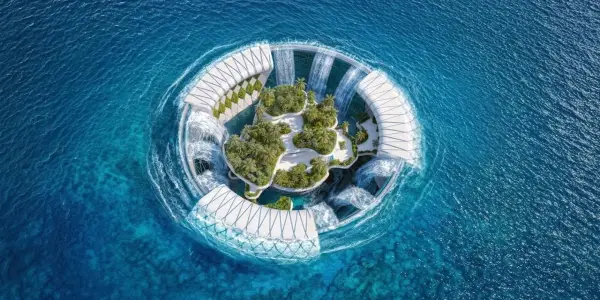
A visionary floating waterfall project off Madagascar seeks to address energy needs, social rehabilitation, and tourism in one ambitious design.
In-depth analysis
Natural phenomena
Madagascar's unique geography, positioned over 500 kilometers off Africa's southeast coast, is characterized by its rich biodiversity and natural resources. The proposed Baobab Waterfall project harnesses the ocean's power, envisioning a continuous deep-ocean waterfall that generates renewable energy while reflecting the island's resilience and adaptability to its environmental challenges.
Impact on communities
The Baobab Waterfall project aims to alleviate social issues in Madagascar by serving as a rehabilitation center, addressing overcrowding in correctional facilities and providing support to communities affected by poverty and limited economic opportunities.
Scientific updates
Incorporating advanced architectural techniques, the Baobab Waterfall utilizes transparent greenhouses within its design to promote agricultural production alongside renewable energy generation. This innovative approach showcases the potential for architecture to address environmental and societal needs through sustainable solutions.
Future outlook
The Baobab Waterfall represents a forward-thinking vision for Madagascar, suggesting that architecture can play a crucial role in resolving pressing issues. Its multifunctional design could pave the way for sustainable development, transforming local communities and the environment for generations to come.
Did you know?
Why this matters for our planet
The Baobab Waterfall exemplifies how innovative design can directly impact communities grappling with energy shortages and social issues. By harnessing renewable energy and promoting agricultural sustainability, this project aims to uplift Madagascar’s economy and improve the quality of life for its residents. As global energy demands rise, solutions like this one could inspire similar initiatives worldwide, fostering resilience in vulnerable communities.
Earth's undiscovered wonder
Madagascar is home to about 5% of the world's known species, with over 90% of its wildlife found nowhere else on Earth. This unique biodiversity is under threat, making innovative projects like the Baobab Waterfall crucial for both conservation and community development.
The voice of Earth
Marcus, 34, from Chicago, recalls his life-changing trip to Madagascar five years ago, where he witnessed the stark contrast between the lush landscapes and the struggles of local communities. He met a farmer who had lost crops due to erratic weather patterns, making him realize the urgency of renewable energy solutions. Inspired by the resilience he observed, Marcus now advocates for sustainable architecture, believing that projects like the Baobab Waterfall can transform lives. His passion stems from a deep connection to nature, and he dreams of a future where innovation empowers communities to thrive amidst environmental challenges.
Expert Commentary
New Glenn Rocket Completes Successful Test...

WhatsApp Security Vulnerability Exposes 3.5...

Apple Offers Support Following Fire in Hong Kong
Indigenous Activists Challenge COP30's Rainforest...
New Technique Unveils Natural Clock in Dinosaur...
Sun Emits Second-Strongest Flare of 2025, Causing...

Catherine O’Hara, Iconic Actress from...

Top Organic Mattresses of 2025: Birch, Avocado,...
Jupiter's Rapid Spin Influences Water...
Innovative Precast Rammed Earth Tennis Court...
Perseverance Rover Discovers Unusual Rock Near...
Damage Assessment Underway in Northern Australia...
Notable Aquatic Highlights from the 2025 Nature's...
Ancient Australian Rocks Provide Insights into...
Ancient Crocodile Fossils Unearthed in Australia...
Natural History Museums: Essential Partners in...
Blue Origin's New Glenn Rocket Set to Launch...
November's Full Supermoon: A Celestial Event to...
New Research Suggests Water Could Form During...

Post-Artemis 2: What Insights Will Scientists...
Significant Solar Activity Forecasted to Cause...
Geomagnetic Storm Forces Delay of Blue Origin's...
Innovative Engine Harnesses Deep Space Energy for...

Innovative Gel Shows Promise in Regenerating...
NASA's Mars Sample Return Mission Faces...
Exocomets Detected Around Distant Stars
Innovative Use of Underwater Speakers Aims to...
Exploring Iterative Creativity: Pelicans on...
Interstellar Comet 3I/ATLAS Reaches Perihelion,...
Time on Mars Outpaces Earth, Unveiling Challenges...
US Government to Halt SNAP Benefits Amid Ongoing...
UK Churches Embrace Heat Pumps for Sustainable...
Innovative Architectural Designs Inspired by...
First Mosquito Sightings in Iceland Linked to...
Upcoming Venus Missions Set to Explore Earth's...
Artemis II Sparks Renewed Interest in Lunar...
The Impact of the Three Gorges Dam on Earth's...
Insights into Lithospheric Dynamics from Turkana...