Study Suggests Earth May Have Transferred Life to Venus Over Billions of Years
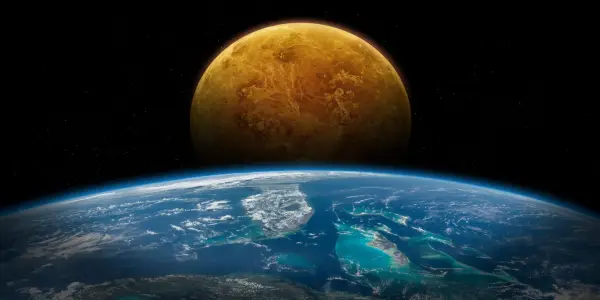
Research indicates Earth could have sent microbes to Venus via asteroid impacts, raising questions about potential life in Venus' clouds.
In-depth analysis
Natural phenomena
Recent studies suggest that asteroid collisions on Earth may have propelled microbial life into space, potentially allowing it to survive the harsh conditions of interplanetary travel. This process could have facilitated the transfer of life to Venus, where it might have existed in the planet's cloud layers over billions of years.
Impact on communities
The findings could spark renewed interest in space exploration, particularly among communities focused on astrobiology and planetary science. This research may also stimulate public curiosity about the potential for life beyond Earth.
Scientific updates
Researchers from Johns Hopkins University and Sandia National Laboratories have developed the Venus Life Equation, which parallels the Drake Equation. Their simulations indicate that microbial cells could survive the journey from Earth to Venus, highlighting a plausible mechanism for interplanetary life transfer.
Future outlook
This study underscores the necessity for future astrobiological missions to Venus. As interest in the planet's atmosphere grows, scientists are eager to investigate whether it may harbor remnants of life, further expanding our understanding of life's distribution in the universe.
Did you know?
Why this matters for our planet
Understanding how life from Earth could have traveled to Venus reshapes our perspective on our role in the cosmos. It suggests that our planet is not just a solitary cradle of life but part of a vast, interconnected web. This research may lead to future missions that could discover microbial life in Venus' clouds, inspiring global efforts to protect our own environment as we explore others.
Earth's undiscovered wonder
Venus, often dubbed Earth's 'sister planet,' experiences surface temperatures hot enough to melt lead, yet recent studies suggest its clouds may harbor microbial life. This paradox challenges our understanding of habitability and invites deeper exploration into extreme environments, both on Earth and beyond.
The voice of Earth
Marcus, 34, from Chicago, has always been fascinated by space. As a child, he gazed at the stars with his father, dreaming of distant worlds. Now, as an environmental scientist, he feels a profound connection to this new research. 'If life from Earth could reach Venus, it makes me think about the fragility of life here,' he says. Every day, he advocates for preserving our planet's ecosystems, believing that our actions could influence not just our future, but the potential life on other planets. For Marcus, this study is a reminder of the responsibility we carry as stewards of life in the universe.
Expert Commentary
Study Reveals Fast Healing of Deep Earthquake...
Blue Origin's New Glenn Rocket Set to Launch...
Moss Survives 9 Months in Space and Thrives After...
The Allure of Venezuela's Oil Reserves: Analyzing...
Innovative Engine Harnesses Deep Space Energy for...
Pacific Northwest's Subduction Zone Revealed to...
Newly Discovered Snake Species Named After Steve...

Innovative Technique Utilizes Dragonberry Weed to...
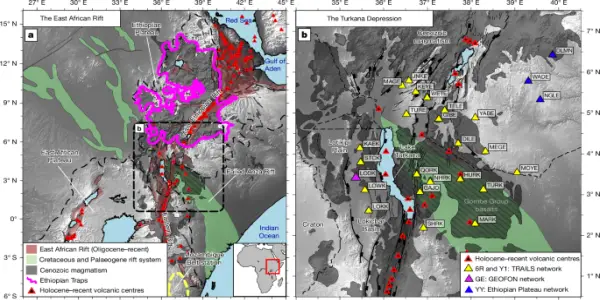
Insights into Lithospheric Dynamics from Turkana...

Turkey Declines Rare Earth Element Sales to the...
Ancient Crocodile Fossils Unearthed in Australia...
Innovative Use of Underwater Speakers Aims to...
New Technique Unveils Natural Clock in Dinosaur...
Innovative Gel Shows Promise in Regenerating...
China's Astronauts Return Safely, but Another...
Artemis II Sparks Renewed Interest in Lunar...
Exploring Sustainable Approaches to Deep-Sea...

VTN Architects Completes Nuoc Ui School in...

The Intersection of AI Development and Natural...

Exploring the Conclusion of 'Predator: Badlands'
New Insights from the Butterfly Nebula May...

Intaaya Retreat in Indonesia Features Innovative...

Reassessing Economic Growth: Valuing Natural...
HEO Robotics Expands Satellite Imaging...

Apple Offers Support Following Fire in Hong Kong

Catherine O’Hara, Iconic Actress from...
Blue Origin's New Glenn Rocket Successfully Lands...
Supercomputers Analyze Enceladus's Plume Dynamics
The Challenges of Sending a Supervillain into the...
The Late Ordovician Mass Extinction: A Pivotal...
Ancient Lakes on Mars: New Research Unveils Ice...

FX Confirms Season 2 Renewal for 'Alien: Earth'

New Insights into 'Project Hail Mary' Reveal...
NASA's Mars Sample Return Mission Faces...
Notable Aquatic Highlights from the 2025 Nature's...

UK Churches Embrace Heat Pumps for Sustainable...

Coyote vs. Acme Blends Looney Tunes with...

Google Enhances Weather Forecasting with...

Top Organic Mattresses of 2025: Birch, Avocado,...
Reassessing the Impact of Farmed Seafood on Ocean...