Astronomers Discover Faintest Exoplanet Ever Observed from Earth
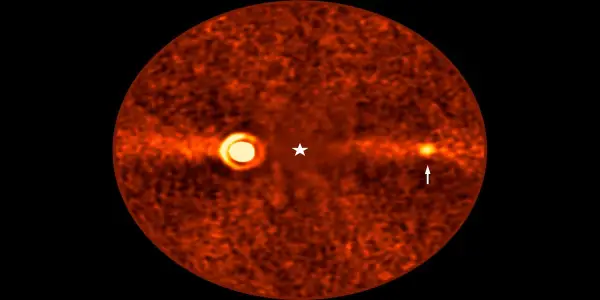
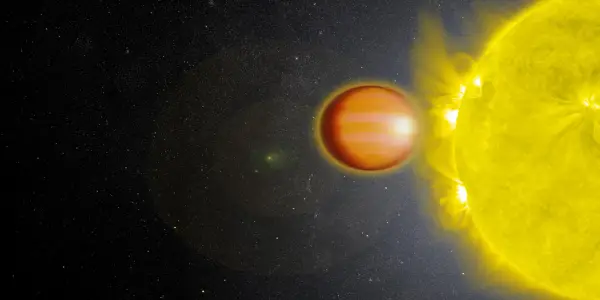
Beta Pictoris d, a gas giant over twice the size of Jupiter, represents a significant find in the search for exoplanets.
In-depth analysis
Natural phenomena
The discovery of Beta Pictoris d, the faintest exoplanet observed from Earth, highlights the dynamic nature of celestial bodies in the universe. This gas giant, more than twice the mass of Jupiter, orbits within a disk of dust surrounding its star, indicative of ongoing planetary formation processes. Its composition includes carbon dioxide, with traces of water and methane, suggesting a complex atmospheric environment.
Impact on communities
The identification of Beta Pictoris d enhances public interest in astronomy and science. It serves as a reminder of the vastness of our universe and the potential for new discoveries, inspiring future generations to pursue careers in science and technology.
Scientific updates
Researchers utilized advanced techniques, including machine learning algorithms, to confirm Beta Pictoris d's existence amidst skepticism. Analysis of archival images, including data from the James Webb Space Telescope, validated the planet's presence, showcasing the importance of collaborative efforts in the scientific community.
Future outlook
The future of exoplanet research appears promising with the anticipated launch of the Extremely Large Telescope. This advancement is expected to accelerate the discovery of new celestial bodies, potentially revealing a wealth of previously unknown planets within our galaxy.
Did you know?
Why this matters for our planet
The discovery of Beta Pictoris d highlights our ongoing quest to understand the universe and our place within it. Exoplanets can offer insights into planetary formation, climate, and even the potential for life beyond Earth. As astronomers refine their methods, these findings could lead to breakthroughs in how we view our own planet's future and the conditions necessary for sustaining life.
Earth's undiscovered wonder
Interestingly, Beta Pictoris d is part of a unique star system that is only about 63 light-years away. This proximity allows astronomers to study its atmospheric composition in detail, providing a rare opportunity to understand how gas giants evolve and interact with their environment, which can inform our knowledge about similar bodies in our own solar system.
The voice of Earth
Marcus, 34, from Chicago, has always been fascinated by the stars. As a child, he spent countless nights gazing through his father's old telescope, dreaming of distant worlds. When he learned about the discovery of Beta Pictoris d, he felt a deep connection to the universe. 'It’s like finding a piece of a puzzle that’s been missing,' he said. This exoplanet represents hope and curiosity for Marcus, who believes that understanding these distant planets might one day lead to answers about our own planet's future. He often shares his passion with local school kids, inspiring them to look up and wonder, fostering the next generation of astronomers.
Expert Commentary

HEO Robotics Expands Satellite Imaging...
Perseverance Rover Discovers Unusual Rock Near...

Reassessing Economic Growth: Valuing Natural...
New Research Sheds Light on Jet Streams of Gas...
Mars Express Reveals Evidence of Ancient Ice Age...

Embracing the Light: A Reflection on Our...

WhatsApp Security Vulnerability Exposes 3.5...

Exploring the Depths of Nature: Boyd Varty's...

Reassessing the Impact of Farmed Seafood on Ocean...

Johnny Keefer's Ascent Raises Questions About...
Insights into Lithospheric Dynamics from Turkana...

Damage Assessment Underway in Northern Australia...

Innovative Architectural Designs Inspired by...

Tennessee's Nature-Based Solutions for Health and...

Exploring Sustainable Methods for Rare Earth...

UK Churches Embrace Heat Pumps for Sustainable...

Exploring the Conclusion of 'Predator: Badlands'
Sun Emits Second-Strongest Flare of 2025, Causing...
Sun Unleashes Spectacular Solar Flare Amid...

Study Reveals Fast Healing of Deep Earthquake...

Indigenous Activists Challenge COP30's Rainforest...

Protests Erupt at COP30 Climate Summit in Belém
Ancient Australian Rocks Provide Insights into...
Young Star V1298 Tau Sheds Light on Planet...

The Intersection of AI Development and Natural...

American Museum of Natural History Launches...
Breakthrough in Microscopy Sheds Light on Ocean's...
Upcoming Venus Missions Set to Explore Earth's...
James Webb Space Telescope Reveals First 3D...


Geomagnetic Storm Forces Delay of Blue Origin's...

The Impact of the Three Gorges Dam on Earth's...

November's Full Supermoon: A Celestial Event to...

Innovative Precast Rammed Earth Tennis Court...

US Government to Halt SNAP Benefits Amid Ongoing...

Innovative Use of Underwater Speakers Aims to...

Post-Artemis 2: What Insights Will Scientists...
Ancient Lakes on Mars: New Research Unveils Ice...

US Greenhouse Gas Emissions Increase Amid Cold...