Indigenous Activists Challenge COP30's Rainforest Protection Plans
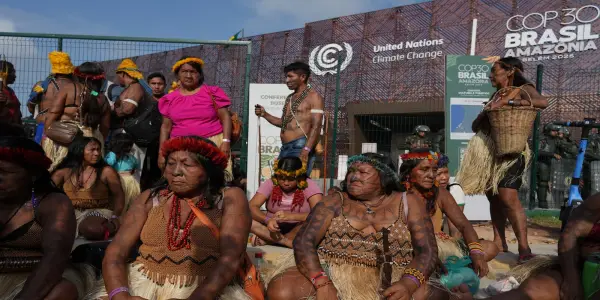
Indigenous leaders demand recognition of their role in biodiversity and climate action during COP30, criticizing new government initiatives as insufficient.
In-depth analysis
Natural phenomena
The ongoing climate crisis has intensified discussions around deforestation, particularly in tropical regions. The Amazon rainforest, a critical carbon sink, is facing unprecedented threats from industrial agriculture and land exploitation, which exacerbate environmental degradation and disrupt local ecosystems. These natural phenomena highlight the urgent need for comprehensive strategies that prioritize conservation and sustainable practices.
Impact on communities
Indigenous communities are at the forefront of the climate crisis, facing direct threats to their land and livelihoods due to deforestation. The protests at COP30 underscore their demand for recognition and inclusion in climate policies that affect their territories and way of life.
Scientific updates
Recent studies emphasize the importance of Indigenous land management practices in preserving biodiversity and mitigating climate change. The Intergovernmental Land Tenure Commitment, endorsed by Brazil, aims to strengthen Indigenous land rights, yet critics argue that without robust enforcement, these commitments risk remaining ineffective against ongoing exploitation.
Future outlook
As negotiations progress, the effectiveness of initiatives like the Tropical Forests Forever Facility will depend on genuine collaboration with Indigenous peoples. Ensuring their rights and voices are integral to climate strategies will be essential for achieving meaningful environmental protection and sustainable development.
Did you know?
Why this matters for our planet
The ongoing deforestation crisis threatens biodiversity and climate stability, directly impacting our daily lives. Healthy forests regulate air quality, sustain water supplies, and provide habitats for countless species. By recognizing Indigenous rights and involving these communities in conservation efforts, we can foster sustainable practices that not only protect the planet but also ensure food security and clean environments for future generations.
Earth's undiscovered wonder
Did you know that the Amazon Rainforest produces 20% of the world’s oxygen? Often referred to as the 'lungs of the Earth,' this vast ecosystem plays a crucial role in regulating the global climate and supports millions of species, many of which are still unexplored. Protecting it is vital for maintaining Earth's delicate balance.
The voice of Earth
Marcus, 34, from Chicago, spent his childhood exploring the forests of Wisconsin, where he learned to appreciate nature's beauty. After attending COP30, he was deeply moved by Indigenous activists advocating for their land rights. He recalled a moment when an elder spoke of the forest as a living entity, deserving of respect. Inspired by their passion, Marcus now volunteers with local conservation groups, believing that protecting these lands is not just a matter of policy but a moral imperative. His connection to the environment has transformed from personal enjoyment to a commitment to activism, urging others to listen to the voices that have long been silenced.
Perseverance Rover Discovers Unusual Rock Near...

Exploring the Conclusion of 'Predator: Badlands'

US Government to Halt SNAP Benefits Amid Ongoing...

Upcoming Venus Missions Set to Explore Earth's...
New Technique Unveils Natural Clock in Dinosaur...

Post-Artemis 2: What Insights Will Scientists...

SpaceX to Launch Over 100 Satellites Today on...

Supercomputers Analyze Enceladus's Plume Dynamics
New Study Reveals Microbes Colonizing Freshly...

Google Enhances Weather Forecasting with...

Rising Frustration in Aceh as Flood Relief...

Exploring Iterative Creativity: Pelicans on...

Sun Unleashes Spectacular Solar Flare Amid...

Blue Origin's New Glenn Rocket Successfully Lands...
Ancient Air Trapped in 6-Million-Year-Old...

Blue Origin's New Glenn Rocket Set to Launch...

Top Organic Mattresses of 2025: Birch, Avocado,...

Catherine O’Hara, Iconic Actress from...

Natural History Museums: Essential Partners in...

Mars Express Reveals Evidence of Ancient Ice Age...

New Ice Age Episodes of Prehistoric Planet Now...
Moss Survives 9 Months in Space and Thrives After...

Artemis II Sparks Renewed Interest in Lunar...

Interstellar Comet 3I/ATLAS Reaches Perihelion,...
Jupiter's Rapid Spin Influences Water...

New Research Suggests Water Could Form During...
Exploring Sustainable Approaches to Deep-Sea...
Ancient Lakes on Mars: New Research Unveils Ice...

Significant Solar Activity Forecasted to Cause...

Innovative Architectural Designs Inspired by...
Understanding Artificial Reefs: A Solution for...
Ancient Crocodile Fossils Unearthed in Australia...

Notable Aquatic Highlights from the 2025 Nature's...

New Insights from the Butterfly Nebula May...

Exploring the Depths of Nature: Boyd Varty's...

Coyote vs. Acme Blends Looney Tunes with...

Steven Spielberg Steps Back from Sci-Fi Series...
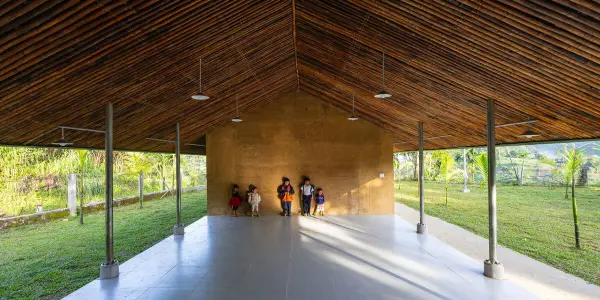
VTN Architects Completes Nuoc Ui School in...

WhatsApp Security Vulnerability Exposes 3.5...