Interstellar Comet 3I/ATLAS Reaches Perihelion, Revealing Cosmic Secrets
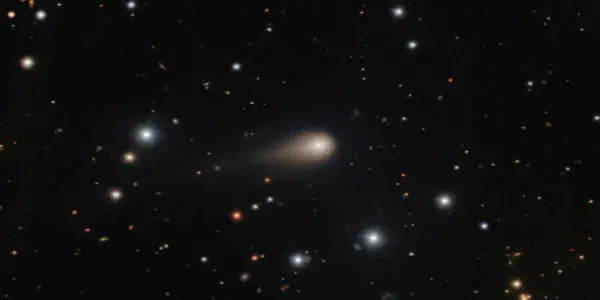
Interstellar comet 3I/ATLAS reaches perihelion, unveiling cosmic secrets as it sheds gas and dust. Discover insights into its origins and rarity in our solar...
In-depth analysis
Natural phenomena
The perihelion of interstellar comet 3I/ATLAS showcased remarkable natural phenomena as its icy surface sublimated under the Sun's heat. This process generated a significant cloud of gas, providing astronomers with a unique opportunity to study the comet's composition and behavior. Such interactions highlight the dynamic nature of celestial bodies and their responses to solar radiation.
Impact on communities
The visibility of 3I/ATLAS from Earth presents a rare opportunity for local astronomy clubs and schools to engage with the public. This event can inspire interest in space science and foster community connections through shared observation experiences.
Scientific updates
Recent observations from NASA's STEREO-A, SOHO, and the GOES satellite have revealed that 3I/ATLAS exhibits distinct compositional traits, appearing notably bluer than the Sun. These findings are pivotal for understanding the physical characteristics of interstellar objects, which differ from solar system bodies.
Future outlook
The ongoing study of 3I/ATLAS is expected to yield significant insights into the formation of solar systems. As data continues to be collected, it could reshape existing theories and enhance our understanding of the universe's complex structures.
Did you know?
Why this matters for our planet
The study of interstellar comets like 3I/ATLAS provides invaluable clues about the origins of our solar system and the potential for life beyond Earth. Understanding their composition offers insights into the building blocks of planets and the conditions that foster life. This knowledge can inform future explorations and scientific endeavors, directly impacting how we view our place in the cosmos and the possibilities for life elsewhere.
Earth's undiscovered wonder
Did you know that interstellar comets originate from outside our solar system, often traveling thousands of years before their arrival? 3I/ATLAS, for instance, is believed to have traveled from another star system, showcasing the dynamic and interconnected nature of the universe.
The voice of Earth
Marcus, 34, from Chicago, stood in his backyard, peering through his telescope at the shimmering tail of 3I/ATLAS. As a child, he had always been fascinated by the stars, but seeing an interstellar comet felt like a direct connection to the universe’s mysteries. 'It’s like a reminder of how small we are,' he said, eyes wide with wonder. For Marcus, every glimpse of the comet wasn't just about astronomy; it was about hope—hope for discoveries that could redefine humanity’s understanding of life beyond our planet. Each night spent with his telescope ignited a passion for science, inspiring him to share this celestial marvel with his daughter, sparking her curiosity about the cosmos.
Jupiter's Rapid Spin Influences Water...
Tennessee's Nature-Based Solutions for Health and...
Study Reveals Fast Healing of Deep Earthquake...
Damage Assessment Underway in Northern Australia...
New Research Suggests Water Could Form During...
Time on Mars Outpaces Earth, Unveiling Challenges...
Innovative Use of Underwater Speakers Aims to...
New Ice Age Episodes of Prehistoric Planet Now...

Top Organic Mattresses of 2025: Birch, Avocado,...
Significant Geomagnetic Storm Unleashes Auroras...
Exploring Iterative Creativity: Pelicans on...

US Greenhouse Gas Emissions Increase Amid Cold...

Turkey Declines Rare Earth Element Sales to the...
Geomagnetic Storm Forces Delay of Blue Origin's...
SpaceX to Launch Over 100 Satellites Today on...

Catherine O’Hara, Iconic Actress from...

Exploring the Depths of Nature: Boyd Varty's...
New Fossil Discovery Alters Understanding of...
Breakthrough in Microscopy Sheds Light on Ocean's...
First Mosquito Sightings in Iceland Linked to...
Blue Origin's New Glenn Rocket Set to Launch...

Post-Artemis 2: What Insights Will Scientists...

The Intersection of AI Development and Natural...

The Impact of the Three Gorges Dam on Earth's...

Protests Erupt at COP30 Climate Summit in Belém
Perseverance Rover Discovers Unusual Rock Near...

US Government to Halt SNAP Benefits Amid Ongoing...
Blue Origin's New Glenn Rocket Successfully Lands...

Coyote vs. Acme Blends Looney Tunes with...

Indigenous Activists Challenge COP30's Rainforest...
Sun Emits Second-Strongest Flare of 2025, Causing...
Ancient Crocodile Fossils Unearthed in Australia...

WhatsApp Security Vulnerability Exposes 3.5...

Notable Aquatic Highlights from the 2025 Nature's...

VTN Architects Completes Nuoc Ui School in...
Pacific Northwest's Subduction Zone Revealed to...
Exploring Sustainable Approaches to Deep-Sea...
Supercomputers Analyze Enceladus's Plume Dynamics

Reassessing the Impact of Farmed Seafood on Ocean...