Invasive Asian Praying Mantises Threaten Europe's Native Wildlife, Experts Warn
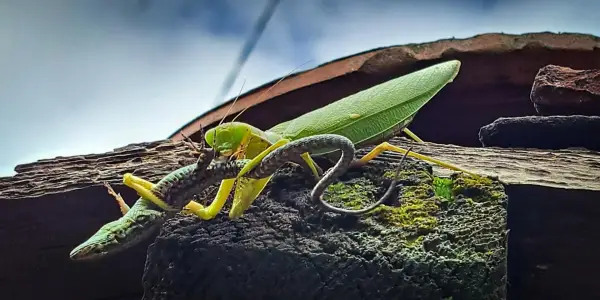
Two Asian mantis species have been classified as invasive in Europe, raising alarms about their impact on local ecosystems and native species.
In-depth analysis
Natural phenomena
The introduction of two Asian praying mantis species, particularly Hierodula tenu, in Europe marks a significant ecological shift. These mantises, now classified as invasive, have rapidly proliferated over the past decade, aided by climate change and urbanization, and pose a growing threat to native wildlife across Mediterranean and continental regions.
Impact on communities
Local communities face ecological challenges as invasive mantises disrupt ecosystems. Their presence in parks and gardens often leads to confusion, as they are mistaken for beneficial species, complicating public perception and response efforts.
Scientific updates
Research led by Roberto Battiston has highlighted the adaptability of Hierodula tenu, emphasizing its role as a voracious predator that threatens vital pollinators and small vertebrates. The study aims to inform the public about these risks and develop effective control strategies.
Future outlook
The future of native biodiversity in Europe hinges on effective monitoring and public engagement. Researchers are advocating for citizen science initiatives to track these invasive mantises, underscoring the need for collective action to protect local ecosystems from further decline.
Did you know?
Why this matters for our planet
The invasion of Asian praying mantises threatens delicate ecosystems across Europe. As these mantises prey on essential pollinators like honeybees and small vertebrates, they disrupt food chains and biodiversity in our gardens and parks. Their rapid spread not only endangers native species but also undermines the balance of our natural surroundings, impacting agriculture and local communities reliant on healthy ecosystems.
Earth's undiscovered wonder
Did you know that the Asian praying mantis, Hierodula tenu, can produce nearly double the eggs of native mantis species? This reproductive advantage contributes to their swift population growth and poses a significant threat to local ecosystems, particularly in Mediterranean regions where unique species are already vulnerable.
The voice of Earth
Marcus, 34, from Chicago, has always found solace in his urban garden, a sanctuary filled with native plants and butterflies. Recently, he spotted a striking mantis among his flowers. At first, he admired its beauty, unaware of its invasive nature. After learning about the species' impact on local ecosystems, Marcus felt a pang of responsibility. He joined a community initiative to monitor these mantises, realizing that protecting his garden meant understanding the delicate balance of nature. Each report he submits feels like a small but meaningful step towards safeguarding the biodiversity he cherishes.
Expert Commentary

Supercomputers Analyze Enceladus's Plume Dynamics
Geomagnetic Storm Forces Delay of Blue Origin's...

Exploring Iterative Creativity: Pelicans on...

Innovative Gel Shows Promise in Regenerating...

UK Churches Embrace Heat Pumps for Sustainable...

Aging Stars Pose Threat to Nearby Planets, New...

Intaaya Retreat in Indonesia Features Innovative...
Insights into Lithospheric Dynamics from Turkana...
Time on Mars Outpaces Earth, Unveiling Challenges...
Ancient Crocodile Fossils Unearthed in Australia...

US Government to Halt SNAP Benefits Amid Ongoing...

Significant Geomagnetic Storm Unleashes Auroras...

The Challenges of Sending a Supervillain into the...

Catherine O’Hara, Iconic Actress from...

Ancient Lakes on Mars: New Research Unveils Ice...

Notable Aquatic Highlights from the 2025 Nature's...

Exploring the Nature of Intelligence: Insights...

Reassessing the Impact of Farmed Seafood on Ocean...

Top Organic Mattresses of 2025: Birch, Avocado,...

New Ice Age Episodes of Prehistoric Planet Now...

Steven Spielberg Steps Back from Sci-Fi Series...
Understanding Artificial Reefs: A Solution for...

Innovative Architectural Designs Inspired by...
Innovative Technique Utilizes Dragonberry Weed to...
Upcoming Venus Missions Set to Explore Earth's...

Exploring the Depths of Nature: Boyd Varty's...

Johnny Keefer's Ascent Raises Questions About...

New Insights from the Butterfly Nebula May...

Reassessing Economic Growth: Valuing Natural...

Perseverance Rover Discovers Unusual Rock Near...

New Insights into 'Project Hail Mary' Reveal...

Interstellar Comet 3I/ATLAS Reaches Perihelion,...

Exploring Key Questions Raised by ‘Avatar: Fire...

New Research Suggests Water Could Form During...

Study Reveals Fast Healing of Deep Earthquake...

The Allure of Venezuela's Oil Reserves: Analyzing...

VTN Architects Completes Nuoc Ui School in...

Rammed Earth Homes of 2026 Showcase Sustainable...