Astronomers Unravel the Mystery of V Sagittae: A Binary Star System on the Brink of Catastrophe
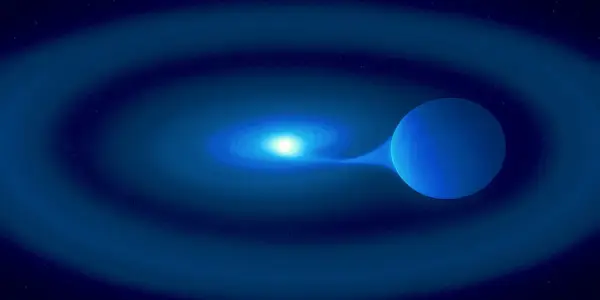
Astronomers have uncovered the secrets of V Sagittae, a binary star system poised for a spectacular supernova. Discover how gravitational forces shape this c...
In-depth analysis
Natural phenomena
The binary star system V Sagittae exhibits remarkable characteristics, featuring a white dwarf and a larger companion star in a close orbit. This interaction leads to intense gravitational forces, causing the white dwarf to consume material at an extraordinary rate, resulting in a luminous ring of gas. Such phenomena are pivotal in understanding stellar evolution.
Impact on communities
The impending nova explosion of V Sagittae may eventually make the system visible to the naked eye, capturing the attention of amateur astronomers and the public alike. This event could inspire interest in astronomy and science.
Scientific updates
Recent observations using the European Southern Observatory’s Very Large Telescope have unveiled critical insights into V Sagittae's behavior. The study reveals that the accretion process on the white dwarf triggers thermonuclear reactions, enhancing its brightness significantly and contributing to ongoing research into binary star dynamics.
Future outlook
As V Sagittae continues to accumulate material, researchers anticipate a nova event that could illuminate the night sky. Furthermore, the eventual collision of the two stars may lead to a supernova, providing invaluable data on stellar life cycles and explosive phenomena.
Did you know?
Why this matters for our planet
The study of V Sagittae illuminates the intricate dance between stars, a cosmic ballet that affects the very fabric of our universe. Understanding binary systems like this one helps scientists predict stellar phenomena that can influence the evolution of galaxies. Events like supernovae contribute to the formation of elements essential for life on Earth, linking our existence to these distant celestial mechanics.
Earth's undiscovered wonder
V Sagittae's unique characteristics include a massive ring of gas formed from material the white dwarf star cannot entirely consume. This ring, an extraordinary byproduct of stellar interaction, not only contributes to the system's brightness but also offers insights into the complex processes that govern star life cycles, rarely observed in other binary systems.
The voice of Earth
Marcus, 34, from Chicago, has always looked up at the night sky, fascinated by the stars. As a child, he’d sit on his rooftop with his telescope, dreaming of distant worlds. When he learned about V Sagittae and its impending nova, he felt a deep connection—this was more than just a star; it was a reminder of the universe's vastness. The thought that a cataclysmic event could soon light up the sky made him feel part of something greater. Marcus now shares his passion with local schoolchildren, hoping to ignite their curiosity about the universe and inspire the next generation of astronomers.

Google Launches WeatherNext 2: Enhanced AI...
Blue Origin's New Glenn Rocket Successfully Lands...

Exploring the Conclusion of 'Predator: Badlands'
Ancient Air Trapped in 6-Million-Year-Old...

VTN Architects Completes Nuoc Ui School in...
New Research Suggests Water Could Form During...

The Allure of Venezuela's Oil Reserves: Analyzing...

FX Confirms Season 2 Renewal for 'Alien: Earth'
Sun Emits Second-Strongest Flare of 2025, Causing...

Catherine O’Hara, Iconic Actress from...

Steven Spielberg Steps Back from Sci-Fi Series...
New Glenn Rocket Completes Successful Test...

SpaceX to Launch Over 100 Satellites Today on...

UK Churches Embrace Heat Pumps for Sustainable...

New Study Reveals Microbes Colonizing Freshly...
Artemis II Sparks Renewed Interest in Lunar...

New Ice Age Episodes of Prehistoric Planet Now...

Reassessing the Impact of Farmed Seafood on Ocean...

Putin Initiates Strategic Plan for Russia's Rare...

Tennessee's Nature-Based Solutions for Health and...

Innovative Precast Rammed Earth Tennis Court...

Innovative Architectural Designs Inspired by...

Understanding Artificial Reefs: A Solution for...

Exploring the Nature of Intelligence: Insights...

American Museum of Natural History Launches...

US Government to Halt SNAP Benefits Amid Ongoing...

Indigenous Activists Challenge COP30's Rainforest...

US Greenhouse Gas Emissions Increase Amid Cold...
New Fossil Discovery Alters Understanding of...

Natural History Museums: Essential Partners in...
Abrams Studios Announces New Sci-Fi Exploration...
Perseverance Rover Discovers Unusual Rock Near...
Exocomets Detected Around Distant Stars
Time on Mars Outpaces Earth, Unveiling Challenges...
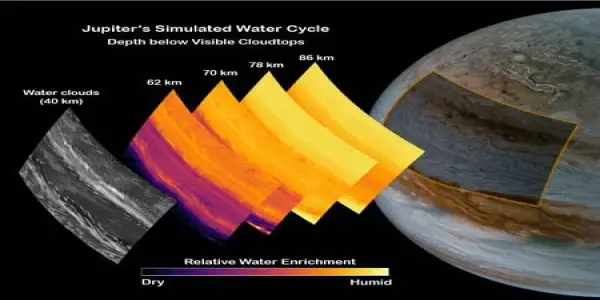
Jupiter's Rapid Spin Influences Water...
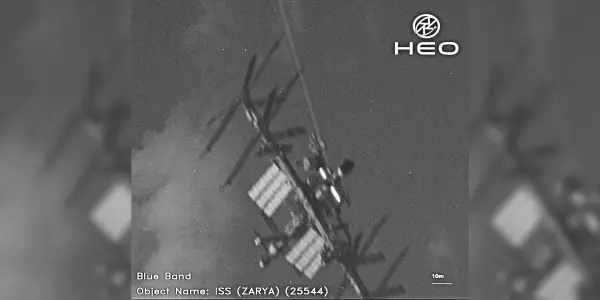
HEO Robotics Expands Satellite Imaging...

Protests Erupt at COP30 Climate Summit in Belém

Innovative Use of Underwater Speakers Aims to...

The Earth’s Value: An Exploration of Its...
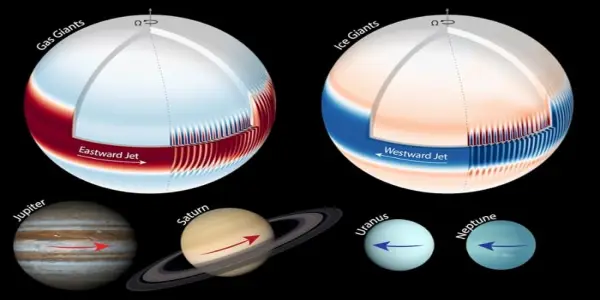
New Research Sheds Light on Jet Streams of Gas...