America 250: David Muir Explores National Parks and Indigenous Tribes
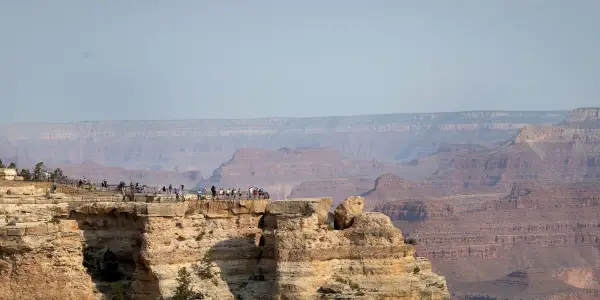
As America celebrates its 250th anniversary, David Muir highlights the significance of national parks and the Native tribes that inhabit them.
In-depth analysis
Natural phenomena
The Grand Canyon and Redwood National and State Parks exemplify the breathtaking natural phenomena found across the United States. The Grand Canyon, with its intricate rock formations shaped over nearly two billion years, showcases geological history, while the towering redwoods, some over 2,000 years old, represent the resilience of ancient ecosystems. Both sites highlight the intricate relationship between nature and Indigenous heritage.
Impact on communities
The ongoing efforts of Indigenous tribes, such as the Havasupai and Yurok, significantly influence local communities. Their commitment to environmental stewardship fosters a deeper appreciation for the natural world, encouraging collaborative conservation efforts that benefit both the land and the people.
Scientific updates
Recent discussions among park officials and Indigenous leaders emphasize the importance of integrating traditional ecological knowledge into conservation strategies. The Yurok Tribe's regained land and active co-management of Redwood National Park reflect a growing recognition of Indigenous contributions to biodiversity preservation and ecosystem management.
Future outlook
The heightened awareness surrounding Indigenous rights and environmental conservation suggests a promising shift in national attitudes. As partnerships between tribes and government agencies strengthen, the potential for sustainable practices that honor both heritage and nature continues to expand.
Did you know?
Why this matters for our planet
Celebrating the natural beauty of America's national parks underscores the urgent need for environmental stewardship. As climate change threatens ecosystems, understanding the historical ties of Indigenous tribes to these lands becomes crucial. By fostering awareness and respect for these connections, individuals can play a role in preserving not just scenic landscapes, but the cultural heritage and biodiversity that enrich our lives.
Earth's undiscovered wonder
The Grand Canyon, carved over nearly two billion years, is not only a geological wonder but also a living testament to Indigenous history. The Havasupai Tribe, who have inhabited the canyon for thousands of years, refer to themselves as the 'People of the Blue-Green Water,' highlighting their deep connection to this breathtaking landscape.
The voice of Earth
Marcus, 34, from Chicago, visited the Grand Canyon for the first time last summer. Standing at the edge, he felt an overwhelming sense of awe and a connection to the land that he had only read about. Listening to a Havasupai elder share stories of their ancestors, he was moved by the tribe's commitment to preserving their heritage. 'It’s not just a park,' Marcus reflected, 'it’s a living story that needs to be told.' This experience ignited his passion for environmental activism, inspiring him to advocate for Indigenous rights and conservation efforts back home.
Expert Commentary
VTN Architects Completes Nuoc Ui School in...

The Impact of the Three Gorges Dam on Earth's...

China's Astronauts Return Safely, but Another...
Innovative Gel Shows Promise in Regenerating...
Rising Frustration in Aceh as Flood Relief...
Young Star V1298 Tau Sheds Light on Planet...

Intense Solar Activity: Sunspot Region Produces...

US Government to Halt SNAP Benefits Amid Ongoing...
Understanding Artificial Reefs: A Solution for...
Jupiter's Rapid Spin Influences Water...
Significant Solar Activity Forecasted to Cause...

American Museum of Natural History Launches...
The Allure of Venezuela's Oil Reserves: Analyzing...
Exploring the Depths of Nature: Boyd Varty's...

Apple Offers Support Following Fire in Hong Kong
Indigenous Activists Challenge COP30's Rainforest...
Reassessing Economic Growth: Valuing Natural...

Geomagnetic Storm Forces Delay of Blue Origin's...

Exploring the Conclusion of 'Predator: Badlands'
Damage Assessment Underway in Northern Australia...
Exploring Sustainable Approaches to Deep-Sea...
Exploring the Nature of Intelligence: Insights...
Rammed Earth Homes of 2026 Showcase Sustainable...
New Technique Unveils Natural Clock in Dinosaur...
New Study Reveals Microbes Colonizing Freshly...
Innovative Engine Harnesses Deep Space Energy for...
Newly Discovered Snake Species Named After Steve...
Steven Spielberg Steps Back from Sci-Fi Series...

WhatsApp Security Vulnerability Exposes 3.5...

Putin Initiates Strategic Plan for Russia's Rare...
New Ice Age Episodes of Prehistoric Planet Now...
Pacific Northwest's Subduction Zone Revealed to...
Study Reveals Fast Healing of Deep Earthquake...
Reassessing the Impact of Farmed Seafood on Ocean...
Insights into Lithospheric Dynamics from Turkana...
First Mosquito Sightings in Iceland Linked to...

Post-Artemis 2: What Insights Will Scientists...
Exocomets Detected Around Distant Stars