Young Star V1298 Tau Sheds Light on Planet Formation Stages
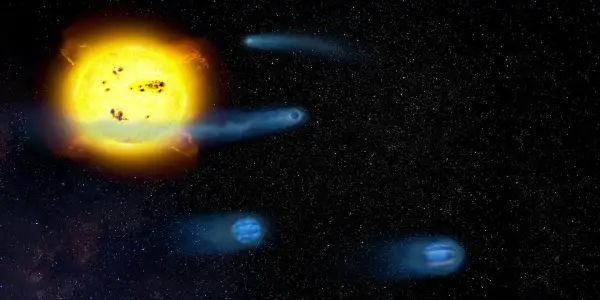
A newly observed star system, V1298 Tau, is providing astronomers with unprecedented insights into the early stages of planet formation, particularly the development of super-Earths and sub-Neptunes.
In-depth analysis
Natural phenomena
The star system V1298 Tau, approximately one million years old, showcases four massive, low-density planets in an early evolutionary stage. These planets are transitioning into super-Earths and sub-Neptunes, types increasingly recognized as common within the Milky Way. This unique system provides invaluable insights into the dynamic processes of planetary formation and evolution.
Impact on communities
The discoveries surrounding V1298 Tau have the potential to influence educational and research communities globally, sparking interest in planetary science and fostering international collaboration among astronomers.
Scientific updates
Recent research utilizing Transit-Timing Variations has revealed that the planets in V1298 Tau are significantly larger than Earth but possess low densities, akin to cotton candy. This finding suggests that these young planets are losing their atmospheres rapidly, challenging previous models of planetary development.
Future outlook
The insights gained from V1298 Tau are expected to reshape future research on planetary systems, emphasizing the rapid evolution of super-Earths and sub-Neptunes. This evolving understanding may lead to new theories on planetary formation across the universe.
Did you know?
Why this matters for our planet
Understanding the formation of super-Earths and sub-Neptunes in systems like V1298 Tau sheds light on our own planetary evolution. This research could inform how we assess the habitability of exoplanets, impacting future explorations and the search for extraterrestrial life. As these insights deepen, they may also influence environmental policies on Earth, emphasizing the importance of maintaining our own planet's delicate balance.
Earth's undiscovered wonder
The V1298 Tau system contains planets that are so low in density they resemble cotton candy. This surprising characteristic indicates these young worlds are in a stage of rapid atmospheric loss, challenging previous assumptions about how planetary atmospheres evolve and potentially reshaping our understanding of planetary science.
The voice of Earth
Marcus, 34, from Chicago, gazes up at the stars each night, captivated by the mysteries of the universe. A passionate amateur astronomer, he often spends weekends stargazing with his daughter, Maya. When he learned about the V1298 Tau discovery, Marcus felt a deep connection to the evolving planets, imagining them as distant cousins to Earth. He explained to Maya that understanding these planets could help humanity find new worlds that could one day sustain life. Their shared wonder at the cosmos fuels Marcus’s hope for the future, igniting a passion in Maya for science and exploration.

New Technique Unveils Natural Clock in Dinosaur...

Innovative Architectural Designs Inspired by...
Artemis II Sparks Renewed Interest in Lunar...

Exploring Sustainable Approaches to Deep-Sea...

New Study Reveals Microbes Colonizing Freshly...

New Insights from the Butterfly Nebula May...

The Earth’s Value: An Exploration of Its...

Google Launches WeatherNext 2: Enhanced AI...
Blue Origin's New Glenn Rocket Set to Launch...
Interstellar Comet 3I/ATLAS Reaches Perihelion,...


Putin Initiates Strategic Plan for Russia's Rare...
Sun Emits Second-Strongest Flare of 2025, Causing...
Breakthrough in Microscopy Sheds Light on Ocean's...

Ancient Crocodile Fossils Unearthed in Australia...
Abrams Studios Announces New Sci-Fi Exploration...

Catherine O’Hara, Iconic Actress from...

Notable Aquatic Highlights from the 2025 Nature's...
SpaceX to Launch Over 100 Satellites Today on...
Perseverance Rover Discovers Unusual Rock Near...

Top Organic Mattresses of 2025: Birch, Avocado,...
Upcoming Venus Missions Set to Explore Earth's...
NASA's Mars Sample Return Mission Faces...
Supercomputers Analyze Enceladus's Plume Dynamics

FX Confirms Season 2 Renewal for 'Alien: Earth'
Insights into Lithospheric Dynamics from Turkana...

Exploring Iterative Creativity: Pelicans on...
Time on Mars Outpaces Earth, Unveiling Challenges...

Tennessee's Nature-Based Solutions for Health and...

Reassessing the Impact of Farmed Seafood on Ocean...

US Greenhouse Gas Emissions Increase Amid Cold...

Exploring Sustainable Methods for Rare Earth...
Ancient Lakes on Mars: New Research Unveils Ice...

Johnny Keefer's Ascent Raises Questions About...

New Glenn Rocket Completes Successful Test...

Natural History Museums: Essential Partners in...

First Mosquito Sightings in Iceland Linked to...

Newly Discovered Snake Species Named After Steve...

UK Churches Embrace Heat Pumps for Sustainable...

VTN Architects Completes Nuoc Ui School in...