New Insights from the Butterfly Nebula May Illuminate Earth's Formation
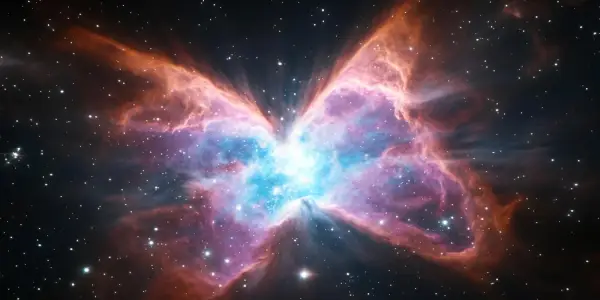
Recent observations from the James Webb Space Telescope provide valuable clues about the origins of Earth and similar planets, reinforcing the idea that we are all made of stardust.
In-depth analysis
Natural phenomena
The Butterfly Nebula, located 3,800 light-years away in the Scorpius constellation, is a planetary nebula formed from the outer layers of a dying star. This cosmic structure is rich in dust and organic materials, showcasing the elemental processes that contribute to planet formation and the emergence of life, highlighting the intricate connections within the universe.
Impact on communities
Research findings from the Butterfly Nebula could influence educational programs and public interest in space science, fostering a deeper appreciation for the cosmos and its relevance to Earth's origins.
Scientific updates
Recent observations from the James Webb Space Telescope have revealed critical details about the elemental composition of the Butterfly Nebula. These findings suggest that heavy metals and organic compounds essential for life may originate from the processes occurring in dying stars, enhancing our understanding of planetary formation.
Future outlook
As scientists continue to analyze data from the JWST, further insights into cosmic evolution are anticipated. This ongoing research may redefine our understanding of the universe and the fundamental processes that govern the formation of planetary systems.
Did you know?
Why this matters for our planet
Understanding the elemental composition of celestial bodies like the Butterfly Nebula has profound implications for life on Earth. The same elements that form our planet's core and crust, as well as organic compounds, originate from dying stars. This knowledge can influence how we approach sustainability, resource management, and even search for life beyond our own planet, reminding us that our existence is deeply intertwined with the cosmos.
Earth's undiscovered wonder
The Butterfly Nebula is not just a beautiful cosmic structure; it's a factory for life-essential elements. Research reveals that it contains organic materials and minerals that are crucial for forming planets. This suggests that the building blocks of life are scattered throughout the universe, potentially waiting to coalesce into new worlds.
The voice of Earth
Marcus, 34, from Chicago, often gazes at the night sky, feeling a deep connection to the universe. As an amateur astronomer, he spends weekends stargazing with his daughter, Emma. Recently, he learned about the Butterfly Nebula's role in creating elements necessary for life. This sparked a conversation with Emma about how they are literally made of stardust. For Marcus, it was a powerful reminder that their family’s legacy is tied to the cosmos, igniting a passion for science in Emma and deepening their bond.
HEO Robotics Expands Satellite Imaging...
Perseverance Rover Discovers Unusual Rock Near...

Reassessing Economic Growth: Valuing Natural...
New Research Sheds Light on Jet Streams of Gas...
Mars Express Reveals Evidence of Ancient Ice Age...
Embracing the Light: A Reflection on Our...

WhatsApp Security Vulnerability Exposes 3.5...

Exploring the Depths of Nature: Boyd Varty's...

Reassessing the Impact of Farmed Seafood on Ocean...

Johnny Keefer's Ascent Raises Questions About...
Insights into Lithospheric Dynamics from Turkana...
Damage Assessment Underway in Northern Australia...

Innovative Architectural Designs Inspired by...

Tennessee's Nature-Based Solutions for Health and...

Exploring Sustainable Methods for Rare Earth...

UK Churches Embrace Heat Pumps for Sustainable...

Exploring the Conclusion of 'Predator: Badlands'
Sun Emits Second-Strongest Flare of 2025, Causing...
Sun Unleashes Spectacular Solar Flare Amid...
New Insights from the Butterfly Nebula May...

Indigenous Activists Challenge COP30's Rainforest...

Protests Erupt at COP30 Climate Summit in Belém
Ancient Australian Rocks Provide Insights into...
Young Star V1298 Tau Sheds Light on Planet...

The Intersection of AI Development and Natural...
American Museum of Natural History Launches...
Breakthrough in Microscopy Sheds Light on Ocean's...
Upcoming Venus Missions Set to Explore Earth's...
James Webb Space Telescope Reveals First 3D...
Geomagnetic Storm Forces Delay of Blue Origin's...

The Impact of the Three Gorges Dam on Earth's...
November's Full Supermoon: A Celestial Event to...

Innovative Precast Rammed Earth Tennis Court...

US Government to Halt SNAP Benefits Amid Ongoing...

Innovative Use of Underwater Speakers Aims to...

Post-Artemis 2: What Insights Will Scientists...
Ancient Lakes on Mars: New Research Unveils Ice...

US Greenhouse Gas Emissions Increase Amid Cold...