New Research Unveils Rapid Formation of Giant’s Causeway Amid Volcanic Activity
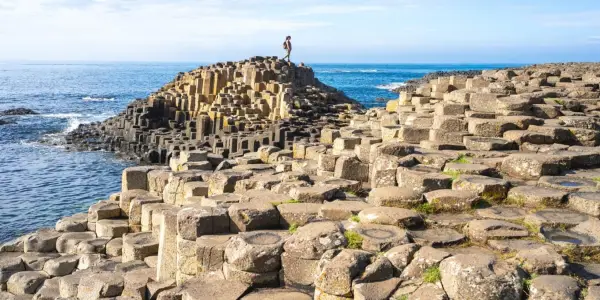
Recent findings reveal the Giant's Causeway formed rapidly from a significant volcanic event, reshaping geological understanding of Northern Ireland.
In-depth analysis
Natural phenomena
The Giant’s Causeway, a UNESCO World Heritage site, is renowned for its striking hexagonal basalt columns, formed by volcanic activity. Recent research indicates that these formations emerged rapidly over approximately 5 million years, rather than the previously believed 60 million, linking them to a significant volcanic event that influenced the North Atlantic region.
Impact on communities
The findings regarding the Giant's Causeway may influence local tourism and conservation strategies in Northern Ireland, as the site continues to attract millions of visitors who appreciate its natural and cultural significance.
Scientific updates
A recent study published in Geology reveals that the formation of the Giant’s Causeway is part of a larger geological narrative involving the North Atlantic Igneous Province. Researchers employed advanced dating techniques to establish a more accurate timeline of volcanic activity in the region, reshaping the understanding of its geological history.
Future outlook
As research on the Giant's Causeway progresses, it promises to deepen the understanding of volcanic processes in the North Atlantic. This evolving narrative may also enhance its appeal as a destination for scientific study and tourism.
Did you know?
Why this matters for our planet
Understanding the rapid formation of the Giant's Causeway shifts our perspective on volcanic activity and its impact on our environment. This knowledge not only enriches our appreciation for geological history but also informs conservation efforts. As climate change threatens natural sites, recognizing their geological significance can help prioritize protection and sustainable tourism, ensuring future generations can experience these wonders.
Earth's undiscovered wonder
The Giant's Causeway is part of the North Atlantic Igneous Province, which includes volcanic remnants as far away as Greenland and the Faroe Islands. This expansive geological feature showcases how interconnected our planet's systems are, revealing the far-reaching effects of volcanic activity across vast distances.
The voice of Earth
Marcus, 34, from Chicago, visited the Giant’s Causeway during a family trip to Ireland. Standing amidst the towering hexagonal columns, he felt a profound connection to the Earth's history. As his daughter picked up a small stone, he shared the legend of Finn McCool, blending myth with science. This moment sparked a passion for geology in her, reminding Marcus of the beauty and stories embedded in our planet’s landscapes. For him, the Causeway was more than a sight; it became a shared family memory, a lesson in both nature's artistry and the marvels of volcanic activity.
Expert Commentary

Intaaya Retreat in Indonesia Features Innovative...
Innovative Use of Underwater Speakers Aims to...

Exploring Key Questions Raised by ‘Avatar: Fire...
Tennessee's Nature-Based Solutions for Health and...
Significant Geomagnetic Storm Unleashes Auroras...
Blue Origin's New Glenn Rocket Set to Launch...

Exploring Iterative Creativity: Pelicans on...
Perseverance Rover Discovers Unusual Rock Near...
New Study Reveals Microbes Colonizing Freshly...
Mars Express Reveals Evidence of Ancient Ice Age...
Moss Survives 9 Months in Space and Thrives After...

Putin Initiates Strategic Plan for Russia's Rare...

The Challenges of Sending a Supervillain into the...
Significant Solar Activity Forecasted to Cause...

Google Enhances Weather Forecasting with...

Innovative Engine Harnesses Deep Space Energy for...
Understanding the Formation of Tectonic Plates
Interstellar Comet 3I/ATLAS Reaches Perihelion,...
Sun Unleashes Spectacular Solar Flare Amid...

Innovative Architectural Designs Inspired by...

Artemis II Sparks Renewed Interest in Lunar...

Turkey Declines Rare Earth Element Sales to the...

Catherine O’Hara, Iconic Actress from...
Study Reveals Fast Healing of Deep Earthquake...

New Insights into 'Project Hail Mary' Reveal...

November's Full Supermoon: A Celestial Event to...

Rising Frustration in Aceh as Flood Relief...
Damage Assessment Underway in Northern Australia...
HEO Robotics Expands Satellite Imaging...
Exploring Sustainable Approaches to Deep-Sea...
New Glenn Rocket Completes Successful Test...
Ancient Lakes on Mars: New Research Unveils Ice...

Post-Artemis 2: What Insights Will Scientists...

Innovative Gel Shows Promise in Regenerating...

Johnny Keefer's Ascent Raises Questions About...
Rammed Earth Homes of 2026 Showcase Sustainable...
James Webb Space Telescope Reveals First 3D...
Indigenous Activists Challenge COP30's Rainforest...