Navigating Risks: The Challenges of NASA's Artemis 2 Moon Mission

As NASA prepares for Artemis 2, the stakes are high with potential risks that could impact the mission and the future of lunar exploration.
In-depth analysis
Natural phenomena
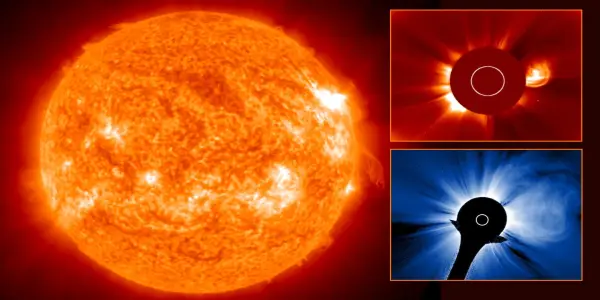
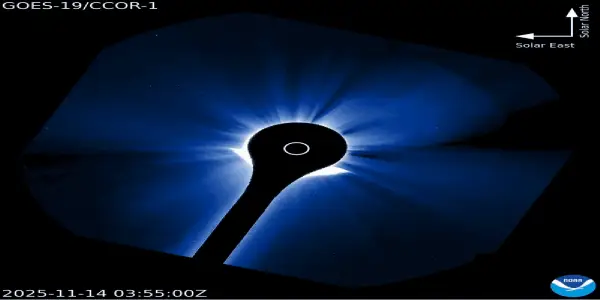
The Artemis 2 mission will operate under the influence of various natural phenomena, particularly solar activity. NASA will closely monitor solar flares and coronal mass ejections, which could disrupt the spacecraft's systems and increase radiation exposure for the astronauts. The mission's success hinges on the ability to mitigate these risks through effective shielding and emergency protocols.
Impact on communities
The Artemis 2 mission has the potential to inspire communities worldwide by reigniting interest in space exploration. As the mission unfolds, it may foster educational initiatives and collaborative projects that engage students and professionals in science and technology.
Scientific updates
NASA's Artemis 2 mission is a pivotal step in lunar exploration, with significant scientific updates expected. The mission aims to validate technologies and systems necessary for future Mars missions, providing crucial data on spacecraft performance and astronaut safety in deep space environments.
Future outlook
Looking ahead, the Artemis program is poised to pave the way for sustainable human presence on the Moon and subsequent missions to Mars. The lessons learned from Artemis 2 will inform future endeavors, enhancing safety and operational efficiency in space exploration.
Did you know?
Why this matters for our planet
The Artemis 2 mission symbolizes more than a return to the Moon; it represents humanity's ambition to explore beyond our planet. Successful lunar missions could lead to sustainable technologies that enhance life on Earth, such as advancements in solar energy and resource utilization. As we face climate challenges, the innovations born from space exploration could provide crucial solutions that benefit our everyday lives, from clean energy to improved materials.
Earth's undiscovered wonder
Did you know that the Moon is moving away from Earth at a rate of about 1.5 inches per year? This gradual separation influences Earth's tides and may eventually impact our planet's rotation. Understanding these changes can help scientists predict long-term effects on climate and ocean currents.
The voice of Earth
Marcus, 34, from Chicago, recalls watching the Apollo 11 moon landing with his father as a child. 'It felt like magic,' he says, eyes lighting up with nostalgia. Years later, as a father himself, he shared that same awe with his daughter during a recent space documentary. The prospect of Artemis 2 reignites his childhood dreams. 'We’re on the brink of another era,' he reflects. 'It’s not just about space; it’s about hope for a future where we learn to live sustainably on Earth and beyond.' Marcus believes the mission could inspire a new generation to care for our planet, uniting them through the wonder of exploration.
Expert Commentary

Exploring the Conclusion of 'Predator: Badlands'
American Museum of Natural History Launches...

UK Churches Embrace Heat Pumps for Sustainable...
Significant Geomagnetic Storm Unleashes Auroras...
Ancient Crocodile Fossils Unearthed in Australia...

The Earth’s Value: An Exploration of Its...

VTN Architects Completes Nuoc Ui School in...
James Webb Space Telescope Reveals First 3D...
Pacific Northwest's Subduction Zone Revealed to...

Exploring Key Questions Raised by ‘Avatar: Fire...
Exploring the Nature of Intelligence: Insights...

Protests Erupt at COP30 Climate Summit in Belém

US Government to Halt SNAP Benefits Amid Ongoing...
Aging Stars Pose Threat to Nearby Planets, New...

US Greenhouse Gas Emissions Increase Amid Cold...
Innovative Engine Harnesses Deep Space Energy for...
New Glenn Rocket Completes Successful Test...
HEO Robotics Expands Satellite Imaging...

Rammed Earth Homes of 2026 Showcase Sustainable...
Reassessing Economic Growth: Valuing Natural...
NASA's Mars Sample Return Mission Faces...

Coyote vs. Acme Blends Looney Tunes with...
Damage Assessment Underway in Northern Australia...

Catherine O’Hara, Iconic Actress from...

New Insights into 'Project Hail Mary' Reveal...
Abrams Studios Announces New Sci-Fi Exploration...
Mars Express Reveals Evidence of Ancient Ice Age...
Ancient Lakes on Mars: New Research Unveils Ice...
Blue Origin's New Glenn Rocket Set to Launch...
Sun Emits Second-Strongest Flare of 2025, Causing...
Time on Mars Outpaces Earth, Unveiling Challenges...
Reassessing the Impact of Farmed Seafood on Ocean...
Understanding Artificial Reefs: A Solution for...

Putin Initiates Strategic Plan for Russia's Rare...
Sun Unleashes Spectacular Solar Flare Amid...
New Ice Age Episodes of Prehistoric Planet Now...
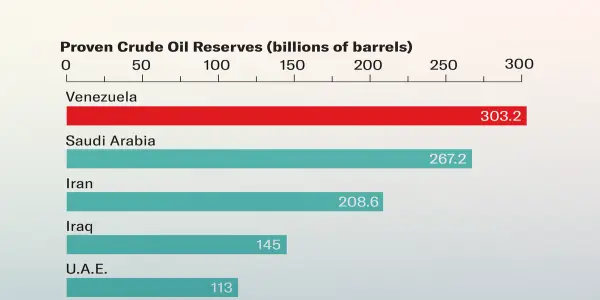
The Allure of Venezuela's Oil Reserves: Analyzing...

Google Launches WeatherNext 2: Enhanced AI...

Exploring the Depths of Nature: Boyd Varty's...