Innovative Technique Utilizes Dragonberry Weed to Extract Rare-Earth Metals from Contaminated Soil
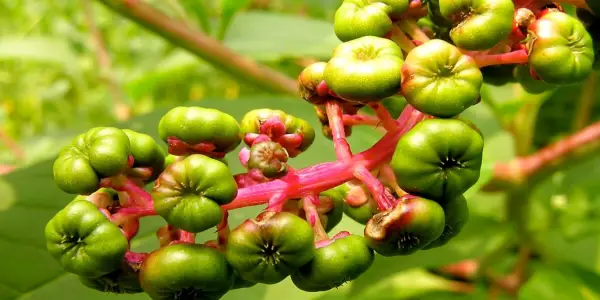
A novel measurement method could enhance the extraction of rare-earth metals from plants, benefiting both the environment and industry.
In-depth analysis
Natural phenomena
The study highlights the unique ability of Phytolacca americana, or pokeweed, to absorb rare-earth elements from contaminated soils. This native plant thrives in polluted environments, demonstrating a natural mechanism for recovering critical metals often found in low concentrations, thus offering an innovative approach to phytomining and environmental remediation.
Impact on communities
Communities near Superfund sites may benefit significantly from this research, as the use of pokeweed for metal recovery could lead to improved soil quality and reduced environmental hazards, fostering healthier ecosystems and potentially revitalizing local economies.
Scientific updates
Researchers at North Carolina State University have developed a non-destructive laser-measurement system utilizing deep ultraviolet fluorescence spectroscopy. This method rapidly assesses rare-earth metal concentrations in plants, enhancing the efficiency of phytomining while minimizing damage to the samples, marking a significant advancement in environmental science.
Future outlook
The promising findings from NC State suggest that the new measurement technique could be adapted for various rare-earth elements, paving the way for sustainable practices in metal extraction. Continued research may lead to broader applications, further integrating ecological methods into resource sourcing.
Did you know?
Why this matters for our planet
The quest for rare-earth elements like dysprosium is vital for advancing technology while safeguarding the environment. Traditional mining practices often devastate ecosystems, but the innovative approach using pokeweed not only recovers these metals but also rehabilitates polluted sites. By turning contaminated land into a source of critical materials, we can mitigate environmental damage while supporting sustainable tech in our everyday lives, from smartphones to wind turbines.
Earth's undiscovered wonder
Pokeweed, or Phytolacca americana, is not just a common garden plant; it has remarkable capabilities. This resilient species can absorb rare-earth elements from contaminated soil, potentially transforming polluted sites into productive land. Its ability to thrive in harsh conditions makes it an intriguing candidate for sustainable phytomining.
The voice of Earth
Marcus, 34, from Chicago, has always felt a deep connection to the environment. Growing up near a Superfund site, he witnessed the impact of pollution on his community. When he learned about the NC State researchers using pokeweed to extract rare-earth metals, he felt a glimmer of hope. Inspired, Marcus started a local initiative to educate others about phytomining and its potential to revitalize contaminated areas. For him, every plant represents a chance to heal the earth, turning scars into solutions.
Expert Commentary
Breakthrough in Microscopy Sheds Light on Ocean's...

US Government to Halt SNAP Benefits Amid Ongoing...

Notable Aquatic Highlights from the 2025 Nature's...

November's Full Supermoon: A Celestial Event to...

Top Organic Mattresses of 2025: Birch, Avocado,...

Exploring the Nature of Intelligence: Insights...
Moss Survives 9 Months in Space and Thrives After...

Geomagnetic Storm Forces Delay of Blue Origin's...

Natural History Museums: Essential Partners in...
Exploring Sustainable Approaches to Deep-Sea...

VTN Architects Completes Nuoc Ui School in...

Post-Artemis 2: What Insights Will Scientists...

Tennessee's Nature-Based Solutions for Health and...

New Research Suggests Water Could Form During...

The Challenges of Sending a Supervillain into the...

FX Confirms Season 2 Renewal for 'Alien: Earth'

Exploring the Conclusion of 'Predator: Badlands'

The Late Ordovician Mass Extinction: A Pivotal...

New Research Sheds Light on Jet Streams of Gas...

Aging Stars Pose Threat to Nearby Planets, New...

UK Churches Embrace Heat Pumps for Sustainable...

Ancient Australian Rocks Provide Insights into...

Coyote vs. Acme Blends Looney Tunes with...

Blue Origin's New Glenn Rocket Set to Launch...

Reassessing the Impact of Farmed Seafood on Ocean...

Intaaya Retreat in Indonesia Features Innovative...

HEO Robotics Expands Satellite Imaging...

Innovative Engine Harnesses Deep Space Energy for...

Indigenous Activists Challenge COP30's Rainforest...

Study Reveals Fast Healing of Deep Earthquake...

Exploring Key Questions Raised by ‘Avatar: Fire...

New Technique Unveils Natural Clock in Dinosaur...

Ancient Crocodile Fossils Unearthed in Australia...

Protests Erupt at COP30 Climate Summit in Belém

First Mosquito Sightings in Iceland Linked to...

Apple Offers Support Following Fire in Hong Kong

NASA's Mars Sample Return Mission Faces...

Rammed Earth Homes of 2026 Showcase Sustainable...

The Impact of the Three Gorges Dam on Earth's...