New Technique Unveils Natural Clock in Dinosaur Eggshells
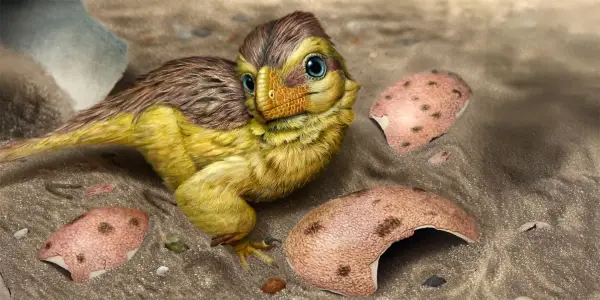
A groundbreaking method developed by an international team of geologists and paleontologists allows for precise dating of fossilized dinosaur eggshells, potentially transforming the understanding of fossil timelines globally.
In-depth analysis
Natural phenomena
Recent research has unveiled a groundbreaking method for dating fossilized dinosaur eggshells, utilizing the natural decay rates of uranium and lead. This innovative technique transforms eggshells into a reliable chronological marker, allowing scientists to pinpoint the age of dinosaur remains with remarkable accuracy, even in sites lacking traditional dating materials.
Impact on communities
The new dating technique could significantly enhance local paleontological studies, providing communities with a clearer understanding of their geological history and fostering educational opportunities related to ancient ecosystems and biodiversity.
Scientific updates
The study, published in Communications Earth & Environment, highlights a successful application of uranium-lead dating to dinosaur eggshells from sites in Utah and Mongolia, achieving an accuracy of approximately five percent. This marks a significant advancement in paleontology, enabling more precise dating of fossil sites globally.
Future outlook
As researchers continue to refine this technique, its implications for paleontology could be transformative. The ability to date fossils more accurately may lead to new insights into dinosaur evolution, behavior, and interactions with their ecosystems.
Did you know?
Why this matters for our planet
This discovery reshapes our understanding of Earth's history and the evolution of species. By accurately dating dinosaur fossils, scientists can reveal how ancient ecosystems functioned and evolved. This knowledge is crucial for grasping current biodiversity trends and informing conservation efforts, as understanding past climate and environmental shifts can guide responses to today's ecological challenges.
Earth's undiscovered wonder
Did you know that some dinosaur eggshells contain traces of uranium and lead? These elements decay over millions of years, allowing researchers to use them as natural clocks. This groundbreaking technique offers a direct means of dating fossilized remains, which has been an ongoing challenge in paleontology.
The voice of Earth
Marcus, 34, from Chicago, has always been captivated by dinosaurs. As a child, he would spend hours poring over books about these ancient creatures. Recently, he learned about the new technique for dating dinosaur eggshells. Inspired, he visited a local museum, where he saw a dinosaur egg for the first time. Holding a replica, he felt a profound connection to the past, imagining the world it came from. This discovery reignited his passion for paleontology and deepened his appreciation for the intricate story of life on Earth.

Catherine O’Hara, Iconic Actress from...
Study Reveals Fast Healing of Deep Earthquake...
Insights into Lithospheric Dynamics from Turkana...

First Mosquito Sightings in Iceland Linked to...

Exploring the Conclusion of 'Predator: Badlands'

Geomagnetic Storm Forces Delay of Blue Origin's...
Intense Solar Activity: Sunspot Region Produces...

The Allure of Venezuela's Oil Reserves: Analyzing...

Exploring the Nature of Intelligence: Insights...

Innovative Technique Utilizes Dragonberry Weed to...

Top Organic Mattresses of 2025: Birch, Avocado,...
Ancient Air Trapped in 6-Million-Year-Old...

Protests Erupt at COP30 Climate Summit in Belém

Exploring Iterative Creativity: Pelicans on...

Blue Origin's New Glenn Rocket Set to Launch...

Tennessee's Nature-Based Solutions for Health and...
New Study Reveals Microbes Colonizing Freshly...
Sun Emits Second-Strongest Flare of 2025, Causing...

November's Full Supermoon: A Celestial Event to...

Coyote vs. Acme Blends Looney Tunes with...

The Challenges of Sending a Supervillain into the...
James Webb Space Telescope Reveals First 3D...

The Impact of the Three Gorges Dam on Earth's...


China's Meng Xiang Ship Aims for Record-Setting...

Post-Artemis 2: What Insights Will Scientists...

Notable Aquatic Highlights from the 2025 Nature's...

New Insights from the Butterfly Nebula May...

Artemis II Sparks Renewed Interest in Lunar...

Exploring Sustainable Approaches to Deep-Sea...
New Fossil Discovery Alters Understanding of...

US Greenhouse Gas Emissions Increase Amid Cold...

Turkey Declines Rare Earth Element Sales to the...

Indigenous Activists Challenge COP30's Rainforest...
China's Astronauts Return Safely, but Another...

Apple Offers Support Following Fire in Hong Kong

Innovative Precast Rammed Earth Tennis Court...

Blue Origin's New Glenn Rocket Successfully Lands...
Supercomputers Analyze Enceladus's Plume Dynamics