European Union's Inaction on Palestinian Crisis Raises Ethical Concerns
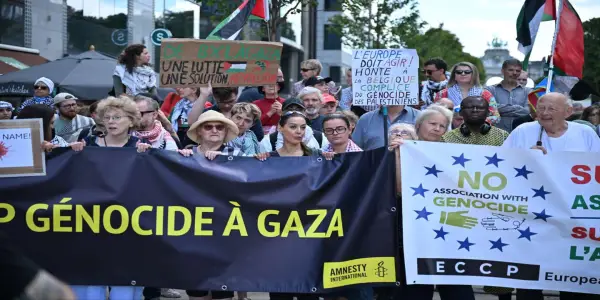
The EU faces criticism for its inaction on the Gaza humanitarian crisis, raising ethical concerns over its commitment to international law and human rights.
In-depth analysis
Background context
The European Union's response to the humanitarian crisis in Gaza has come under intense scrutiny, particularly following its failure to deliver promised aid amid escalating violence. Critics highlight the contradiction between the EU's advocacy for human rights and its perceived inaction regarding civilian casualties resulting from the conflict, raising ethical concerns about its commitments.
Key political implications
The EU's handling of the Gaza crisis could significantly impact its credibility on the global stage, potentially undermining its role as a leader in promoting human rights and international law.
Who gains / who loses
While Israel may benefit from continued EU support and financial backing, the Palestinian population in Gaza suffers immensely, facing dire humanitarian conditions and a lack of international advocacy for their rights and needs.
Possible future scenarios
If the EU fails to act decisively, it risks further alienating itself from both Palestinian interests and global human rights advocates, potentially leading to increased unrest and calls for accountability from within Europe.
Did you know?
Why you should know this
The EU's response to the Gaza crisis directly affects the humanitarian landscape, influencing the lives of millions. As food shortages grow and aid remains stagnant, the decisions made by EU leaders have real consequences. Understanding this situation sheds light on the complexities of international diplomacy and raises questions about the effectiveness of humanitarian efforts in times of conflict.
Behind the political curtain
Despite being one of the largest humanitarian donors to Palestine, the EU has yet to enact sanctions on Israel despite multiple reports of human rights violations. This contradiction highlights the challenges of upholding international law when political interests are at stake.
Ordinary person in an extraordinary situation
Maram Humaid, a journalist from Gaza, illustrates the dire human cost of the ongoing conflict. Living in a region where food scarcity is becoming a daily reality, she often finds herself sharing the little she has with friends and family, living in fear of what tomorrow may bring. When she gave her friend flour, it was a gesture of solidarity, but also a reflection of her own anxiety—how long before she too runs out of essentials? Humaid's story resonates with many Gazans who feel abandoned by the international community. Each day is a struggle not just for survival but for dignity, as they navigate a crisis that has left them feeling invisible on the world stage. With the EU’s inaction, ordinary people like Humaid are left to pick up the pieces while awaiting the promise of aid that never arrives.
Expert Commentary

The Foundation of Friendship: Understanding...
Cuba Rejects U.S. Security Threat Claims Amid...

Zohran Mamdani's Vision for Global Municipal...

Trump Addresses Nuclear Testing, Government...

The 1969 Sino-Soviet Border Conflict: A Near Miss...
US Tariffs Impact Nuevo Leon's Steel Sector,...
The Role of Palestinian Statehood in Advancing...

Political Reactions to BBC Leadership Changes...

Spain's Attorney General Convicted in...
Intensified Clashes Erupt Between Afghan and...
U.S. Extends Sanctions Relief as Syrian Leader...

Oracle's Stance on Israel Sparks Controversy...

Australia Seizes Opportunity in U.S.-China Rare...

Bangladesh's International Crimes Tribunal...
Former Honduran President Hernández Convicted of...
Trump's Influence Crucial for Sustaining Gaza...

Mamdani Emerges Victorious in NYC Mayoral Race...

UK Officials Under Scrutiny Following Collapse of...
Iraq's Parliamentary Elections: Key Insights...

Trump Considers Tomahawk Missile Support for...

Isaac Asimov's Perspective on Star Trek: A Sci-Fi...
Texas Governor Abbott Designates CAIR as a...

Baden Bower Reduces Pitch-to-Publish Timeline by...
Germany Resumes Arms Exports to Israel Amid...
Assessing Trump's Nobel Peace Prize Worthiness...

Jetpack Navigation 3 Achieves Stability for...

AfD Leader Raises Concerns Over Potential Threats...

Indian Trade Unions Rally Against New Labour...

Saudi Crown Prince's Invitation to the White...
Syria's Foreign Minister Visits China to...

New Advocacy Report Urges Action Against Child...
Nydia Velázquez Steps Down, Sparking Calls for...

Ireland Moves Forward with Bill Targeting Israeli...

Bangladesh's Upcoming Election: Key Political...
Japan Reacts Strongly to China's Travel Advisory...

Javier Milei's Victory Signals a Shift in...

EA Raises Concerns Over Sale to Saudi Arabia's...

Peru Sever Diplomatic Relations with Mexico Amid...

Zohran Mamdani Secures Victory in New York City...

The Evolving Landscape of Copyright Enforcement...