NASA Unveils New Imagery of Interstellar Comet 3I/ATLAS, Confirming Its Cometary Nature
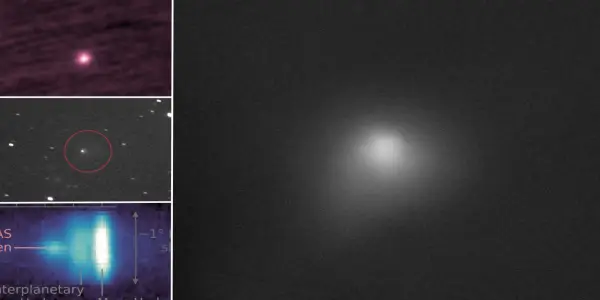
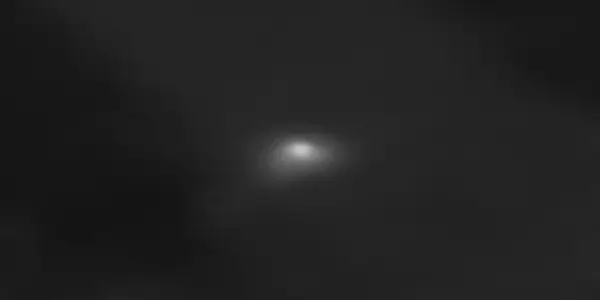
NASA has utilized multiple spacecraft to capture new images of the interstellar comet 3I/ATLAS, reinforcing its classification as a comet rather than an extraterrestrial object.
In-depth analysis
New discoveries
NASA's latest images of comet 3I/ATLAS reveal significant findings, including jets of material being emitted as it approaches the Sun. Detailed observations have confirmed its classification as a comet, dispelling rumors of it being an alien spacecraft. The presence of carbon dioxide and water ice in its nucleus indicates unique chemical properties, prompting further scientific exploration.
Mission updates
NASA's collaborative missions, including the James Webb Space Telescope and the Mars Reconnaissance Orbiter, have successfully gathered crucial data on 3I/ATLAS. These efforts have provided a wealth of images and insights into the comet's behavior and composition.
Who is affected
The scientific community is significantly impacted by the findings related to 3I/ATLAS, as researchers gain valuable data on interstellar objects. This information can enhance our understanding of the formation of celestial bodies and the conditions in other solar systems, influencing future studies and missions.
Next steps
Moving forward, NASA plans to conduct further analysis of the data collected from 3I/ATLAS. This includes investigating the comet's unusual release of carbon dioxide and its overall composition, which could provide deeper insights into interstellar materials.
Did you know?
Why we should care
The arrival of comet 3I/ATLAS offers a rare glimpse into the interstellar material that shapes our universe. For everyday people, this event connects us to the cosmos, reminding us that our solar system is part of a vast expanse filled with mysteries. Understanding these comets can lead to insights about the origins of our own planet and the potential for life beyond Earth.
The universe's unsolved mystery
3I/ATLAS invites deeper questions about the nature of interstellar objects. While its behavior aligns with known comets, the details of its composition and trajectory challenge existing theories. What does this anomaly tell us about the conditions in other solar systems? The answers could reshape our understanding of celestial formation and the dynamics of cosmic bodies.
The person who looks at the stars
Meet Clara Jensen, a high school astronomy teacher in Tucson, Arizona, who has inspired countless students with her passion for the cosmos. When she heard about 3I/ATLAS, Clara felt an exhilarating connection to the universe, sparking her imagination about what lies beyond our solar system. For her, the comet represents not just a scientific marvel but a bridge to curiosity for young minds. Clara plans to use the comet's journey as a teaching moment, encouraging her students to explore the unknown and contemplate humanity's place in the universe. Each image from NASA fuels her belief that science can ignite wonder and drive future discoveries. As she gazes at the night sky, she sees a world of possibilities, reminding her students that they are part of a cosmic story much larger than themselves.
China's Mars Orbiter Captures Image of...

New Research Suggests Dark Matter Influences...
Collaboration Between Exoplanet Researchers and...
Innovative Portable Reflecting Telescope...
The Impact of Space Technology on Everyday Life
The Dwarf III Smart Telescope: A Compact Marvel...
Exploring Oregon's Premier Public Telescope...
NASA and European Partners Prepare for...

Samsung Unveils Unprecedented Black Friday Deal...

Astrophotographer Captures Stunning Image of...
Rogue Moons: A New Frontier for Life Beyond Stars

Exploring Alternatives to the Meta Quest 3 Elite...
Deep Fission Proposes Underground Nuclear...
X5.1 Solar Flare Triggers G4 Geomagnetic Storm...

Affordable Fitness Tracking: The Amazfit Active 2...
Blue Origin Faces Major Setback as New Glenn...
Italian Producer Plans Historic Film to Shoot in...
Charlotte: The Lunar 3D Printer Poised to...
Young Canadian Astronomer Identifies Two...

Samsung's Galaxy S26 Ultra Set for Significant...
Astronomers Identify Potential Earth-Like...
NASA Unveils New Images of Interstellar Comet...
Meteorite Fragment May Have Impacted Houston Home
Portal Systems Aims to Revolutionize Spacecraft...
SabreSat: An Innovative Air-Breathing Satellite...
Potential Alien Disclosure May Trigger Bitcoin...
Russian Cosmonauts Conduct Extended Spacewalk to...
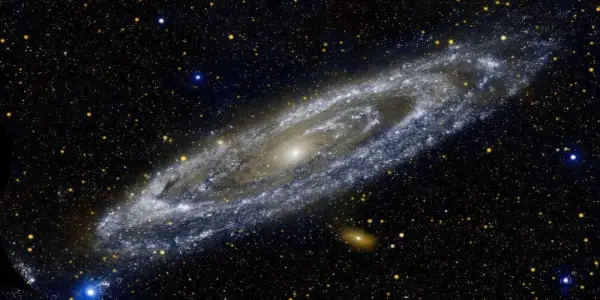
Andromeda Galaxy's Impact on Its Satellite...
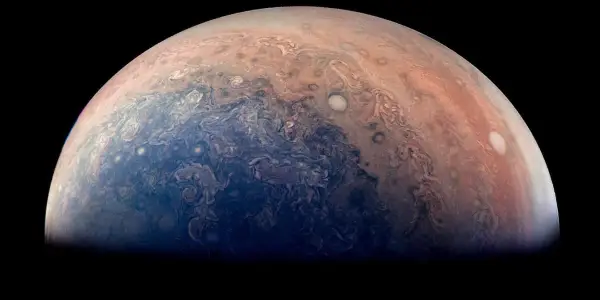
Discovery of a Planet Formation Zone Beyond...
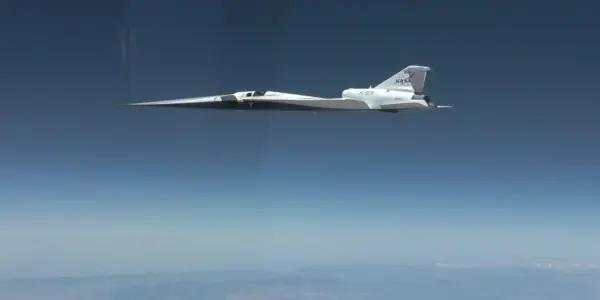
NASA's X-59 Achieves Historic Supersonic Flight
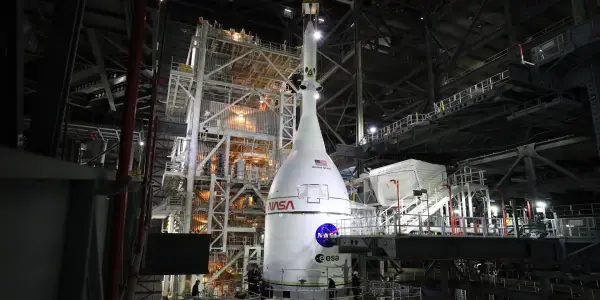
NASA Advances Artemis 2 Mission with Orion...
The Pleiades Star Cluster Reveals Its Extensive...

FULU Foundation Introduces Repair Bounty System...
Congress Questions NASA's Facility Closures Amid...

Foundation Season 3 Hints at Deeper Asimov Themes...

Jeff Bezos's AI Hardware Venture Takes Aim at...
NASA's Ambitious Timeline for Human Exploration...
Hawaiian Students Honor Gemini North Telescope's...