Hubble Captures Stunning Imagery of Star Cluster in the Large Magellanic Cloud
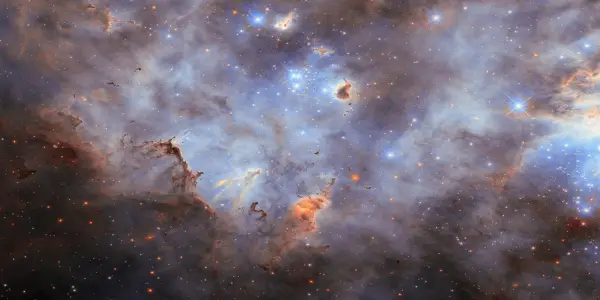
The latest image from NASA's Hubble Space Telescope showcases a vibrant star cluster within the Large Magellanic Cloud, a dwarf galaxy located approximately 160,000 light-years away.
In-depth analysis
New discoveries
NASA's Hubble Space Telescope has captured a stunning image of a star cluster in the Large Magellanic Cloud, revealing intricate details of NGC 1929. This region, known for its active star formation, showcases the telescope's advanced capabilities, providing new insights into the dense clouds of gas and dust that contribute to stellar birth.
Mission updates
Hubble's latest observations utilized its advanced camera technology to explore the star cluster's surrounding environment, enhancing the depth of understanding regarding the region's composition and formation.
Who is affected
The scientific community, particularly astronomers studying stellar evolution, will benefit from Hubble's findings. These insights into star formation in dwarf galaxies like the Large Magellanic Cloud can inform broader research across different galactic environments, including our own Milky Way.
Next steps
Researchers will continue to analyze the data collected from Hubble's observations, aiming to deepen understanding of star formation processes. Further studies may focus on comparing findings from the LMC with those from other galaxies.
Did you know?
Why we should care
The stunning images captured by Hubble reveal not just distant stars but the complex processes that create them, helping us understand our own galaxy's history. For those fascinated by the universe, this research illuminates how the conditions for star formation can vary significantly, influencing everything from the development of solar systems to the potential for life beyond Earth.
The universe's unsolved mystery
The Large Magellanic Cloud holds tantalizing clues about dark matter and galaxy formation. While astronomers have gathered extensive data, the precise mechanics behind star formation in dwarf galaxies remain elusive. This gap in knowledge invites further exploration and challenges scientists to refine their models of cosmic evolution.
The person who looks at the stars
Maria Torres, an aspiring astrophysicist from a small town in New Mexico, gazes at the night sky with wonder. Inspired by her grandfather's stories of stargazing, Maria dreams of unraveling the mysteries of the universe. Each new image from Hubble fuels her ambition, reminding her that even the smallest galaxies like the LMC can unlock secrets about existence itself. For Maria, these discoveries are not just academic; they represent a connection to the cosmos that could one day lead her to the stars. As she prepares for her first year in college, the latest findings invigorate her passion, reinforcing her belief that understanding the universe could one day help humanity address its own challenges here on Earth.
Expert Commentary

Lenovo's Legion Tab Gen 3 Sees Significant Black...
Recent Studies Explore Potential Exoplanet in...
ISS Crew Takes Precautions Against Radiation...
Astronomers Identify Potential Earth-Like...
Hawaiian Students Honor Gemini North Telescope's...
SabreSat: An Innovative Air-Breathing Satellite...

NASA and Blue Origin Successfully Launch Dual...
Unraveling the Mysteries of Mars: Recent...

Unistellar eQuinox 2 Smart Telescope Sees...

Enhance Your Weather Preparedness with Weather...
Jupiter's Moons Io and Europa to Cast Shadows...

Top Black Friday Smartwatch Deals Worth...
James Webb Space Telescope Discovers Ancient...
NASA's ESCAPADE Probes Set for Unique Journey to...
AI Reveals Over 800 New Cosmic Anomalies from...
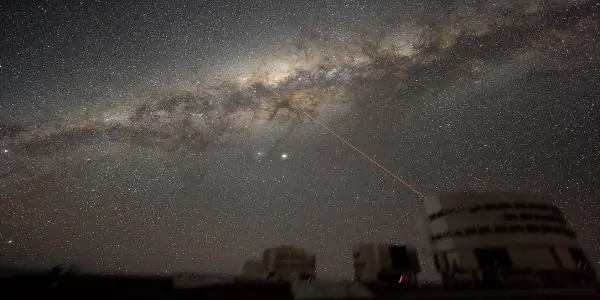
Breakthrough in Milky Way Simulation Using AI...

Affordable Fitness Tracking: The Amazfit Active 2...
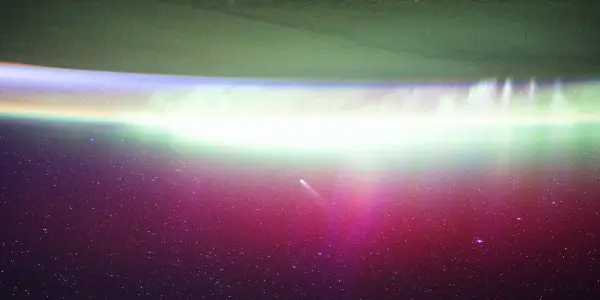
Astronauts aboard the ISS Capture Stunning Images...
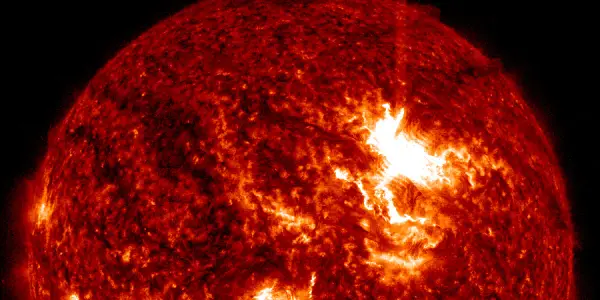
X5.1 Solar Flare Triggers G4 Geomagnetic Storm...
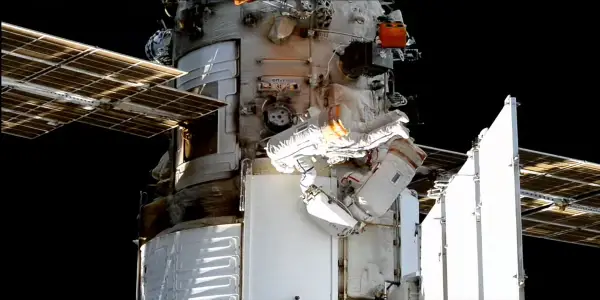
Russian Cosmonauts Conduct Extended Spacewalk to...

Samsung Galaxy S26 Expected to Feature Enhanced...
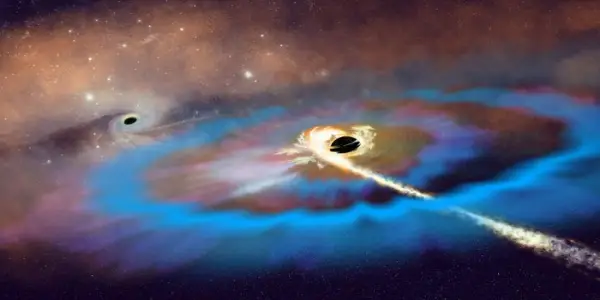
Astronomers Capture Unprecedented Black Hole...
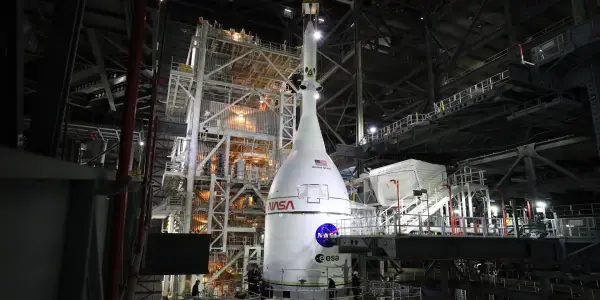
NASA Advances Artemis 2 Mission with Orion...
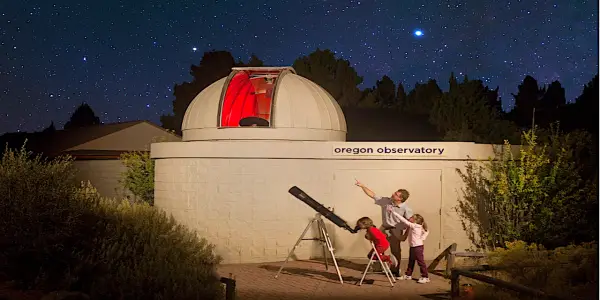
Exploring Oregon's Premier Public Telescope...

Apple Introduces Emergency SOS via Satellite in...

Samsung's Galaxy S26 Ultra Set for Significant...

Childcare Crisis: Families Struggle as...
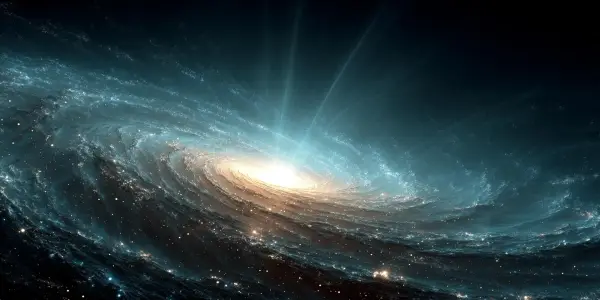
Astrophysicists Unveil Dark Universe Through...
Andromeda Galaxy's Impact on Its Satellite...
Blue Origin Faces Major Setback as New Glenn...
Astronomers Uncover Evidence of Aging Stars...

Satellite Imagery Highlights Hurricane Damage...
Euclid Space Telescope Discovers Hidden Stars in...

Deep Fission Proposes Underground Nuclear...

Astronomers Identify Three Earth-Sized Exoplanets...

European Space Agency Unveils Stunning Radar...
Rogue Moons: A New Frontier for Life Beyond Stars
Intense Solar Storms Could Ignite Life on...
NASA's Ambitious Timeline for Human Exploration...