Czech Startup Zaitra Pioneers AI-Driven Satellite Messaging
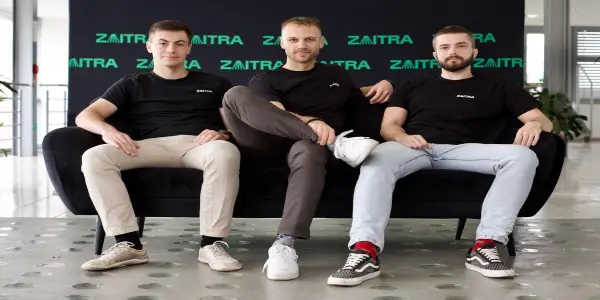
Utilizing its Skaisen AI and specialized hardware, Zaitra transforms satellite data into immediate alerts for sectors including defense and environmental monitoring.
In-depth analysis
New discoveries
Zaitra's innovative Skaisen AI model represents a significant breakthrough in satellite data processing, enabling real-time analysis of imagery. By filtering out unusable data and transmitting only critical insights, the technology enhances operational efficiency for various applications, including maritime monitoring and environmental protection, thus redefining the potential of satellite communications.
Mission updates
Zaitra has successfully demonstrated its technology aboard the Czech VZLUSAT-2 satellite, showcasing its ability to filter cloud-covered images. The company further validated its capabilities on the Troll satellite, operating under full conditions and receiving positive feedback at the recent Small Satellite Conference in Utah.
Who is affected
The advancements made by Zaitra impact a wide range of stakeholders, including maritime authorities, environmental agencies, and industries reliant on satellite data. Organizations involved in monitoring illegal fishing, detecting methane leaks, and responding to wildfires stand to benefit from the near-real-time insights provided by Zaitra's technology.
Next steps
Zaitra plans to further develop its AI node and expand its operational capabilities. The company is currently pursuing a seed funding round to support this growth, while also focusing on increasing its client base and refining its technology for broader applications in the satellite data market.
Did you know?
Why we should care
Zaitra's innovation in satellite data processing is not just a tech breakthrough; it has profound implications for emergency response and environmental protection. Imagine swift alerts for oil spills or wildfire threats, allowing responders to act before damage escalates. This technology could reshape how governments and organizations manage crises, making our world safer and more efficient in real-time.
The universe's unsolved mystery
Zaitra's approach to processing satellite data in orbit raises intriguing questions about the future of space technology. As AI evolves, can we expect satellites to not only observe but also predict events on Earth? The potential to foresee natural disasters or human activities could redefine our relationship with the planet and challenge the limits of human foresight.
The person who looks at the stars
Rado Pitonak, a co-founder of Zaitra, often gazes at the night sky, contemplating the vastness of space and its secrets. Growing up in the Czech countryside, he would spend hours stargazing, dreaming of how technology could bridge the gap between Earth and the cosmos. Now, he channels that childhood wonder into real-world applications, working tirelessly to transform satellite data into actionable insights. His passion is evident as he shares stories of how their technology has already helped detect illegal fishing and monitor environmental changes. For Rado, every alert generated by Zaitra represents not just a data point but a potential to protect our planet and its resources. His vision is clear: the stars are not just for observation but a pathway to a safer, more informed world.
Expert Commentary

Daily Roundup: November 10, 2025 – Advancements...
James Webb Space Telescope May Have Detected the...
Discovery of a Planet Formation Zone Beyond...

Foundation Season 3 Hints at Deeper Asimov Themes...
SabreSat: An Innovative Air-Breathing Satellite...
Hawaiian Students Honor Gemini North Telescope's...

Affordable Fitness Tracking: The Amazfit Active 2...
Apple Introduces Emergency SOS via Satellite in...
AI Reveals Over 800 New Cosmic Anomalies from...

Samsung Unveils Unprecedented Black Friday Deal...
Exploring the Composition of Cosmic Voids
Meteorite Fragment May Have Impacted Houston Home
Astronomers Capture Unprecedented Black Hole...
Blue Origin Faces Major Setback as New Glenn...
New Research Suggests Dark Matter Influences...
James Webb Telescope Identifies Rapidly Growing...
Astronomers Identify Potential Earth-Like...
Samsung Galaxy S26 Expected to Feature Enhanced...
Highlights of 2025 in Space Exploration: From...
Portal Systems Aims to Revolutionize Spacecraft...
James Webb Space Telescope Discovers Ancient...
Unistellar eQuinox 2 Smart Telescope Sees...
Potential Alien Disclosure May Trigger Bitcoin...
Ancient Galaxies: A Chaotic Early Universe...

Mapping the Invisible: Astronomers Uncover Dark...

Urwerk Unveils Limited-Edition 100V 'LightSpeed'...
Exploring Oregon's Premier Public Telescope...
Astronomers Uncover Evidence of Aging Stars...
Astronauts aboard the ISS Capture Stunning Images...

The Pleiades Star Cluster Reveals Its Extensive...
NASA's ESCAPADE Probes Set for Unique Journey to...
Rogue Moons: A New Frontier for Life Beyond Stars
NASA Unveils New Images of Interstellar Comet...
James Webb Space Telescope Captures Stunning...
SpaceX Faces Challenges in Meeting NASA's 2027...

Samsung's Galaxy S26 Ultra Set for Significant...
Jupiter's Moons Io and Europa to Cast Shadows...
Enhance Your Weather Preparedness with Weather...