The Age of a Galaxy Influences Planet Formation Potential
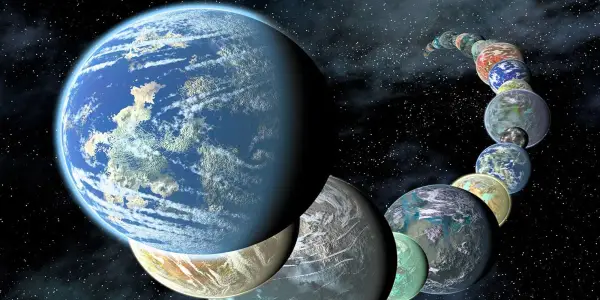
Research reveals that the age of a galaxy significantly affects the types of planets it can create, as the chemical composition evolves through stellar lifecycles.
In-depth analysis
New discoveries
The study reveals a significant correlation between a galaxy's age and the characteristics of its rocky planets. It shows that older galaxies, with higher metallicity, tend to produce denser and more diverse planets, enhancing the potential for habitability. This research offers a new model for understanding the complex processes behind planetary formation and the evolution of galactic chemistry.
Mission updates
Ongoing missions, including the James Webb Space Telescope and the forthcoming PLATO mission, are set to enhance our understanding of rocky exoplanets. These initiatives aim to provide critical data that aligns with the study's findings on planetary characteristics and their relationship to galactic evolution.
Who is affected
The implications of this research extend to astronomers and astrobiologists exploring the conditions necessary for life beyond Earth. Additionally, the study's insights may influence future planetary exploration missions and inform our understanding of the universe's evolutionary history, impacting both scientific communities and public interest in cosmic phenomena.
Next steps
Researchers plan to further investigate the relationship between galactic age and planetary characteristics through advanced observational techniques. Continued exploration of exoplanets will aim to validate the model introduced in this study, enhancing our comprehension of how life-supporting conditions evolve over cosmic timescales.
Did you know?
Why we should care
Understanding the age of galaxies and their influence on planet formation has real implications for our search for extraterrestrial life. As we explore rocky exoplanets, knowing their elemental makeup helps assess their habitability. This research connects cosmic history to our lives on Earth, as the very elements that shape our home are also key to understanding where life might exist elsewhere.
The universe's unsolved mystery
Despite our advancements in astronomy, the precise conditions that lead to the emergence of life remain elusive. This study highlights a critical gap in our knowledge: how the interplay of stellar lifecycles and elemental distribution influences not just planet formation, but the potential for life itself. The universe is a vast puzzle, and each discovery brings us closer to understanding how our story fits into it.
The person who looks at the stars
Meet Elena Torres, an aspiring astrophysicist who spends her nights gazing through her telescope in the Nevada desert. The recent findings resonate deeply with her passion; she dreams of discovering new worlds that could harbor life. For Elena, each star represents a potential home for beings like us, shaped by the cosmic processes she studies. Inspired by the idea that older galaxies offer clues to the elements necessary for life, she feels a connection to the universe's history. This research fuels her determination to contribute to our understanding of life's origins, making her nightly stargazing not just a hobby, but a mission that intertwines her future with the cosmos.
ISS Crew Takes Precautions Against Radiation...
NASA Advances Artemis 2 Mission with Orion...
Astronomers Uncover Evidence of Aging Stars...
Assessing the Financial Impact of NASA's Apollo...
Italian Producer Plans Historic Film to Shoot in...

Innovative Portable Reflecting Telescope...
Webb Telescope Reveals Unprecedented Cosmic...
Hubble Telescope Unveils Enigmatic Galaxy NGC 2775
Euclid Space Telescope Discovers Hidden Stars in...
New Simulations Shed Light on the Enigmatic...
Young Canadian Astronomer Identifies Two...
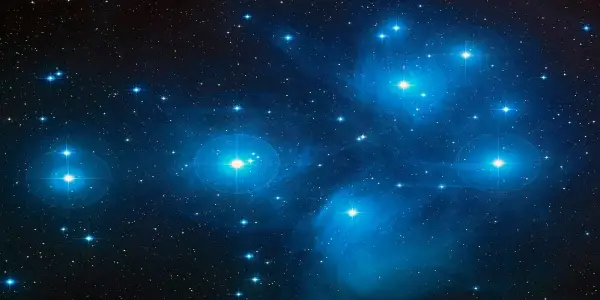
The Pleiades Star Cluster Reveals Its Extensive...
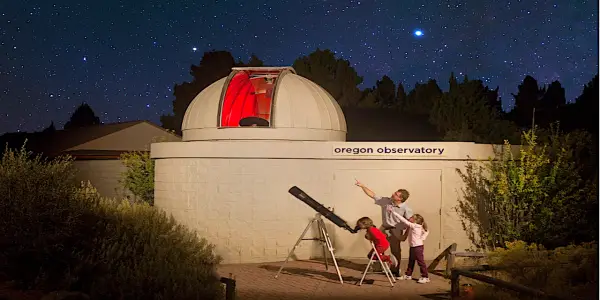
Exploring Oregon's Premier Public Telescope...
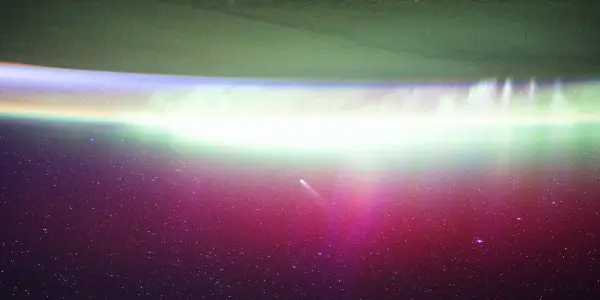
Astronauts aboard the ISS Capture Stunning Images...
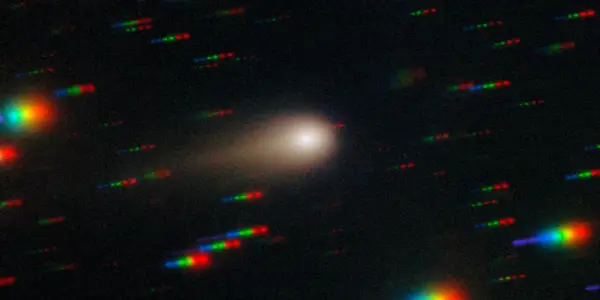
NASA's Campaign to Monitor Interstellar Comet...
The Dwarf III Smart Telescope: A Compact Marvel...
Rogue Moons: A New Frontier for Life Beyond Stars
SabreSat: An Innovative Air-Breathing Satellite...
Unusual Wind from Neutron Star Challenges Space...
Breakthrough in Milky Way Simulation Using AI...
Collaboration Between Exoplanet Researchers and...
Astronomers Capture Unprecedented Black Hole...

This Week In Space Podcast: Episode 187 Explores...
Interstellar Comet 3I/ATLAS Approaches...

Urwerk Unveils Limited-Edition 100V 'LightSpeed'...
Astronomers Converge in Phoenix for AAS 247: A...
Potential Alien Disclosure May Trigger Bitcoin...
China's Mars Orbiter Captures Image of...

Childcare Crisis: Families Struggle as...
Astronomers Identify Potential Earth-Like...
SpaceX Achieves 150th Falcon 9 Launch with...

Unistellar eQuinox 2 Smart Telescope Sees...
Andromeda Galaxy's Impact on Its Satellite...
NASA's Ambitious Timeline for Human Exploration...

Satellite Imagery Highlights Hurricane Damage...

Intense Solar Storms Could Ignite Life on...