Sanae Takaichi's Premiership Signals a New Era in Japan's Foreign Policy
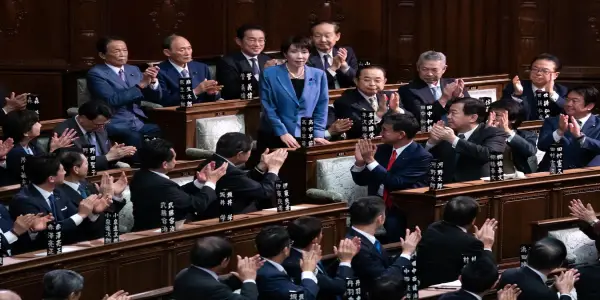
With Sanae Takaichi's election as Japan's first female prime minister, the country is poised for a significant shift in its approach to international relations, particularly regarding China.
In-depth analysis
Background context
Japan's political landscape has undergone a significant transformation with the election of Sanae Takaichi as prime minister, making her the first woman to hold the position. Her conservative leadership emerges amidst the dissolution of a long-standing coalition with the Liberal Democratic Party, indicating a potential shift in Japan's foreign policy, particularly towards its East Asian neighbors.
Key political implications
Takaichi's election signifies a potential pivot in Japan's foreign policy, emphasizing a more assertive stance on national defense and international relations, particularly concerning China and Taiwan.
Who gains / who loses
Takaichi's administration may benefit conservative factions within Japan advocating for a robust military posture and a reevaluation of pacifist principles. Conversely, neighboring countries, particularly China and South Korea, could perceive her leadership as a threat, potentially straining diplomatic relations and escalating regional tensions.
Possible future scenarios
Under Takaichi's leadership, Japan may strengthen military ties with allies like the U.S. and Australia, fostering an anti-China coalition. Alternatively, her confrontational approach could lead to increased tensions and instability in the Asia-Pacific region.
Did you know?
Why you should know this
Sanae Takaichi's election as Japan's first female prime minister marks a pivotal shift in the nation's political and foreign policy landscape. Her approach may influence not just Japan's defense strategies, but also everyday lives, from increased military spending that could redirect funds from social programs to heightened tensions that might affect regional stability. Understanding these changes can provide insight into future economic and security implications for citizens both in Japan and across East Asia.
Behind the political curtain
In a surprising twist, Takaichi's rise comes after a long-standing coalition between the LDP and a junior partner dissolved, a rare occurrence in Japan's often stable political climate. This shift could lead to significant changes in internal party dynamics, setting the stage for future electoral battles and policy formulations.
Ordinary person in an extraordinary situation
Consider Hiroshi Tanaka, a small business owner in Tokyo who runs a family-owned restaurant. With Takaichi's push for a more militarized Japan, Hiroshi fears the potential economic repercussions of increased military spending, which may divert resources from local businesses like his. He recalls the economic downturn during previous conflicts and worries that rising tensions in East Asia could lead to instability, affecting his livelihood and the community he serves. For Hiroshi, this isn't just politics; it's about the future of his family and the vibrant culture his restaurant represents. As he watches Takaichi's policies unfold, he hopes for a balanced approach that prioritizes peace and prosperity, rather than conflict.
Expert Commentary
Democrats Celebrate Recent Wins Amidst Internal...

US Tariffs Impact Nuevo Leon's Steel Sector,...

Jared Isaacman Renominated as NASA Administrator...

The Impact of Trump's Second Year: A Year of...

Italy's Meloni Engages with Qatar Emir on Energy...

Zohran Mamdani Secures Victory in New York City...
Japan Reacts Strongly to China's Travel Advisory...

U.S. Authorities Detain British Journalist Linked...

Spain's Attorney General Convicted in...

Saudi Crown Prince's Invitation to the White...

NFL Players Union Faces Grievance Over Annual...

European Automakers Face New Chip Shortage as...

AfD Leader Raises Concerns Over Potential Threats...

The Rise of Technocracy in Modern Governance

Japan and Finland in Diplomatic Tension Following...

Canada Decides Against Public Disclosure of Nazi...

Javier Milei's Victory Signals a Shift in...

Geopolitical Tensions Surround Palau Amid...

Italy's PM Meloni Responds Firmly to Trump's...

Golden Snub-Nosed Monkeys Make European Debut in...

Apple Achieves Unprecedented Financial Success in...

Iraq's Parliamentary Elections: Key Insights...

Lessons from Ulysses S. Grant on Civil-Military...
Examining Trump's Claims of Resolving Conflicts:...

Misjudgments in Military Strategy: The Lessons...

Mamdani's Victory: A Turning Point for the...

Isaac Asimov's Perspective on Star Trek: A Sci-Fi...


Texas Governor Abbott Designates CAIR as a...

Inquiry Critiques Scottish Government's Covid-19...

China's Shift to a Cautious Research Strategy...
U.S. Extends Sanctions Relief as Syrian Leader...
German Chancellor Merz to Visit Israel for Key...

Zohran Mamdani's Vision for Global Municipal...

Algeria Grants Pardon to Jailed Novelist Boualem...
Khamenei Assassination: A Pivotal Shift in...

NASA Unveils Stunning Images of Interstellar...

Bangladesh's Upcoming Election: Key Political...

Nevada's Governor's Office Allegedly Intervened...

Comet 3I/ATLAS Continues to Mystify Scientists...