Assessing the Air Defense Capabilities of the Gulf Cooperation Council
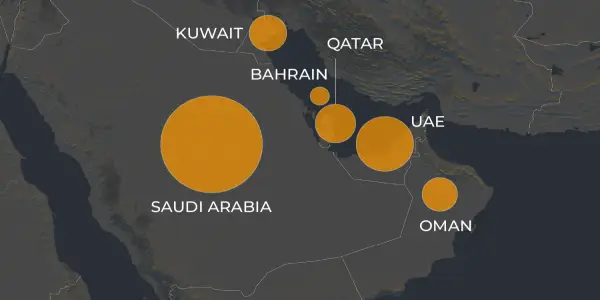
The Gulf Cooperation Council held an emergency meeting in Doha to enhance air defense capabilities in response to recent security threats and military cooper...
In-depth analysis
Background context
The Gulf Cooperation Council (GCC) held an emergency meeting in Doha in response to an Israeli airstrike on a Hamas office in Qatar, which resulted in six deaths. Established in 1981, the GCC aims to enhance collaboration among its six member states—Saudi Arabia, UAE, Qatar, Kuwait, Oman, and Bahrain—particularly in military readiness amid escalating regional conflicts.
Key political implications
The airstrike has prompted GCC states to reconsider their defense strategies, highlighting the necessity for enhanced military cooperation and intelligence sharing among member nations to address external threats.
Who gains / who loses
Countries like Saudi Arabia and the UAE, with advanced military capabilities, may strengthen their regional influence through enhanced defense collaborations. Conversely, nations like Oman and Bahrain, which lack extensive air defense systems, could find themselves at a strategic disadvantage.
Possible future scenarios
As tensions in the region rise, GCC nations may deepen military alliances and increase defense spending. Alternatively, failure to effectively collaborate could lead to vulnerabilities, exacerbating security concerns within the Gulf.
Did you know?
Why you should know this
The recent airstrike in Qatar highlights the fragility of regional security and the direct implications for everyday life in the Gulf. As GCC nations ramp up military cooperation, residents may face increased military presence and heightened tensions. This situation can affect everything from local economies to travel, making it essential for citizens to stay informed about the evolving geopolitical landscape.
Behind the political curtain
While many associate the GCC with economic cooperation, a surprising fact is that its military collaboration has been growing since the Arab Spring. The six nations have conducted over 100 joint military exercises since 2011, demonstrating their increasing focus on defense readiness amid regional instability.
Ordinary person in an extraordinary situation
Consider Fatima, a schoolteacher in Doha, who now navigates a landscape where her daily routines are punctuated by air raid drills and heightened security alerts. The recent airstrike has left her community anxious, as local families grapple with the fear of escalating violence. Fatima has taken it upon herself to reassure her students, explaining the importance of peace and resilience. However, she struggles with her own uncertainty about the future. This incident has transformed her role, pushing her to be not just an educator but also a source of strength and hope in a time of crisis, illustrating how geopolitical events can reshape the lives of ordinary individuals.
Expert Commentary

Japan and Finland in Diplomatic Tension Following...
U.S. Extends Sanctions Relief as Syrian Leader...
European Allies Stand Firm with Denmark Amid U.S....
South Korea Rebuilds Trust and Reassesses Foreign...

Revitalizing Relations: The Future of the...
Switzerland Faces Economic Challenges Amid U.S....
The 1969 Sino-Soviet Border Conflict: A Near Miss...

AfD Leader Raises Concerns Over Potential Threats...

The Rise of Technocracy in Modern Governance
UK Finalizes £8 Billion Typhoon Fighter Jet...
China's Shift to a Cautious Research Strategy...

The Fate of the Maquis in Star Trek: A Missed...
Cuba Rejects U.S. Security Threat Claims Amid...

Golden Snub-Nosed Monkeys Make European Debut in...
Germany Resumes Arms Exports to Israel Amid...
Saudi Crown Prince Mohammed bin Salman Set for...
Bhutan's Complex Relationship with India: A...

Ireland Moves Forward with Bill Targeting Israeli...
Javier Milei's Victory Signals a Shift in...
Mark Carney Discusses Political Transition During...

NASA Unveils Stunning Images of Interstellar...

Canada Decides Against Public Disclosure of Nazi...
Bangladesh's Upcoming Election: Key Political...
US Tariffs Impact Nuevo Leon's Steel Sector,...
Syria's Foreign Minister Visits China to...
Indian Trade Unions Rally Against New Labour...
Mamdani's Victory: A Turning Point for the...
Geopolitical Tensions Surround Palau Amid...
Tarique Rahman's Homecoming: A Potential Turning...
Exiled Russian Orthodox Leader Responds to Spying...

Zohran Mamdani's Vision for Global Municipal...
Italy's Meloni Engages with Qatar Emir on Energy...
The Impact of Trump's Second Year: A Year of...

Apple Achieves Unprecedented Financial Success in...
Contradictory Signals from Trump and Rubio on...

New England Senators Play Crucial Role in...
Jim Avila, Esteemed ABC News Correspondent, Dies...
Japan Reacts Strongly to China's Travel Advisory...

Jetpack Navigation 3 Achieves Stability for...

European Automakers Face New Chip Shortage as...