Moss Endures Nine Months in the Vacuum of Space
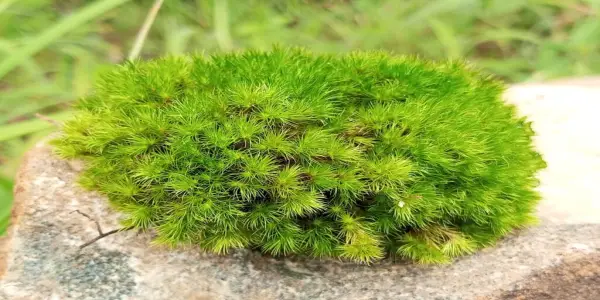
Researchers discover that moss spores can survive nine months in space, showcasing their resilience against extreme radiation and temperature fluctuations.
In-depth analysis
New discoveries
Recent research has unveiled that moss spores can endure the extreme conditions of space for up to nine months. This study highlights their remarkable resilience against severe radiation and temperature fluctuations, revealing that nearly 80% of the spores successfully germinated after returning to Earth, demonstrating their extraordinary adaptability to harsh environments.
Mission updates
The study's findings have been published in a peer-reviewed journal, marking a significant contribution to the field of astrobiology and enhancing understanding of extremophiles in space.
Who is affected
This research impacts scientists and researchers in astrobiology, ecology, and space exploration. It opens new avenues for studying life forms that could thrive in extraterrestrial environments, potentially influencing future missions to the Moon and Mars.
Next steps
Future research will focus on leveraging these findings to explore sustainable ecosystems in space. Scientists aim to conduct further experiments that could lead to the development of life-supporting habitats on other celestial bodies.
Did you know?
Why we should care
The resilience of moss spores in space offers insights into sustainable life beyond Earth. As humanity seeks to establish colonies on the Moon or Mars, understanding how these simple plants can thrive in extreme conditions is crucial. This knowledge might inform agricultural practices in hostile environments, potentially allowing future astronauts to cultivate food and support ecosystems in places previously deemed uninhabitable.
The universe's unsolved mystery
While moss spores have demonstrated remarkable survival skills, they raise deeper questions about the nature of life itself. What other organisms, perhaps yet undiscovered, hold the key to thriving in extraterrestrial environments? The exploration of extremophiles not only expands our understanding of biology but also challenges our perceptions of where life can exist, potentially reshaping our search for extraterrestrial life.
The person who looks at the stars
Maria Vasquez, an aspiring astrobiologist, often finds herself gazing at the night sky from her rooftop in Tucson, Arizona. Growing up in a family of farmers, she learned the importance of resilient crops. The recent findings on moss spores resonate deeply with her dreams of cultivating life on other planets. Every time she looks up, she imagines a future where moss might play a crucial role in sustaining human life on Mars. This connection fuels her passion, pushing her to study how life adapts and thrives in unwelcoming environments. For Maria, the survival of moss spores isn't just a scientific milestone; it's a beacon of hope for humanity's interstellar journey.
Rogue Moons: A New Frontier for Life Beyond Stars
Unusual Wind from Neutron Star Challenges Space...
Euclid Space Telescope Discovers Hidden Stars in...
Astronomers Identify Three Earth-Sized Exoplanets...
Innovative Portable Reflecting Telescope...

James Webb Telescope Identifies Rapidly Growing...
Intense Solar Storm May Illuminate Skies Across...
Astronomers Identify Potential Earth-Like...
SpaceX Achieves 150th Falcon 9 Launch with...
NASA's ESCAPADE Probes Set for Unique Journey to...
Congress Questions NASA's Facility Closures Amid...
New Mexico Startup Unveils Ambitious Plan to...
Ancient Earth Chemistry Discovered Beneath Modern...

Daily Roundup: November 10, 2025 – Advancements...
Collaboration Between Exoplanet Researchers and...
Recent Studies Explore Potential Exoplanet in...
Astrophotographer Captures Stunning Image of...
The Pleiades Star Cluster Reveals Its Extensive...
NASA's Ambitious Timeline for Human Exploration...
Blue Origin Faces Major Setback as New Glenn...
Potential Alien Disclosure May Trigger Bitcoin...
Italian Producer Plans Historic Film to Shoot in...
Andromeda Galaxy's Impact on Its Satellite...
Ancient Galaxies: A Chaotic Early Universe...

Satellite Imagery Highlights Hurricane Damage...
Top Black Friday Smartwatch Deals Worth...

Jeff Bezos's AI Hardware Venture Takes Aim at...

X-Men Return to Education in Upcoming Comic...

Exploring Alternatives to the Meta Quest 3 Elite...
The Dwarf III Smart Telescope: A Compact Marvel...
Assessing the Financial Impact of NASA's Apollo...
Portal Systems Aims to Revolutionize Spacecraft...
NASA's X-59 Achieves Historic Supersonic Flight

Deep Fission Proposes Underground Nuclear...
NASA and European Partners Prepare for...
Astronomers Discover Ancient White Dwarf Actively...
Interstellar Comet 3I/ATLAS Approaches...
Astronauts aboard the ISS Capture Stunning Images...