Putin Issues Warning Amidst Europe’s Military Escalation
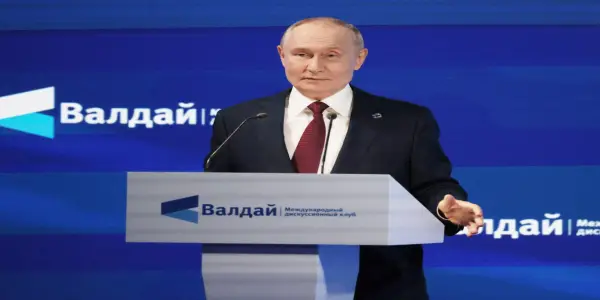
Russian President Vladimir Putin warns of Europe's military escalation, dismissing claims of a Russian threat to NATO as misinformation amid rising tensions.
In-depth analysis
Background context
The relationship between Russia and NATO has deteriorated significantly since the onset of the Ukraine conflict in 2022, with increased military activities and heightened tensions. Putin's recent comments reflect concerns over NATO's military buildup in Eastern Europe, particularly in response to perceived threats from Russia, which he insists are exaggerated.
Key political implications
Putin's statements may further strain diplomatic relations between Russia and Western nations, complicating any potential negotiations for peace and reinforcing NATO's military posture in Eastern Europe.
Who gains / who loses
NATO member states may gain a sense of security through increased military readiness, while Russia risks further isolation and economic strain as tensions escalate. The situation leaves both sides entrenched in their positions, limiting avenues for dialogue.
Possible future scenarios
The ongoing militarization could lead to heightened confrontations or, conversely, prompt renewed diplomatic efforts to de-escalate tensions. The responses from NATO and European nations will be pivotal in determining the trajectory of these relations.
Did you know?
Why you should know this
Putin's warning about Europe's militarization signals potential changes in security and defense strategies that could impact daily life across the continent. Increased military presence and spending by NATO countries might lead to economic shifts, affecting everything from national budgets to consumer prices. Understanding these dynamics helps individuals grasp how international tensions can ripple into local economies and communities.
Behind the political curtain
A lesser-known fact is that NATO's military presence in Eastern Europe has not only grown since the Ukraine conflict but has also included the deployment of multinational battlegroups in countries like Poland and the Baltic states, aimed at deterring potential aggression. This strategic positioning represents a significant shift in NATO's approach to collective defense.
Ordinary person in an extraordinary situation
Consider Anna, a small business owner in Lithuania, who feels the weight of this geopolitical tension daily. With increased NATO operations nearby, her local supply chain has been strained, driving up costs and causing uncertainty among her clients. Anna has always dreamed of expanding her business, but the fear of conflict disrupts her plans. Every news report about military maneuvers makes her anxious about the future—both for her business and her family's safety. This situation exemplifies how global politics can infiltrate the lives of ordinary citizens, forcing them to navigate not only financial challenges but also the emotional toll of living in a region marked by uncertainty.
Expert Commentary
Russian and Indian Foreign Ministers Convene...
Trump to Engage with Syrian Leader Following...
Nydia Velázquez Steps Down, Sparking Calls for...
European Automakers Face New Chip Shortage as...
German Chancellor Merz to Visit Israel for Key...
Indian Trade Unions Rally Against New Labour...

Ireland Moves Forward with Bill Targeting Israeli...

The Foundation of Friendship: Understanding...
Japan Reacts Strongly to China's Travel Advisory...
The 1969 Sino-Soviet Border Conflict: A Near Miss...

UK Officials Under Scrutiny Following Collapse of...
Texas Governor Abbott Designates CAIR as a...

Baden Bower Reduces Pitch-to-Publish Timeline by...
E.U. Ambassador to the U.S. Affirms Positive...
Japan Protests China's Travel Advisory Amid...
AfD Leader Raises Concerns Over Potential Threats...

Reddit Enhances App Performance with R8...

Durian Diplomacy: A Spiky Symbol of Soft Power in...
Khamenei Assassination: A Pivotal Shift in...
Jim Avila, Esteemed ABC News Correspondent, Dies...
Understanding Donald Trump’s Vision of Military...
Global Community's Stance on Israel: A Complex...

Mamdani Emerges Victorious in NYC Mayoral Race...
New Yorkers Kick Off Early Voting for Mayoral...

Comet 3I/ATLAS Continues to Mystify Scientists...
The Rise of Technocracy in Modern Governance
Jared Isaacman Renominated as NASA Administrator...
Trump Considers Tomahawk Missile Support for...
Explosion at Tennessee Munitions Facility Leaves...
Overview of Recent US Trade Policies Against China
U.S. Embassies Redefine Human Rights:...
The Role of Palestinian Statehood in Advancing...
Six Finalists Announced for the 2026...
Trump Reverses Stance on Greenland After UK...
Trump and Finnish President Stubb Forge Strong...
South Africa's G20 Presidency: A Mixed Legacy of...

Nevada's Governor's Office Allegedly Intervened...
Analyzing Trump's Latin America Strategy Amid...
Canada's Carney to Meet Xi in China, Signaling a...
Denmark's Prime Minister Advocates for Stricter...