Protests Erupt Across Italy Amid Gaza Conflict, Pressuring Meloni Government
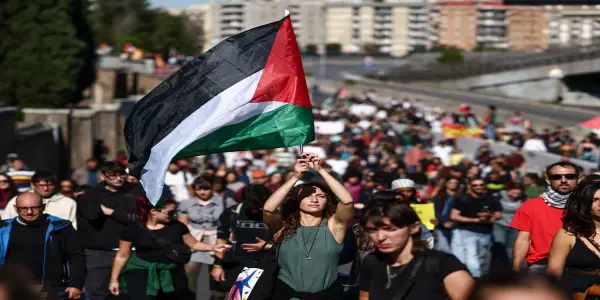
Protests erupt across Italy as over two million join strikes against the Gaza conflict, disrupting transport and highlighting the nation's tradition of solid...
In-depth analysis
Background context
Italy's recent protests are rooted in a historical tradition of solidarity movements, particularly regarding international conflicts. The demonstrations, involving over two million participants, were organized by trade unions as a general strike to advocate for Palestinian rights and support a humanitarian flotilla. This mobilization reflects deep-seated societal values around humanitarian issues.
Key political implications
The protests pose a significant challenge to Prime Minister Giorgia Meloni's administration, which faces increasing public scrutiny over its stance on the Gaza conflict. The government's response may influence its political stability and future policy decisions.
Who gains / who loses
The protesters, representing a broad spectrum of society, gain visibility for their cause and may pressure the government to adopt a more assertive stance on Palestinian rights. Conversely, Meloni's administration risks losing public support and credibility if it fails to respond adequately to the growing dissent.
Possible future scenarios
As protests escalate, the government may be compelled to reconsider its position on Palestine, potentially leading to policy shifts. Alternatively, continued resistance could deepen public discontent and spark further unrest, complicating the political landscape.
Did you know?
Why you should know this
The recent protests in Italy highlight a growing public outcry over international humanitarian issues, particularly the Gaza conflict. This movement illustrates how global events can mobilize citizens to advocate for change, impacting local economies and public services. Understanding these protests allows individuals to grasp how interconnected global conflicts can influence everyday life, from transportation disruptions to community solidarity.
Behind the political curtain
Italy's history of solidarity movements dates back to the 1960s, with notable protests against the Vietnam War and support for anti-apartheid actions. This rich legacy demonstrates a cultural inclination towards activism that persists in contemporary issues, making the recent protests a continuation of a long-standing tradition.
Ordinary person in an extraordinary situation
Maria Rossi, a 68-year-old retired schoolteacher from Bologna, stood among the sea of protesters, clutching her granddaughter’s hand. For Maria, this was not just a protest; it was a chance to teach her family about empathy and justice. She recalled her own parents discussing their involvement in post-war movements, instilling in her a deep sense of responsibility to advocate for those suffering worldwide. As she waved her Palestinian flag, Maria felt a profound connection not only to the cause but also to the history of her own country—a place where voices unite for a shared future. In moments of turmoil, it’s individuals like Maria who remind us that activism can bridge generations, fostering understanding and hope in chaotic times.
Expert Commentary
New Yorkers Kick Off Early Voting for Mayoral...
The Rise of Technocracy in Modern Governance

Putin Issues Warning Amidst Europe’s Military...
Israel Seeks Diplomatic Renewal with Bolivia...
Former Preschool Cook Sentenced for Molesting...

Isaac Asimov's Perspective on Star Trek: A Sci-Fi...
Bangladesh's Upcoming Election: Key Political...

U.S. Lawmakers Express Concerns Over Trump...

Is the U.S. Reassessing Its Stance on Israel...
Texas Governor Abbott Designates CAIR as a...

Jared Isaacman Renominated as NASA Administrator...

Trump's Bold Foreign Policy Yields Progress in...

European Automakers Face New Chip Shortage as...
Trump Reverses Stance on Greenland After UK...
Colombia's ELN Rebels Intensify Military Drills...
Australia Seizes Opportunity in U.S.-China Rare...
The Israel-Hamas Ceasefire: A Critical Moment...

Nevada's Governor's Office Allegedly Intervened...

NASA Unveils Stunning Images of Interstellar...
The 1969 Sino-Soviet Border Conflict: A Near Miss...
Six Finalists Announced for the 2026...

Understanding Donald Trump’s Vision of Military...

Ghanaian Lawmakers Discover New Opportunities in...
Bangladesh's International Crimes Tribunal...
Saudi Crown Prince's Invitation to the White...
Singapore and China Celebrate 35 Years of...
Trump Appoints Special Envoy to Greenland,...

Mamdani Emerges Victorious in NYC Mayoral Race...
Bhutan's Complex Relationship with India: A...

The Foundation of Friendship: Understanding...
Japan Reacts Strongly to China's Travel Advisory...
Canada and China Take Steps Toward Repairing...
Iraq's Parliamentary Elections: Key Insights...
South Korea Initiates First Military Talks with...

NFL Players Union Faces Grievance Over Annual...
Canada's Carney to Meet Xi in China, Signaling a...

Comet 3I/ATLAS Continues to Mystify Scientists...
Javier Milei's Victory Signals a Shift in...

AfD Leader Raises Concerns Over Potential Threats...

The Evolving Landscape of Copyright Enforcement...