Analysts Assess Impact of Potential Saudi F-35 Purchase on Israeli Military Superiority
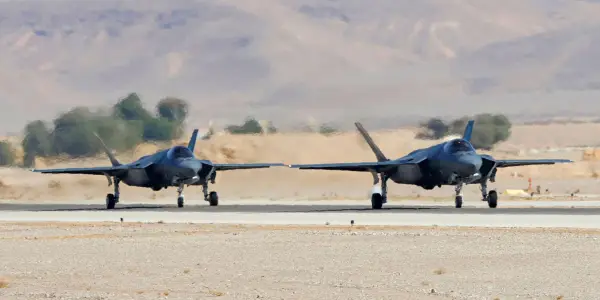
Experts indicate that while Saudi Arabia's interest in F-35 jets raises concerns, Israel's military edge is likely to be maintained under current geopolitical dynamics.
In-depth analysis
Background context
Saudi Arabia's pursuit of up to 50 F-35 fighters from Lockheed Martin has ignited discussions about military balance in the Middle East. Central to this debate is Israel's qualitative military edge (QME), historically upheld by U.S. assurances of superior technology, particularly in light of regional tensions involving Iran.
Key political implications
This arms deal could significantly impact U.S.-Israeli relations, as Israel demands that any sale to Saudi Arabia be contingent on normalization efforts, complicating diplomatic engagements in the region.
Who gains / who loses
Should the sale proceed, Saudi Arabia stands to gain advanced military capabilities, enhancing its deterrence against Iran. Conversely, Israel risks compromising its air superiority, potentially destabilizing its strategic position in the region.
Possible future scenarios
If Saudi Arabia acquires F-35s, it may trigger an arms race among Gulf states seeking similar technologies. Alternatively, the U.S. might restrict such sales to maintain Israel's military advantage, influencing regional alliances.
Did you know?
Why you should know this
Saudi Arabia's pursuit of F-35 fighters isn't just a military transaction; it could reshape the security landscape of the Middle East. For everyday citizens, this means potential shifts in regional stability, affecting everything from oil prices to international relations. Understanding how military power dynamics play out can illuminate broader geopolitical trends that ultimately impact daily life.
Behind the political curtain
In 1976, the U.S. established the Qualitative Military Edge (QME) assurance for Israel, which dictates that any arms sold to neighboring states must not compromise Israel's military superiority. This agreement has been pivotal in maintaining Israel's defense strategy and serves as a critical lever in U.S.-Middle East relations.
Ordinary person in an extraordinary situation
Consider Ahmed, a 32-year-old teacher in Riyadh. He's been following the news about the F-35 deal closely, feeling a mix of hope and anxiety. On one hand, he believes that having advanced technology could enhance Saudi defense against threats. On the other, he worries about escalating tensions with Israel and the implications for peace in the region. For him, the stakes are not just military; it's about a future where he can raise his children in a stable environment. Ahmed's concerns reflect a broader sentiment among many citizens in the Gulf who desire security but fear the consequences of an arms race.

Geopolitical Tensions Surround Palau Amid...

Trump Considers Tomahawk Missile Support for...

South Korea Initiates First Military Talks with...
Is the U.S. Reassessing Its Stance on Israel...

Javier Milei's Victory Signals a Shift in...

The 1969 Sino-Soviet Border Conflict: A Near Miss...

Overview of Recent US Trade Policies Against China

U.S. Lawmakers Express Concerns Over Trump...

Mark Carney Discusses Political Transition During...

New Advocacy Report Urges Action Against Child...

Japan Protests China's Travel Advisory Amid...

Spain's Attorney General Convicted in...

New England Senators Play Crucial Role in...

Understanding Donald Trump’s Vision of Military...

Isaac Asimov's Perspective on Star Trek: A Sci-Fi...

Australia Seizes Opportunity in U.S.-China Rare...

Zohran Mamdani Secures Victory in New York City...

Lessons from Ulysses S. Grant on Civil-Military...

Limited Expectations as Trump and Xi Approach...
U.S. Extends Sanctions Relief as Syrian Leader...

Trump's Bold Foreign Policy Yields Progress in...

Bangladesh's Upcoming Election: Key Political...

Sanae Takaichi Elected as Leader of Japan's...

Texas Governor Abbott Designates CAIR as a...

European Automakers Face New Chip Shortage as...

EA Raises Concerns Over Sale to Saudi Arabia's...

Bangladesh Seeks India's Assistance in...
Canada and China Take Steps Toward Repairing...

Oracle's Stance on Israel Sparks Controversy...

Saudi Crown Prince's Invitation to the White...

Boeing 777X: The Long Wait for Innovation and...
Togo Navigates Diplomatic Balancing Act Amid...

Nevada's Governor's Office Allegedly Intervened...
Global Community's Stance on Israel: A Complex...

Bangladesh's International Crimes Tribunal...

Ghanaian Lawmakers Discover New Opportunities in...

Jetpack Navigation 3 Achieves Stability for...

The Foundation of Friendship: Understanding...

Baden Bower Reduces Pitch-to-Publish Timeline by...

Milorad Dodik Steps Down, Clearing Path for...