Sanae Takaichi Elected as Leader of Japan's Ruling Party, Poised to Become First Female Prime Minister
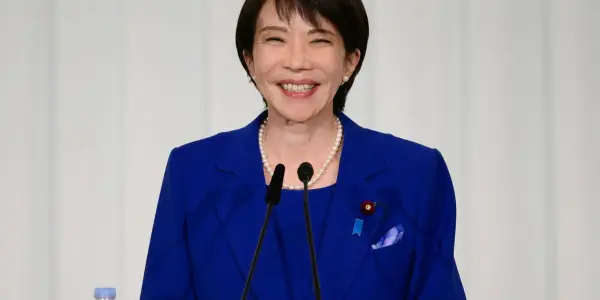
Sanae Takaichi, a prominent ultra-conservative figure and former Economic Security Minister, has been elected leader of Japan's ruling Liberal Democratic Party, positioning her as the likely first female prime minister in the country's history.
In-depth analysis
Background context
Sanae Takaichi's election as the new leader of Japan's ruling Liberal Democratic Party (LDP) marks a historic moment, as she is poised to become the first female prime minister. Her hard-line approach to national security reflects the ultra-conservative ideals of her mentor, Shinzo Abe, while her leadership comes amid a backdrop of declining public confidence in the LDP.
Key political implications
Takaichi's election signals a consolidation of conservative values within the LDP, potentially alienating centrist factions while aiming to secure support from the party's traditional base amidst rising far-right sentiments.
Who gains / who loses
Takaichi's leadership may benefit conservative voters who prioritize national security and strong defense policies, while centrist and progressive factions within the LDP might feel marginalized. Additionally, her election could impact Japan's international relations, particularly with allies concerned about her hard-line stance.
Possible future scenarios
If Takaichi successfully navigates internal party dynamics and restores public trust, the LDP could regain electoral strength. Conversely, failure to address pressing issues may lead to further electoral challenges and a potential rise in alternative political movements.
Did you know?
Why you should know this
Sanae Takaichi's election as the first female leader of Japan's LDP could reshape the nation's political landscape. Her hard-line approach on security and relations with China signals a shift that impacts not just diplomatic ties but also everyday life in Japan, from economic stability to public safety. As Japan grapples with gender equality, Takaichi’s leadership could inspire women across the country to pursue roles in governance and business.
Behind the political curtain
Despite Japan's long history of male-dominated politics, Takaichi's ascent is particularly striking given that only 10% of Japanese lawmakers are women, one of the lowest figures among developed nations. This stark contrast highlights the uphill battle for gender representation in Japan's political sphere.
Ordinary person in an extraordinary situation
Take Yuki Tanaka, a 34-year-old teacher in Tokyo, who has watched Japan's political climate closely. For Yuki, Takaichi's leadership sparks hope. Growing up in a society where women are often sidelined, Yuki felt her aspirations limited. Takaichi’s election resonates deeply with her, symbolizing a potential shift toward greater female representation. Yuki sees this as an opportunity not only to inspire her students but to advocate for a future where women can lead in all fields. The excitement Yuki feels is palpable, as she reflects on how Takaichi's journey could redefine possibilities for her own daughter, who dreams of becoming a scientist. As Yuki engages her students in discussions about leadership, her belief in a more inclusive future strengthens, showcasing how political changes can echo in the lives of everyday citizens.
Expert Commentary

Iraq's Parliamentary Elections: Key Insights...

European Automakers Face New Chip Shortage as...

Bangladesh Seeks India's Assistance in...

Mamdani Emerges Victorious in NYC Mayoral Race...

Saudi Crown Prince Mohammed bin Salman Set for...

US Tariffs Impact Nuevo Leon's Steel Sector,...

Tarique Rahman's Homecoming: A Potential Turning...

Geopolitical Tensions Surround Palau Amid...

EA Raises Concerns Over Sale to Saudi Arabia's...

Revitalizing Relations: The Future of the...

Jared Isaacman Renominated as NASA Administrator...

South Africa's G20 Presidency: A Mixed Legacy of...

Texas Governor Abbott Designates CAIR as a...

Japan Protests China's Travel Advisory Amid...

Bangladesh's Upcoming Election: Key Political...

Contradictory Signals from Trump and Rubio on...

Jim Avila, Esteemed ABC News Correspondent, Dies...

Trump Addresses Nuclear Testing, Government...

U.S. Authorities Detain British Journalist Linked...

Exiled Russian Orthodox Leader Responds to Spying...

Germany Resumes Arms Exports to Israel Amid...

Canada Decides Against Public Disclosure of Nazi...

Saudi Crown Prince's Invitation to the White...

Mamdani's Victory: A Turning Point for the...

Apple Achieves Unprecedented Financial Success in...

The Fate of the Maquis in Star Trek: A Missed...
Six Finalists Announced for the 2026...

Javier Milei's Victory Signals a Shift in...

Baden Bower Reduces Pitch-to-Publish Timeline by...

Limited Expectations as Trump and Xi Approach...

Canada and China Take Steps Toward Repairing...

Exploring Intimacy and Isolation in Claire-Louise...

South Korea Rebuilds Trust and Reassesses Foreign...

Mark Carney Discusses Political Transition During...

Colombia's ELN Rebels Intensify Military Drills...

The Rise of Technocracy in Modern Governance

New England Senators Play Crucial Role in...

Key Insights from Trump's National Security...

New Advocacy Report Urges Action Against Child...

UK Finalizes £8 Billion Typhoon Fighter Jet...