Australia's SpIRIT Nanosatellite Captures First Selfie in Space, Set to Track Cosmic Gamma-Ray Bursts
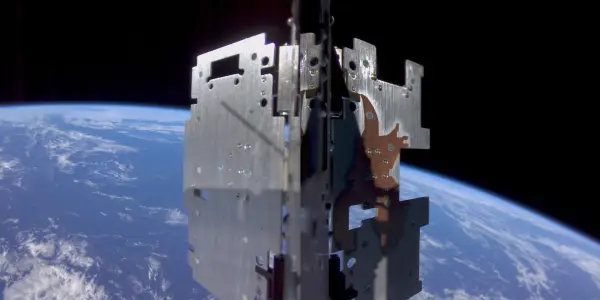
Australia's SpIRIT nanosatellite captures its first images in space, marking a new era in cosmic research as it prepares to track gamma-ray bursts from orbit.
In-depth analysis
New discoveries
The SpIRIT nanosatellite has made significant strides in its scientific mission by successfully detecting the Crab gamma pulsar shortly after entering its operational phase. This early achievement highlights its advanced capabilities in identifying cosmic gamma-ray bursts, which are critical for understanding high-energy astronomical events and could reshape current knowledge in astrophysics.
Mission updates
Having completed its commissioning phase, SpIRIT is now fully operational in orbit, having successfully tested all onboard systems. The satellite is transitioning to its primary role of detecting cosmic gamma-ray bursts.
Who is affected
Astronomers and astrophysicists worldwide stand to benefit from SpIRIT's capabilities, as it serves as an early warning system for cosmic events. The satellite's findings will enhance research and collaboration in the global scientific community, fostering a deeper understanding of the universe.
Next steps
Moving forward, SpIRIT will focus on its core mission of monitoring cosmic gamma-ray bursts. The satellite's ongoing observations are expected to yield valuable data over the next 12 months, contributing to significant advancements in space science.
Did you know?
Why we should care
The SpIRIT nanosatellite represents a leap in Australia’s role in global space exploration, offering insights that could affect everything from climate science to satellite technology. By detecting cosmic gamma-ray bursts, SpIRIT can provide critical data that may inform our understanding of the universe and lead to advancements in technologies used for everyday communication and navigation on Earth.
The universe's unsolved mystery
Cosmic gamma-ray bursts remain one of the most enigmatic phenomena in the universe. Their unpredictable nature poses a challenge for scientists, who are still unraveling the processes behind these explosive events. Understanding these bursts could unlock secrets about the life cycles of stars and the very fabric of space-time, pushing the boundaries of our astronomical knowledge.
The person who looks at the stars
Meet Sarah Johnson, a 32-year-old astrophysics teacher in Melbourne, who has always been captivated by the night sky. As a child, she would spend hours gazing at stars, dreaming of exploring the cosmos. Now, with the launch of SpIRIT, Sarah feels a renewed sense of wonder. The satellite's mission to detect gamma-ray bursts resonates deeply with her lessons on stellar life cycles, allowing her to inspire her students with real-time discoveries. Each image captured by SpIRIT fuels Sarah's passion for science, igniting curiosity in her classroom about the vastness of the universe and our place within it. For her, this isn’t just about technology; it’s about connecting young minds to the mysteries of existence.
Expert Commentary
Assessing the Financial Impact of NASA's Apollo...
Highlights of 2025 in Space Exploration: From...
SpaceX Achieves 150th Falcon 9 Launch with...
AI Reveals Over 800 New Cosmic Anomalies from...
Proposed Fleet of Sun-Gazing Spacecraft Aims to...
Andromeda Galaxy's Impact on Its Satellite...
Samsung Unintentionally Reveals Galaxy S26 Series...
Nearby Super-Earth Identified as Key Target in...
Unraveling the Mysteries of Mars: Recent...
General Relativity May Extend Habitability of...
Affordable Fitness Tracking: The Amazfit Active 2...
Astronauts aboard the ISS Capture Stunning Images...
New Study Reveals Theia and Earth May Have Shared...
This Week in Science: Insights on Comet 3I/ATLAS,...

FULU Foundation Introduces Repair Bounty System...
Astronomers Discover Ancient White Dwarf Actively...
Astronomers Capture First Image of Two Orbiting...
Interstellar Comet 3I/ATLAS Reveals Water...
Australia's SpIRIT Nanosatellite Captures First...
NASA Research Uncovers Climate's Impact on...
Russian Cosmonauts Conduct Extended Spacewalk to...
Senegal Joins Artemis Accords, Expanding...
Samsung Unveils Unprecedented Black Friday Deal...
James Webb Space Telescope May Have Detected the...

Urwerk Unveils Limited-Edition 100V 'LightSpeed'...
India Successfully Launches CMS-03 Military...
Innovative Portable Reflecting Telescope...
Potential Evidence of Dark Matter Emerges from...
Samsung Galaxy S26 Expected to Feature Enhanced...
Meteorite Fragment May Have Impacted Houston Home
First Direct Imaging of a Protoplanet in a Star's...

MiHoYo Expands Ambitions with New MMO Project...
Top Black Friday Smartwatch Deals Worth...
Celestial Wonders of Autumn 2025: Eight Key Night...
Astrophysicists Unveil Dark Universe Through...
MIT Researchers Uncover Ancient Traces of...
European Space Agency Unveils Stunning Radar...
Astronomers Identify Ancient Water in...
Webb Telescope Reveals Unprecedented Cosmic...
Breakthrough in Milky Way Simulation Using AI...