Proposed Fleet of Sun-Gazing Spacecraft Aims to Detect Solar Tornadoes Threatening Earth
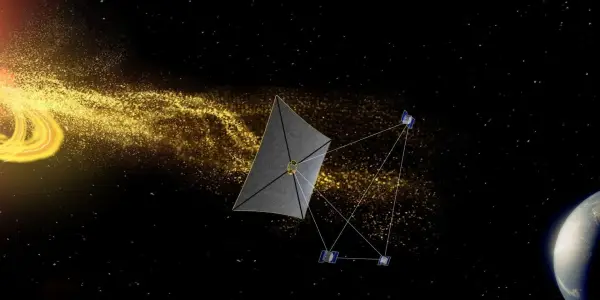
A new study suggests that a constellation of four spacecraft could enhance the speed of space weather warnings by 40%, potentially safeguarding critical infrastructure from solar storms.
In-depth analysis
New discoveries
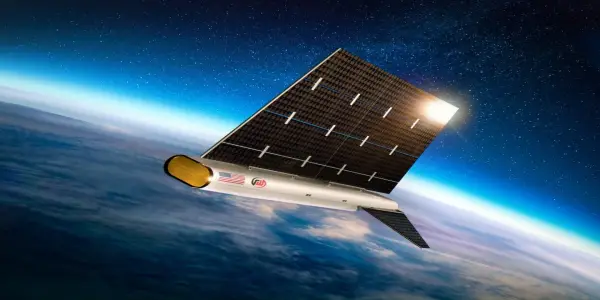
The SWIFT initiative proposes a groundbreaking fleet of four spacecraft designed to enhance the detection of solar tornadoes. This innovative configuration, particularly the inclusion of a solar sail-equipped spacecraft, aims to provide unprecedented insights into solar activity, improving the understanding of how solar phenomena impact Earth's environment and infrastructure.
Mission updates
The SWIFT proposal, recently funded by NASA and the National Science Foundation, is set to revolutionize space weather monitoring. The initiative seeks to reduce warning times for solar events by up to 40%, enhancing preparedness against solar-related disruptions.
Who is affected
The implications of solar tornadoes extend to various sectors, including telecommunications, power grids, and satellite operations. Communities reliant on these infrastructures could face significant disruptions during intense solar events, highlighting the necessity for improved monitoring and timely alerts.
Next steps
Following the proposal's approval, the next phase will involve detailed mission planning and spacecraft design. The focus will be on establishing the triangular formation for optimal solar monitoring, ensuring the system's readiness to respond to solar threats.
Did you know?
Why we should care
Solar tornadoes can disrupt our daily lives in unexpected ways, from causing power outages to interfering with GPS signals. As our reliance on technology increases, understanding solar activity becomes crucial. The proposed SWIFT mission could enhance our ability to predict solar storms, potentially preventing disruptions that affect everything from air travel to communication systems, safeguarding both businesses and individual lives.
The universe's unsolved mystery
Solar tornadoes remain one of the cosmos' enigmatic phenomena. These swirling plasma structures, capable of immense energy release, challenge our understanding of solar dynamics. By unraveling their mysteries, scientists may unlock deeper insights into not only solar activity but also the fundamental behaviors of magnetic fields throughout the universe, offering a glimpse into the forces that govern stellar systems.
The person who looks at the stars
Meet Elena Reyes, a high school science teacher in Tucson, Arizona, who inspires her students to explore the cosmos. With her telescope, she often shows them the beauty of the night sky, but she also emphasizes the importance of understanding solar phenomena like tornadoes. For Elena, the SWIFT mission is more than just a scientific endeavor; it represents hope for a future where her students can thrive in an increasingly technology-driven world. She often recounts the chaos caused by the 1989 Quebec blackout, explaining how solar events can affect everyday life. This connection sparks curiosity in her students, pushing them to think critically about space weather and its impact on Earth. Elena's passion for astronomy and education intertwines, fostering a generation that will look to the stars not just in wonder, but with a sense of responsibility.
Expert Commentary
Impulse Space Enters Lunar Exploration: New...

Urwerk Unveils Limited-Edition 100V 'LightSpeed'...

Jonathan Davies Urges England to Create New...
Potential Evidence of Dark Matter Emerges from...
Discovery of Betelgeuse's Companion Star Unveiled
NASA's Ambitious Timeline for Human Exploration...
Apple May Consider Transitioning to Starlink Amid...
NASA Unveils New Images of Interstellar Comet...

Netgear Orbi 370 Review: An Accessible Wi-Fi 7...
Interstellar Comet 3I/ATLAS Reveals Water...

Childcare Crisis: Families Struggle as...
Astronomers Capture First Image of Two Orbiting...
Starlink Satellites Make Headlines as They Fall...

FULU Foundation Introduces Repair Bounty System...
Astronauts aboard the ISS Capture Stunning Images...
International Space Station Crew Continues...

The Slitheen Return in 'Doctor Who' Comic Series...
AI Reveals Over 800 New Cosmic Anomalies from...
The Pleiades Star Cluster Reveals Its Extensive...
Russian Cosmonauts Conduct Extended Spacewalk to...
This Week In Space Podcast: Episode 187 Explores...
Exploring the James Webb Space Telescope: A $13...
European Space Agency Unveils Stunning Radar...
Mapping the Invisible: Astronomers Uncover Dark...
Affordable Fitness Tracking: The Amazfit Active 2...
Nearby Super-Earth Identified as Key Target in...
Japanese Astronaut Observes Typhoon Activity from...
Italian Producer Plans Historic Film to Shoot in...
Blue Origin Advances New Glenn Rocket Testing...
James Webb Telescope Reveals Potential Atmosphere...
Artemis 2 Astronauts Safely Return After Historic...
Hubble Telescope Unveils Enigmatic Galaxy NGC 2775
Boeing's Upcoming Starliner Mission Set for April...
Astronomers Capture Evidence of Dark Matter's...
SabreSat: An Innovative Air-Breathing Satellite...
Exploring Alternatives to the Meta Quest 3 Elite...
Young Canadian Astronomer Identifies Two...
Highlights of 2025 in Space Exploration: From...
Czech Startup Zaitra Pioneers AI-Driven Satellite...
European Space Agency Enhances Collaboration with...