European Space Agency Enhances Collaboration with Japan and South Korea on Space Initiatives
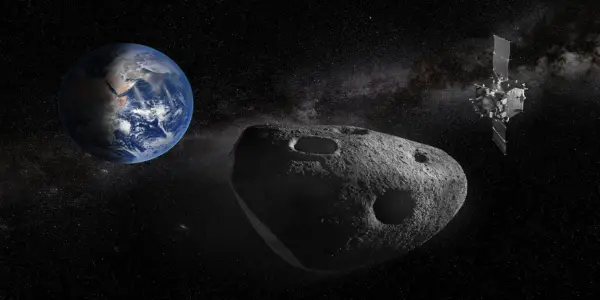
During the International Astronautical Congress in Sydney, the European Space Agency formalized partnerships with South Korea and Japan to boost international space cooperation.
In-depth analysis
New discoveries
Recent agreements between the European Space Agency and South Korea have the potential to enhance lunar exploration significantly. The collaboration will facilitate the sharing of telemetry data and ground station resources, directly benefiting South Korea's Danuri mission, which is capturing detailed images of the Moon's surface and contributing to a deeper understanding of lunar geology.
Mission updates
ESA is set to launch the Ramses spacecraft in collaboration with Japan's JAXA, as part of the Destiny+ mission. This mission will investigate the asteroid parent body of 1998 OR2, marking an important milestone in international space exploration efforts.
Who is affected
The agreements between ESA and its partners, particularly South Korea and Japan, will impact a wide range of stakeholders, including scientists, engineers, and policymakers. These collaborations will enhance research capabilities and foster innovation in space exploration, benefiting both nations' space programs and the global scientific community.
Next steps
Moving forward, ESA plans to continue its discussions with India to expand its international collaborations. These efforts are essential for staying competitive in the rapidly evolving space sector and for ensuring that scientific advancements keep pace with emerging technologies.
Did you know?
Why we should care
The ESA's partnerships with South Korea and Japan carry profound implications for everyday life on Earth. Enhanced collaboration in space exploration can lead to advancements in technology that filter down to sectors like telecommunications, environmental monitoring, and disaster management. For instance, improved space weather monitoring can protect our power grids and communication networks, ensuring stability in daily operations and safety in the face of natural disruptions.
The universe's unsolved mystery
The ongoing quest to understand the universe is filled with enigmas, such as the origins of dark matter and dark energy. These fundamental forces shape the cosmos, yet their nature remains elusive. As international partnerships strengthen, they may unlock new insights, potentially answering questions about our existence and the universe's ultimate fate, captivating both scientists and dreamers alike.
The person who looks at the stars
Maria Chen, a 12-year-old from Sydney, spends her evenings gazing at the night sky through her small telescope. Inspired by the ESA's recent partnerships, she dreams of becoming an astronaut. Each new discovery fuels her passion, igniting a desire to explore the cosmos. Maria's story reflects a generation captivated by space, where international collaboration not only paves the way for groundbreaking missions but also inspires young minds to reach for the stars. The hope that such partnerships bring—building a future where exploration is shared—gives her and countless others a reason to look up with wonder and ambition.
Expert Commentary

James Webb Telescope Identifies Rapidly Growing...
Exploring the 'Ultraview Effect': Human...

Affordable Fitness Tracking: The Amazfit Active 2...

Jeff Bezos's AI Hardware Venture Takes Aim at...

Astronomers Capture First Image of Two Orbiting...
Boeing's Upcoming Starliner Mission Set for April...

Mapping the Invisible: Astronomers Uncover Dark...
Senegal Joins Artemis Accords, Expanding...

Innovative Portable Reflecting Telescope...

Satellite Observations Reveal Unconventional...
Expansion of Earth’s Magnetic Field Weak Spot...

Celestial Wonders of Autumn 2025: Eight Key Night...

OnePlus 15 vs. Samsung Galaxy S25 Plus: A Clash...
Proposed Fleet of Sun-Gazing Spacecraft Aims to...
SpaceX Achieves Major Milestone with Launch of...

MiHoYo Expands Ambitions with New MMO Project...
Impulse Space Enters Lunar Exploration: New...

Reviving Adult Friendships: Strategies to Combat...
New Mexico Startup Unveils Ambitious Plan to...
NASA Faces Scrutiny Over Boeing Starliner...
China's Shenzhou 22 Mission Launches Uncrewed...
Russian Cosmonauts Conduct Extended Spacewalk to...

NASA's Ambitious Timeline for Human Exploration...
Assessing the Financial Impact of NASA's Apollo...

Unistellar eQuinox 2 Smart Telescope Sees...

Top Black Friday Smartwatch Deals Worth...

The Pleiades Star Cluster Reveals Its Extensive...

Childcare Crisis: Families Struggle as...
Astronomers Capture Evidence of Dark Matter's...

Japanese Astronaut Observes Typhoon Activity from...
SpaceX Set to Launch NASA's Pandora Exoplanet...

Potential Evidence of Dark Matter Emerges from...

Astrophysicists Unveil Dark Universe Through...

Samsung Galaxy S26 Expected to Feature Enhanced...

Unusual Wind from Neutron Star Challenges Space...
NASA's Artemis 3 Moon Mission Delayed to 2028 Due...
New Simulations Shed Light on the Enigmatic...
Artemis 2 Astronauts Safely Return After Historic...

NASA Unveils New Images of Interstellar Comet...
Astrophotographer Captures Stunning Image of...