Moon and Venus Align in the Pre-Dawn Sky on October 19
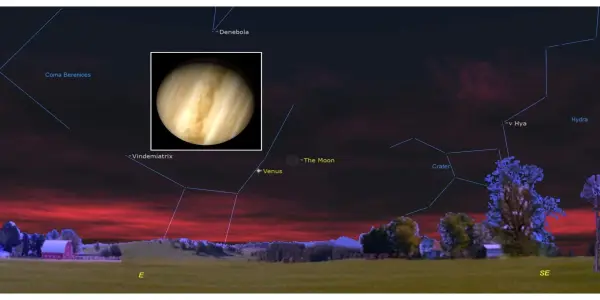
Witness a stunning celestial event on October 19 as the crescent moon and Venus align in the pre-dawn sky, creating a breathtaking visual display for early r...
In-depth analysis
Natural phenomena
On October 19, observers will witness a captivating alignment of the crescent moon and Venus, appearing just four degrees apart in the eastern sky at dawn. This event not only offers a stunning visual but also serves as a reminder of the vast distances in space, with the moon being Earth's closest celestial neighbor and Venus lying 26 million miles away.
Impact on communities
Such celestial events foster community engagement and interest in astronomy, encouraging local gatherings for stargazing and educational activities. They provide a shared experience that can strengthen community bonds.
Scientific updates
Currently, Venus shines at a bright magnitude of -3, making it the most visible planet in the sky. However, it is gradually moving closer to the horizon as it nears its conjunction with the sun, indicating that its visibility will soon diminish.
Future outlook
As celestial events continue to capture public interest, educational institutions are likely to enhance their outreach efforts. This could inspire a new generation of astronomers and deepen public understanding of our universe.
Did you know?
Why this matters for our planet
The upcoming alignment of the crescent moon and Venus offers a moment for reflection on our cosmic neighborhood. As these celestial bodies dance in the sky, they remind us of Earth's fragile position in the vast universe. Such events can inspire a sense of stewardship for our planet, fostering a deeper connection to the environment and a commitment to preserving the beauty that surrounds us.
Earth's undiscovered wonder
Did you know that Venus is often referred to as Earth's 'sister planet' due to their similar size and composition? Despite this, Venus has a surface temperature hot enough to melt lead, showcasing the extremes of planetary environments and highlighting the importance of understanding our own planet's climate.
The voice of Earth
Marcus, 34, from Chicago, grew up gazing at the stars with his grandmother, who would share stories about the moon and planets. Now, as he prepares to witness the crescent moon and Venus together, he feels a deep connection to those childhood nights. Marcus recalls how the twinkling stars sparked his curiosity about space, leading him to become a science teacher. For him, this celestial event isn’t just a moment of beauty; it's a reminder of the wonder that inspired him to ignite that same passion in his students, urging them to look up and dream.
Interstellar Comet 3I/ATLAS Reaches Perihelion,...
Significant Solar Activity Forecasted to Cause...

Reassessing Economic Growth: Valuing Natural...
Blue Origin's New Glenn Rocket Set to Launch...

VTN Architects Completes Nuoc Ui School in...
First Mosquito Sightings in Iceland Linked to...

Intaaya Retreat in Indonesia Features Innovative...
Innovative Engine Harnesses Deep Space Energy for...

Reassessing the Impact of Farmed Seafood on Ocean...

WhatsApp Security Vulnerability Exposes 3.5...
Study Reveals Fast Healing of Deep Earthquake...
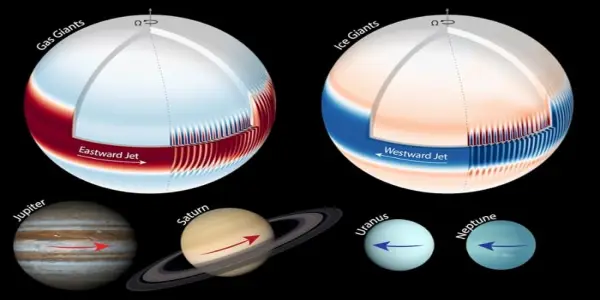
New Research Sheds Light on Jet Streams of Gas...
Young Star V1298 Tau Sheds Light on Planet...
Abrams Studios Announces New Sci-Fi Exploration...

Putin Initiates Strategic Plan for Russia's Rare...

Indigenous Activists Challenge COP30's Rainforest...
New Study Reveals Microbes Colonizing Freshly...

Coyote vs. Acme Blends Looney Tunes with...
Sun Emits Second-Strongest Flare of 2025, Causing...
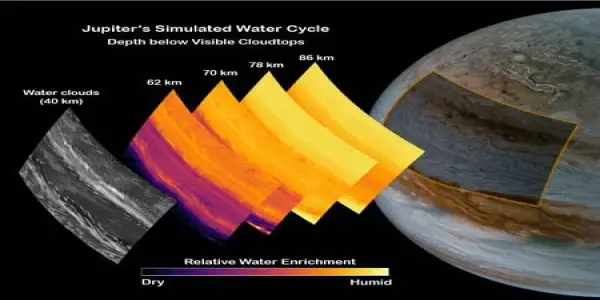
Jupiter's Rapid Spin Influences Water...
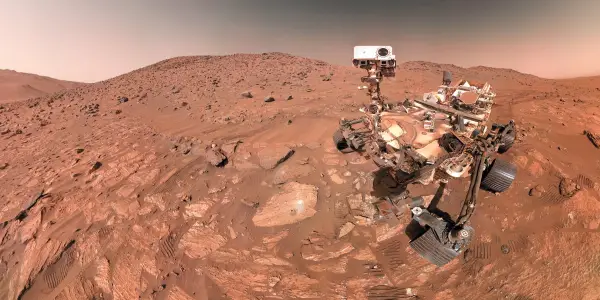
NASA's Mars Sample Return Mission Faces...

Exploring the Depths of Nature: Boyd Varty's...
Embracing the Light: A Reflection on Our...

Innovative Precast Rammed Earth Tennis Court...

The Allure of Venezuela's Oil Reserves: Analyzing...
Innovative Gel Shows Promise in Regenerating...

Catherine O’Hara, Iconic Actress from...

Top Organic Mattresses of 2025: Birch, Avocado,...
Ancient Crocodile Fossils Unearthed in Australia...
Exocomets Detected Around Distant Stars
New Glenn Rocket Completes Successful Test...
Ancient Air Trapped in 6-Million-Year-Old...
American Museum of Natural History Launches...

Tennessee's Nature-Based Solutions for Health and...
Upcoming Venus Missions Set to Explore Earth's...

New Insights into 'Project Hail Mary' Reveal...

Artemis II Sparks Renewed Interest in Lunar...
Insights into Lithospheric Dynamics from Turkana...
Damage Assessment Underway in Northern Australia...