Saturn's Rings Appear to Vanish on November 23: How to Observe the Phenomenon
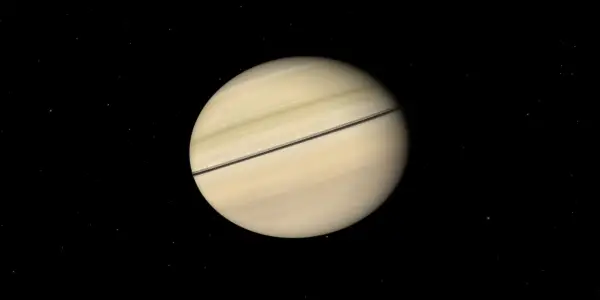
Saturn will temporarily appear without its rings on November 23 due to an optical illusion.
In-depth analysis
Natural phenomena
On November 23, Saturn will present a unique optical illusion as its rings align edge-on with Earth, causing them to appear nearly invisible. This 'ring plane crossing' occurs periodically as both planets orbit the Sun, affecting visibility. During this event, Saturn will shine brightly in the southeastern sky, positioned within the constellation Pisces.
Impact on communities
This celestial event encourages local astronomy clubs and enthusiasts to organize viewing sessions, fostering community engagement and shared experiences among stargazers. It also promotes interest in astronomy education.
Scientific updates
Astronomers highlight the significance of this event for studying Saturn's atmospheric features and its moons, Titan and Enceladus. Observations during this crossing can enhance understanding of gas giants and their complex systems.
Future outlook
As Saturn's ring plane crossings will continue to occur, enthusiasts can anticipate future opportunities for observation. Resources and apps will aid in tracking these events, fostering ongoing interest in planetary science.
Did you know?
Why this matters for our planet
The alignment of Saturn's rings offers a rare opportunity to spark public interest in astronomy and space exploration. Observing this event encourages people to engage with science, inspiring the next generation to explore the cosmos. This connection fosters a deeper appreciation for our place in the universe and the importance of protecting our own planet amid the vastness of space.
Earth's undiscovered wonder
Saturn has a fascinating feature: its rings are composed of ice particles, dust, and rocky debris, which can vary in size from tiny grains to massive boulders. Surprisingly, some of these particles are remnants from comets that have passed close to the planet, making Saturn's rings a cosmic history book of sorts.
The voice of Earth
Marcus, 34, from Chicago, recalls the first time he looked through a telescope as a child. It was a chilly November night, and he was mesmerized by Saturn's rings. Later, during a tough time in his life, he often gazed at the night sky, finding solace in the thought that the universe was vast and full of mysteries. Now, as the rings align edge-on, he plans to share this moment with his daughter, hoping to ignite her curiosity about the cosmos just as it did for him years ago.

Putin Initiates Strategic Plan for Russia's Rare...
The Allure of Venezuela's Oil Reserves: Analyzing...
Blue Origin's New Glenn Rocket Successfully Lands...

Intaaya Retreat in Indonesia Features Innovative...

Coyote vs. Acme Blends Looney Tunes with...
Perseverance Rover Discovers Unusual Rock Near...
Sun Emits Second-Strongest Flare of 2025, Causing...
Insights into Lithospheric Dynamics from Turkana...
New Fossil Discovery Alters Understanding of...

The Impact of the Three Gorges Dam on Earth's...

Understanding Artificial Reefs: A Solution for...
Damage Assessment Underway in Northern Australia...

The Intersection of AI Development and Natural...

VTN Architects Completes Nuoc Ui School in...

UK Churches Embrace Heat Pumps for Sustainable...

Understanding the Formation of Tectonic Plates
China's Astronauts Return Safely, but Another...
HEO Robotics Expands Satellite Imaging...
Breakthrough in Microscopy Sheds Light on Ocean's...
Blue Origin's New Glenn Rocket Set to Launch...
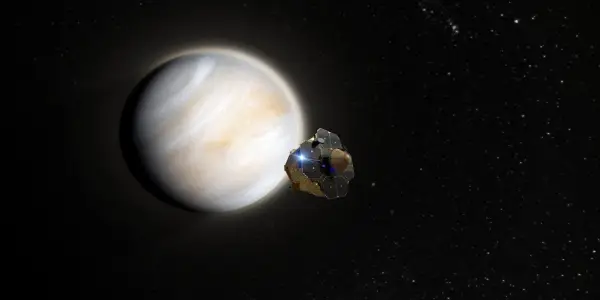
Upcoming Venus Missions Set to Explore Earth's...
Exploring the Nature of Intelligence: Insights...
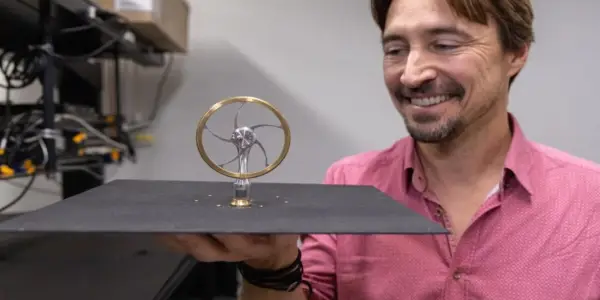
Innovative Engine Harnesses Deep Space Energy for...

Exploring Sustainable Approaches to Deep-Sea...
Moss Survives 9 Months in Space and Thrives After...

Top Organic Mattresses of 2025: Birch, Avocado,...
James Webb Space Telescope Reveals First 3D...

FX Confirms Season 2 Renewal for 'Alien: Earth'
New Insights from the Butterfly Nebula May...

Exploring Key Questions Raised by ‘Avatar: Fire...
November's Full Supermoon: A Celestial Event to...

WhatsApp Security Vulnerability Exposes 3.5...

Steven Spielberg Steps Back from Sci-Fi Series...

Indigenous Activists Challenge COP30's Rainforest...

Asteroid Impact in Finland Reveals Ancient...
Geomagnetic Storm Forces Delay of Blue Origin's...
Ancient Australian Rocks Provide Insights into...

Newly Discovered Snake Species Named After Steve...