G20 Summit in South Africa Marks a New Era Amid U.S. Absence
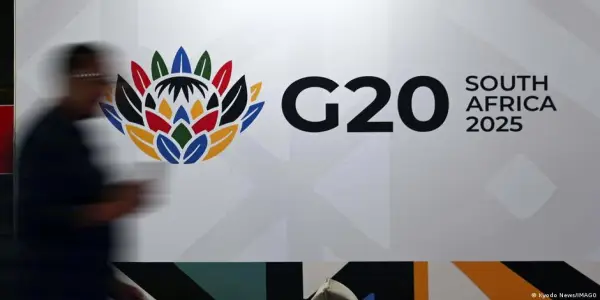
As the G20 convenes in Africa for the first time, the absence of U.S. leadership raises questions, while the EU aims to strengthen its global partnerships.
In-depth analysis
Background context
The inaugural G20 summit in Johannesburg marks a historic moment for Africa, bringing together leaders from major economies, the EU, and the AU. This gathering represents a significant coalition, with G20 nations comprising over half of the global population and a substantial share of economic output. However, notable absences, particularly from the U.S. and China, raise questions about diplomatic relations.
Key political implications
The U.S. boycott signals a shift in diplomatic engagement, potentially diminishing its influence in Africa. Meanwhile, the EU's active participation could position it as a leading partner, altering traditional power dynamics in international relations.
Who gains / who loses
The EU stands to gain significantly by strengthening ties with African nations, enhancing its role as a reliable partner. Conversely, the U.S. risks losing influence and credibility in the region due to its absence, potentially alienating key allies.
Possible future scenarios
The outcomes of the summit may lead to deeper EU-Africa collaborations, while the U.S. could reassess its foreign policy approach. This shift may redefine global partnerships and influence Africa's strategic importance on the world stage.
Did you know?
Why you should know this
The G20 summit in Johannesburg is more than a diplomatic event; it reflects shifting global power dynamics that directly impact everyday lives. With the U.S. stepping back and Europe stepping forward, trade agreements and international partnerships will influence local economies, job markets, and access to resources. Understanding these changes helps individuals grasp how global politics shape their communities and economic opportunities.
Behind the political curtain
The Trump administration's claims about South Africa's treatment of white citizens, which led to the U.S. boycott of the summit, were widely discredited. This misunderstanding has strained relations and reflects a broader trend of miscommunication that can escalate diplomatic tensions unexpectedly.
Ordinary person in an extraordinary situation
Consider Thandiwe Moyo, a small business owner in Johannesburg who sells handmade crafts. As the G20 summit unfolds, she feels a mixture of hope and anxiety. The international attention brings potential customers and partnerships, yet the absence of major powers like the U.S. raises questions about future trade. Thandiwe is keenly aware that her livelihood depends not just on local sales but on global relationships. She hopes that the summit will foster an environment where African businesses can thrive, and she dreams of her crafts reaching markets far beyond her city. For Thandiwe, the summit isn’t just a political gathering; it’s a chance for her hard work to gain recognition and for her community to benefit from new economic opportunities.
Russian and Indian Foreign Ministers Convene...
Bhutan's Complex Relationship with India: A...
Germany Resumes Arms Exports to Israel Amid...
The Rise of Technocracy in Modern Governance
Trump's Bold Foreign Policy Yields Progress in...
Indian Trade Unions Rally Against New Labour...

New Advocacy Report Urges Action Against Child...
Trump and Finnish President Stubb Forge Strong...
Geopolitical Tensions Surround Palau Amid...
Texas Governor Abbott Designates CAIR as a...
AfD Leader Raises Concerns Over Potential Threats...
Trump Appoints Special Envoy to Greenland,...
Explosion at Tennessee Munitions Facility Leaves...
Khamenei Assassination: A Pivotal Shift in...

Challenges Faced by Costumes in 'Mighty Morphin...
Canada's Carney to Meet Xi in China, Signaling a...
Peru Sever Diplomatic Relations with Mexico Amid...

Canada Decides Against Public Disclosure of Nazi...
Denmark's Prime Minister Advocates for Stricter...

U.S. Lawmakers Express Concerns Over Trump...
Former Honduran President Hernández Convicted of...
Colombia's ELN Rebels Intensify Military Drills...

The Foundation of Friendship: Understanding...
Global Community's Stance on Israel: A Complex...
The Israel-Hamas Ceasefire: A Critical Moment...
U.S. Embassies Redefine Human Rights:...
The Role of Palestinian Statehood in Advancing...
Former Preschool Cook Sentenced for Molesting...
Zohran Mamdani's Vision for Global Municipal...
Boeing 777X: The Long Wait for Innovation and...

Mamdani Emerges Victorious in NYC Mayoral Race...
Cuban Authorities Engage in Deadly Clash with...
Bangladesh Seeks India's Assistance in...
New England Senators Play Crucial Role in...
Trump Addresses Nuclear Testing, Government...
Zohran Mamdani Secures Victory in New York City...
Ireland Moves Forward with Bill Targeting Israeli...
Protests Erupt Across Italy Amid Gaza Conflict,...
Trump to Engage with Syrian Leader Following...
Oracle's Stance on Israel Sparks Controversy...