Vega C Rocket Successfully Launches Satellite for CO₂ Monitoring Alongside Four Earth-Observation Craft
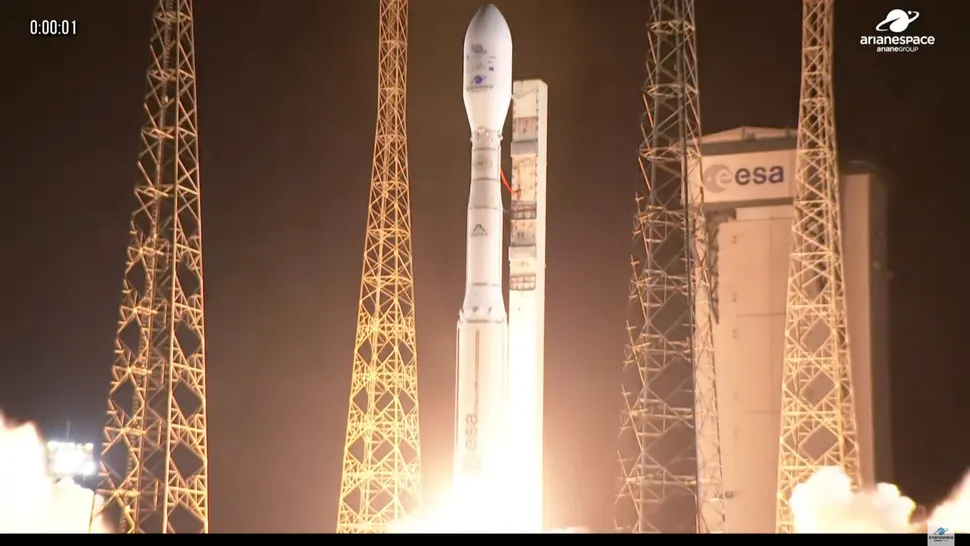
On July 25, a mission deploying a carbon dioxide-monitoring satellite and four additional Earth-observation spacecraft was successfully executed from French Guiana.
In-depth analysis
New discoveries
Vega C just launched a CO₂ tracker that'll literally watch us pollute from space. Finally, we'll have receipts on who's actually meeting those climate promises.
Mission updates
Europe's Spaceport in French Guiana stays busy—Vega C's flawless flight proves they're back in the game after previous setbacks. Four extra Earth-observers hitched a ride too.
Who is affected
Climate scientists are getting the data they've begged for. Polluters can't hide anymore. Meanwhile, policymakers now have no excuse for "we didn't know."
Next steps
Time to watch those emissions readings roll in. Hopefully this satellite makes countries squirm enough to actually do something.
Did you know?
Why we should care
The successful launch of the carbon dioxide-monitoring satellite is more than a technological feat; it directly impacts everyday lives. As communities face rising temperatures and extreme weather, this satellite will provide crucial data to help local governments and organizations make informed decisions about climate action. The insights gained will assist in shaping policies that could safeguard public health, agriculture, and the environment, ensuring a more sustainable future.
The universe's unsolved mystery
Despite advancements in satellite technology, questions about the Earth's changing climate remain. How will shifting carbon dioxide levels influence global weather patterns in the coming decades? This uncertainty drives the need for continuous monitoring and innovative solutions, as the answers could reshape our understanding of climate dynamics and human resilience in the face of environmental change.
The person who looks at the stars
Meet Clara, a high school science teacher in a small coastal town. She often takes her students outside at night to gaze at the stars, using a telescope to explore the cosmos. Clara connects the dots between their celestial observations and Earth’s challenges, like climate change. The recent satellite launch excites her; it represents a tangible tool her students might use in their lifetimes to understand and combat global warming. Clara dreams of a future where her students, inspired by the stars, become leaders in environmental science, armed with the data necessary to protect their planet. Her passion ignites curiosity in her classroom, fostering a generation that sees the universe not just as a mystery, but as a place to find solutions.
Expert Commentary
The Vega C launch is a major step forward for climate monitoring. Deploying a dedicated CO2-tracking satellite alongside Earth-observation spacecraft will provide invaluable data for understanding greenhouse gas emissions. This mission highlights how advanced satellite technology can support global efforts to combat climate change and informs policymakers with precise, real-time environmental insights.
NASA Faces Scrutiny Over Boeing Starliner...

Lenovo's Legion Tab Gen 3 Sees Significant Black...
Congress Questions NASA's Facility Closures Amid...
Research Reveals Mars' Windy Conditions Could...
Proposed Fleet of Sun-Gazing Spacecraft Aims to...

Astronomers Capture First Image of Two Orbiting...

This Week In Space Podcast: Episode 187 Explores...

Celestial Wonders of Autumn 2025: Eight Key Night...
NASA Advances Artemis 2 Mission with Orion...

New Study Reveals Theia and Earth May Have Shared...

Reviving Adult Friendships: Strategies to Combat...

First Direct Imaging of a Protoplanet in a Star's...

European Space Agency Unveils Stunning Radar...
Astronomers Capture Evidence of Dark Matter's...
NASA Research Uncovers Climate's Impact on...

Samsung Unintentionally Reveals Galaxy S26 Series...

Exploring Alternatives to the Meta Quest 3 Elite...
Potential Alien Disclosure May Trigger Bitcoin...

FULU Foundation Introduces Repair Bounty System...
New Mexico Startup Unveils Ambitious Plan to...

The Pleiades Star Cluster Reveals Its Extensive...
Hawaiian Students Honor Gemini North Telescope's...
The Dwarf III Smart Telescope: A Compact Marvel...
Impulse Space Enters Lunar Exploration: New...

Netgear Orbi 370 Review: An Accessible Wi-Fi 7...
New Research Suggests the Milky Way's Core May...

Urwerk Unveils Limited-Edition 100V 'LightSpeed'...

Jeff Bezos's AI Hardware Venture Takes Aim at...

Samsung Unveils Unprecedented Black Friday Deal...

Astronomers Discover Ancient White Dwarf Actively...

China's Mars Orbiter Captures Image of...

Jonathan Davies Urges England to Create New...

UK Advances in Space Defense and Naval Drone...

MiHoYo Expands Ambitions with New MMO Project...

James Webb Space Telescope May Have Detected the...
India Successfully Launches CMS-03 Military...

Affordable Fitness Tracking: The Amazfit Active 2...
Russian Cosmonauts Conduct Extended Spacewalk to...
Interstellar Comet 3I/ATLAS Reveals Water...

Portal Systems Aims to Revolutionize Spacecraft...