Debunking Viral Claims of an Incoming Comet: What We Know About 3I/ATLAS
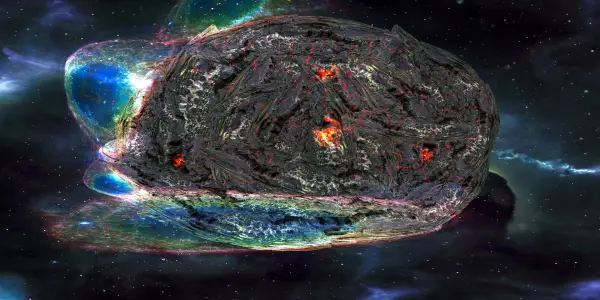
Explore the truth behind the viral claims of comet 3I/ATLAS potentially colliding with Earth. Discover the facts and implications of this astronomical event.
In-depth analysis
New discoveries
Recent investigations into comet 3I/ATLAS have revealed its unique teardrop shape and a dust cocoon surrounding its icy nucleus. Observations from the Hubble Space Telescope indicate a diameter between 1 and 3 kilometers, highlighting its significance as one of the fastest interstellar visitors to our solar system.
Mission updates
NASA has confirmed that comet 3I/ATLAS poses no threat to Earth, with its closest approach being approximately 5 million kilometers away. This distance is more than twice that between Earth and the Moon.
Who is affected
The spread of misinformation regarding comet 3I/ATLAS has caused concern among social media users, leading to unnecessary anxiety about potential military responses and extraterrestrial connections. This situation underscores the need for accurate information dissemination.
Next steps
Moving forward, experts emphasize the importance of fact-checking and responsible sharing of information to combat misinformation. Continued monitoring of 3I/ATLAS will provide further insights into its characteristics and trajectory.
Did you know?
Why we should care
The chatter surrounding comet 3I/ATLAS highlights a critical issue: the impact of misinformation on public perception and safety. In an age where social media can amplify fears, understanding the true nature of astronomical events is vital. For everyday life, this means being equipped to discern fact from fiction, ensuring that panic doesn’t overshadow scientific reality when it comes to potential threats from space.
The universe's unsolved mystery
Comet 3I/ATLAS serves as a reminder that the cosmos still holds secrets that challenge our understanding. While the comet’s characteristics are fascinating, they also raise questions about the origins of interstellar objects. What other anomalies lie beyond our solar system, and how might they reshape our knowledge of the universe? This comet may just be the beginning of a deeper exploration into our cosmic neighborhood.
The person who looks at the stars
Meet Sarah, a high school science teacher in New Mexico, who often takes her students outside at night to gaze at the stars. For her, the recent buzz around comet 3I/ATLAS sparked an exciting discussion about both celestial wonders and the importance of critical thinking. She encourages her students to question sensational claims and to seek the truth behind the headlines. Sarah believes that fostering curiosity about the universe can empower the next generation to engage with science responsibly, bridging the gap between wonder and understanding. Her passion illustrates how educators can inspire informed citizens who appreciate both the beauty of the cosmos and the necessity of skepticism in the age of information overload.
Expert Commentary

Urwerk Unveils Limited-Edition 100V 'LightSpeed'...
Meteorite Fragment May Have Impacted Houston Home
Breakthrough in Milky Way Simulation Using AI...
Astronomers Discover Ancient White Dwarf Actively...
NASA Faces Scrutiny Over Boeing Starliner...
NASA Unveils New Images of Interstellar Comet...
Exploring the 'Ultraview Effect': Human...
Discovery of Betelgeuse's Companion Star Unveiled
This Week in Science: Insights on Comet 3I/ATLAS,...
Astronomers Identify Ancient Water in...

Reviving Adult Friendships: Strategies to Combat...
Charlotte: The Lunar 3D Printer Poised to...
NASA's Artemis 3 Moon Mission Delayed to 2028 Due...
European Space Agency Unveils Stunning Radar...
Interstellar Comet 3I/ATLAS Reveals Water...

Netgear Orbi 370 Review: An Accessible Wi-Fi 7...
Astronomers Capture Evidence of Dark Matter's...
Samsung Galaxy S26 Expected to Feature Enhanced...
Jeff Bezos's AI Hardware Venture Takes Aim at...

Affordable Fitness Tracking: The Amazfit Active 2...

Samsung Unveils Unprecedented Black Friday Deal...
The Dwarf III Smart Telescope: A Compact Marvel...
Portal Systems Aims to Revolutionize Spacecraft...
Exploring the Best Online Resources for Stunning...
Potential Alien Disclosure May Trigger Bitcoin...
James Webb Telescope Reveals Potential Atmosphere...

India Successfully Launches CMS-03 Military...
NASA and Blue Origin Successfully Launch Dual...
Juno's Mission Status in Question Amid Government...
Australia's SpIRIT Nanosatellite Captures First...
Samsung Unintentionally Reveals Galaxy S26 Series...
Congress Questions NASA's Facility Closures Amid...
SabreSat: An Innovative Air-Breathing Satellite...
European Space Agency Enhances Collaboration with...
New Simulations Shed Light on the Enigmatic...
This Week In Space Podcast: Episode 187 Explores...
Blue Origin Advances New Glenn Rocket Testing...
Astronauts aboard the ISS Capture Stunning Images...
China's Tianwen-3 Mission: A Potential Rival in...
Satellite Observations Reveal Unconventional...